REVIEW · TOKYO
Tokyo Made Easy | Private Chauffeur Day Adventure | Car and Guide
Book on Viator →Operated by JapanAventures · Bookable on Viator
Tokyo feels bigger with no transit stress. A private chauffeur day in Tokyo means you spend your energy on what you came for—temples, markets, neighborhoods, and skyline views—without the constant stop-and-start of trains and station transfers. You also get an easy rhythm for a 9 to 10 hour sightseeing day, built around Tokyo’s biggest “wow” stops.
I love the way this route mixes eras and moods: seafood-fueled food culture at Tsukiji, a deep dive into old Tokyo at Sensō-ji and the Imperial Palace East Gardens, then a total mood shift to tech shops, youth fashion, and bay views at Odaiba. Another big plus is flexible pacing, and if your guide is Daniel, you can count on a friendly, professional style that keeps families comfortable and moving—without turning the day into a rigid checklist.
One thing to consider: Tokyo Tower’s admission isn’t included, and with so many icon stops, you’ll want to manage expectations if you prefer long, slow stays in each place.
In This Review
- Key things that make this day work
- Why a private chauffeur day makes Tokyo easier
- Tsukiji Fish Market: food culture in a tight 45-minute stop
- Asakusa’s Sensō-ji: old Tokyo and a temple you can feel
- Tokyo Station, Akihabara, and the urban speed-change you didn’t plan for
- Imperial Palace East Gardens: Edo Castle grounds in calmer time
- Odaiba and Tokyo Tower: bay views and skyline icons
- Harajuku and Meiji Jingu: youth culture meets quiet Shinto
- Shinjuku viewpoints and Shibuya Crossing: the street-level Tokyo finale
- Price and what $349 per group actually buys you
- Pacing: how to get the best day without feeling rushed
- Who this Tokyo day fits best
- Should you book Tokyo Made Easy with a private chauffeur?
- FAQ
- How long is the private chauffeur day adventure?
- What is the price for this experience?
- Does the tour include pickup?
- Is this a private tour?
- What tickets are included?
- Do I get a mobile ticket?
- When will I receive confirmation after booking?
- Can the group request a childseat?
- Is there free cancellation?
Key things that make this day work
- A private car that does the heavy lifting: less time figuring out trains, more time actually seeing Tokyo.
- A lineup of big-name icons with short visits: designed for maximum variety in a limited day.
- Free entry at most stops: many locations are ticket-free, so you’re not stacking paid attractions all day.
- A guide who can match the pace: Daniel is specifically described as professional, punctual, and easy to be around.
- Skyline moments without paying extra at every stop: free observation decks plus a separate paid option at Tokyo Tower.
Why a private chauffeur day makes Tokyo easier
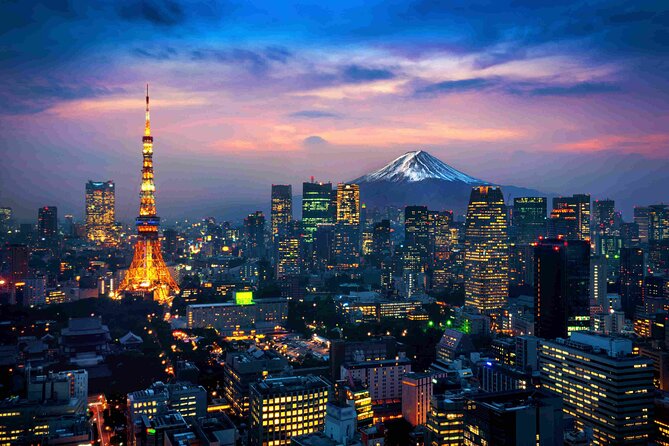
Tokyo is great, but it can also wear you out. Stations are close together and yet still feel like a maze when you’re tired, carrying bags, or trying to keep an eye on kids (or just your own patience). This experience solves that by putting you in a car with a dedicated driver for most of the day—so your day runs on your schedule, not on train timing.
The format is also smart for first-timers. You get a stack of recognizable places—food, history, pop culture, and city viewpoints—without having to plan a mini itinerary for every transit leg. It’s especially handy if you’re traveling with mixed ages or want a day that doesn’t turn into sprinting between crowded lines.
Tsukiji Fish Market: food culture in a tight 45-minute stop
Tsukiji Fish Market has long been one of Tokyo’s most famous stops, and for good reason. It opened in 1935 on reclaimed land and grew into the world’s largest wholesale seafood market—an important part of Japanese food culture and a global icon.
In a day that’s otherwise moving nonstop, this stop is a clear win because it’s short and focused: about 45 minutes. That means you can get the atmosphere and the visual culture of the market without spending the whole morning stuck in logistics. Admission here is free, so you’re mainly paying with time (which your chauffeur helps protect).
Practical tip: treat this as a walk-and-look moment. Bring patience for crowds and narrow lanes, and keep your camera ready. If you’re hoping for a calm, empty market, you might find the energy is part of the point.
Asakusa’s Sensō-ji: old Tokyo and a temple you can feel
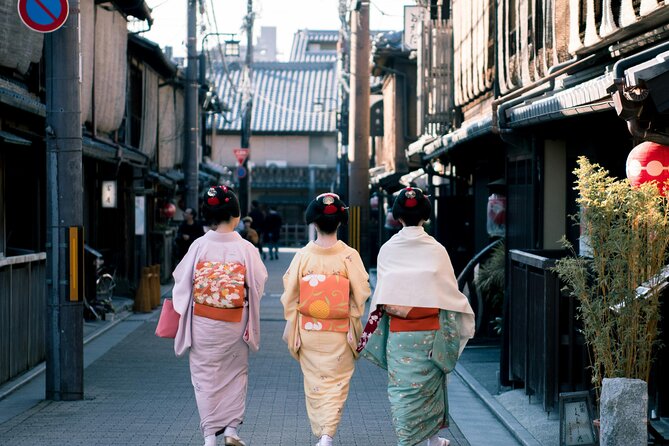
Next up is Sensō-ji in Asakusa, Tokyo’s oldest and most significant Buddhist temple. Tradition places its founding in 645 AD, connected to a golden statue of Kannon, the bodhisattva of compassion.
This is the kind of stop that works better when you’re not stressed about navigation. You arrive, you follow the flow, and you take in the sights for about an hour with free admission. If Tsukiji is your sensory warm-up, Sensō-ji is the emotional switch: you slow down, pay attention to details, and let the older Tokyo vibe settle in.
One smart thing about including this temple early in the day: you’re still fresh enough to enjoy walking around the approach areas. Later, when you’ve already seen shopping streets and viewpoints, you’ll appreciate the contrast even more.
Tokyo Station, Akihabara, and the urban speed-change you didn’t plan for
Tokyo Station is a major railway hub in the Marunouchi business area, and it’s worth a quick look even if you don’t ride through it. The west side is known for its historic red-brick facade, while the east side has the more modern Yaesu entrance. Opened in 1914, it sits at the crossroads of Tokyo’s past and present.
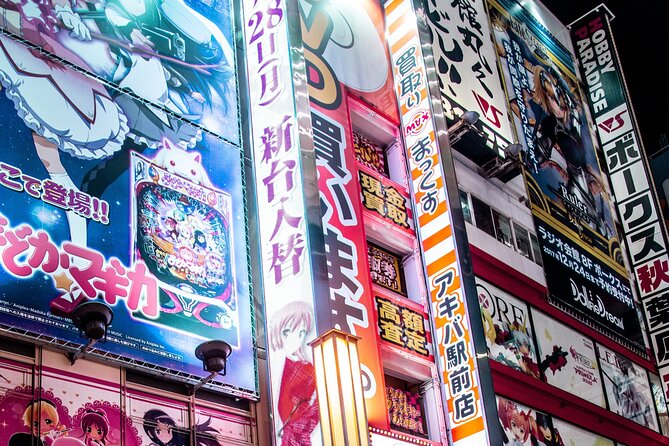
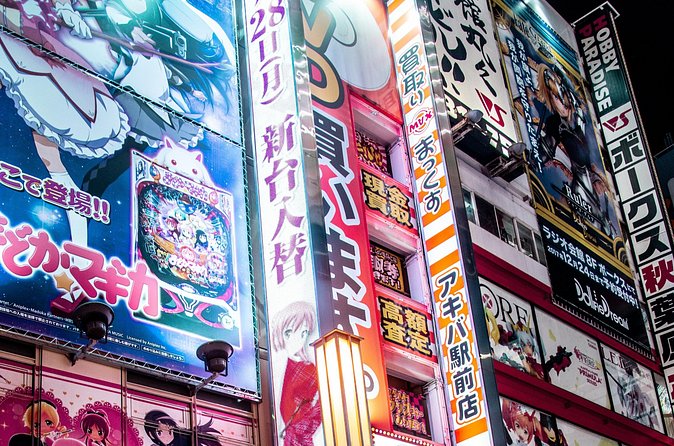
From there, you head to Akihabara, aka Akiba, famous for electronics and Japan’s otaku culture. Expect this stop to feel like a fast color change in your day—tech storefronts, fan culture, and shopping energy focused around one central zone. The time here is about 1 hour, with free admission.
Why this pairing works: it’s a believable transition from “systems that run Tokyo” (Tokyo Station) to “small obsessions that define Tokyo” (Akihabara). You get two different types of modern Tokyo identity without losing time planning separate routes.
If you’re not into electronics or pop culture shopping, you can still enjoy Akihabara for the people-watching and the texture of the neighborhood. But if you’re very into it, this stop will likely feel short—your chauffeur’s flexibility can help, but don’t expect all-day shopping.
Imperial Palace East Gardens: Edo Castle grounds in calmer time
The East Gardens of the Imperial Palace sit on the grounds of the former Edo Castle, seat of the Tokugawa shoguns who ruled from 1603 to 1867. Today, it’s public park space inside the inner palace area, which makes it a nice reset after busier streets.
You’ll typically get about 45 minutes here, and it’s free. That limited window is actually an advantage. You get enough time to notice the setting and soak up the contrast—stone, paths, and the sense of a place designed to be monumental—without turning the day into a long park stroll.
Practical tip: keep this stop “light.” Don’t plan on a deep, study-level experience of every corner. Instead, use it for the big picture: a brief, meaningful walk on the historic foundation of modern power.
Odaiba and Tokyo Tower: bay views and skyline icons
Odaiba is an artificial island in Tokyo Bay that began as defensive forts in the 1850s and later got redeveloped in the 1990s into an entertainment and shopping zone. The energy here is different from the temple and market parts of the day. It’s more about views, open space, and modern Tokyo spectacle.
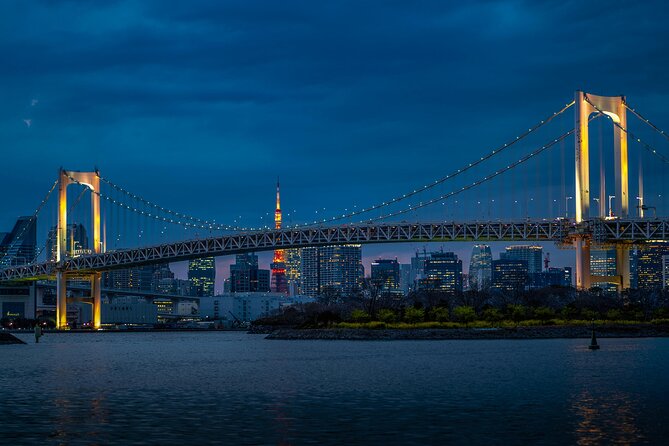
Your time is about 1 hour with free admission at the district level. And this is where a personal highlight pops up from real experiences: you may get great views of the Rainbow Bridge and see a Statue of Liberty replica. Those small “photo landmark” moments are exactly what make a chauffeur day feel like more than just transportation.
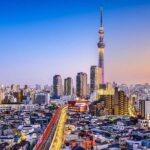
Then comes Tokyo Tower, the red-and-white steel landmark completed in 1958, modeled after the Eiffel Tower and still used as a broadcast antenna. It’s also a classic Tokyo photo stop. Your time here is about 30 minutes, and admission is not included.
How to think about Tokyo Tower in your day: it’s optional-pay, not an automatic included feature. If you want the view from the top, you’ll need to budget that extra ticket cost. If you just want the iconic silhouette and some outside photos, you can treat this as a quick stop.
Harajuku and Meiji Jingu: youth culture meets quiet Shinto
Harajuku, centered around Harajuku Station in the Shibuya area, is known globally for youth fashion and the birthplace of kawaii culture. It’s also tied to “extreme fashion,” which is why it’s so easy to recognize on arrival: this neighborhood looks like Tokyo’s styling lab.
Your time here is about 45 minutes, with free admission. It’s enough to see the vibe, take photos, and soak up the contrast between what’s trendy and what’s traditionally Tokyo nearby.
Then you switch again—this time to Meiji Jingu Shrine. Established in 1920, it honors the deified spirits of Emperor Meiji and Empress Shoken. The pace changes instantly. If Harajuku is quick-moving energy, Meiji Jingu is stillness and ritual.
Your stop here is also about 45 minutes, free admission. This is a smart pairing because it prevents you from burning out. After shopping streets and city noise, the shrine gives your day a “reset button” without needing to travel farther.
Shinjuku viewpoints and Shibuya Crossing: the street-level Tokyo finale
One of the most satisfying parts of this route is finishing with wide-angle city views and then closing with the world-famous pedestrian chaos of Shibuya. It makes your photos and memories feel like a complete Tokyo story arc: heritage, modern tech, then big-city scale.
First, head to the Tokyo Metropolitan Government Building in Shinjuku. You can access the observation decks for free, and the height is 202 meters (663 feet). Expect about 45 minutes here. Free access to a tall viewpoint is a major value move when you’re trying to keep the day from turning expensive.
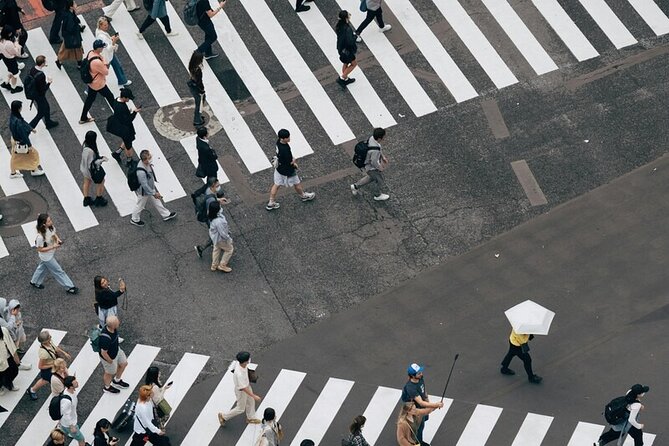
Next is Shibuya Crossing, the famous scramble intersection outside Shibuya Station. It’s known as the busiest pedestrian crossing, and at peak times you can see 2,500 to 3,000 people flooding into the intersection. Your time is about 30 minutes, free.
Why this ending works: Shibuya gives you the feeling of Tokyo as a machine—everything moving, people flowing, the city always switched on. After hours of visiting specific landmarks, it’s a natural payoff.
Price and what $349 per group actually buys you
Let’s do the math. The price is $349 per group, up to 7 people. If you fill the group, that’s about $50 per person. If it’s just two people, it becomes about $175 per person. So the value swings based on how many of you share the ride.
For many families and small groups, this private format makes sense because it replaces multiple transit hassles and the effort of planning transfers. You’re paying for time, comfort, and a driver who can keep the day moving. You’re also paying for a guide relationship—especially the part where Daniel is described as fun to hang out with, punctual, and good at keeping people entertained while still explaining what you’re seeing.
Is it worth it if you travel solo? It can be, but only if you really want the convenience of a private car rather than DIY transit. If you’re fine with trains and you enjoy planning, you’ll likely spend less on transport. This tour’s real strength is how it reduces mental load and compresses Tokyo’s biggest hits into one day.
Pacing: how to get the best day without feeling rushed
The structure of the stops is built around “hit the highlight, then move.” Many locations are about 30 to 60 minutes, which is perfect for sampling a lot. That means you shouldn’t schedule expectations like this is a slow, museum-length visit day.
Instead, think of it like this:
- Use the car time to rest and reset.
- Use each stop for the main idea: one market feel, one major temple, one neighborhood vibe, one viewpoint.
- Save your extra time energy for the place you love most, and rely on your chauffeur to adjust where possible.
Your guide’s style matters here. In the provided feedback, Daniel stands out as someone who stays respectful of people’s needs and can adapt if your group has older members or a slower pace.
Who this Tokyo day fits best
This private chauffeur day is a great match if you:
- Want a first-timer best-of day without train stress.
- Are traveling with family members (especially mixed ages) who might not want long station walks.
- Prefer a door-to-door feel, with pickup offered and the whole day built around your schedule.
- Want to see a wide range: seafood market culture, Buddhist and Shinto sites, youth fashion neighborhoods, tech shops, and observation decks.
It might not fit if you:
- Want deep, long stays at one or two places.
- Plan to spend most of the day inside ticketed attractions (since many stops are free, but Tokyo Tower is not included).
Should you book Tokyo Made Easy with a private chauffeur?
If your priority is a high-coverage Tokyo day with minimal transit friction, this one is a strong choice. The mix of major icons, a mostly free admission lineup, and a driver who can keep you comfortable makes it a good value—especially when you have more than two people in your group.
Book it if you like the idea of seeing Tsukiji, Sensō-ji, Akihabara, the Imperial Palace East Gardens, Odaiba, Harajuku, Meiji Jingu, Tokyo Tower (pay separately), the Shinjuku free decks, and Shibuya Crossing in one organized flow. And if your group has different energy levels, that adaptability is exactly the point.
FAQ
How long is the private chauffeur day adventure?
It runs about 9 to 10 hours.
What is the price for this experience?
It’s $349.00 per group, up to 7 people.
Does the tour include pickup?
Pickup is offered.
Is this a private tour?
Yes. It’s private, and only your group participates.
What tickets are included?
Most stops are free to enter. Tokyo Tower admission is not included.
Do I get a mobile ticket?
Yes, a mobile ticket is included.
When will I receive confirmation after booking?
Confirmation is received within 48 hours of booking, subject to availability.
Can the group request a childseat?
Yes, a childseat can be provided on request.
Is there free cancellation?
Yes. You can cancel up to 24 hours in advance of the experience start time for a full refund.
If you want, tell me your travel dates and group size, and I’ll suggest the most realistic way to pace the day based on whether you’re more into food, temples, shopping, or views.