REVIEW · TOKYO
From Tokyo to Mount Fuji! Private Car Tour by Eng Speaking Driver
Book on Viator →Operated by Tokyo Handsome Caravan · Bookable on Viator
Mount Fuji trips get complicated fast. This private car tour keeps it simple with hotel pickup, an English-speaking driver, and a route you can shape to your pace. I especially like the private-group setup and the way you skip the hassle of figuring out transfers.
Two big wins for me: the tour includes Mt. Fuji 5th station entrance fees, and you get a full day built around classic sights without feeling rushed. One thing to plan for: the 5th station visit can be canceled due to weather, so your best views depend on the conditions that day.
In This Review
- Key things that make this tour worth your time
- Private Tokyo to Mt. Fuji: what makes the logistics feel easy
- Mt. Fuji 5th station with the included entry fee
- Lake Kawaguchiko and Oishi Park: two ways to enjoy Fuji views
- Chureito Pagoda: iconic postcard views (and about 400 stairs)
- Oshino Hakkai ponds: UNESCO-area vibes without the big theme-park feel
- Kitaguchi Hongu Fuji Sengen Jinja Shrine: ancient trees and long views
- Funatsu Tainai Jugata Lava Tree Mold: a volcanic stop with personality
- How the English-speaking driver and co-driver shape your day
- Price and value: does $586.38 per group make sense?
- Timing tips for lunch and crowds during a 12-hour day
- Weather and contingency: what if Fuji is shy?
- Should you book this private Mt. Fuji tour from Tokyo?
- FAQ
- How many people can join this private tour?
- How long is the tour from hotel pickup to drop-off?
- Is lunch included in the tour price?
- What entrance fees are included?
- What if the weather is bad for Mount Fuji 5th station?
- Do you get pickup from your Tokyo hotel?
Key things that make this tour worth your time
- Hotel-to-hotel convenience: you’re picked up directly from your Tokyo hotel and dropped back at the end.
- Fuji 5th station entry included: the fee is built into the price for your group.
- Real flexibility in a 12-hour day: you can move through stops at a comfortable pace.
- Iconic photo spots with specific time blocks: Chureito Pagoda, Lake Kawaguchiko, Oshino Hakkai.
- Small-group comfort: limited to just your group (up to 5), in an air-conditioned vehicle.
- Safety-minded team: an English-speaking driver with a co-driver in the passenger seat.
Private Tokyo to Mt. Fuji: what makes the logistics feel easy
This is one of those Mt. Fuji plans that starts with a big relief: you don’t need to stitch together trains, buses, and timed connections. A driver meets you at your Tokyo hotel, and you spend the day riding in an air-conditioned car with highway tolls, fuel, and parking fees handled.
The trip runs about 12 hours from pickup to drop-off. That’s long enough to see more than just one viewpoint, but it’s also tight enough that you’ll want to think about your energy level. If you like structure but hate crowding, the private setup hits a sweet spot.
One practical benefit: it’s limited to your group (up to 5). That matters when you’re photographing Fuji in spots like Lake Kawaguchiko or when you want a slower walk than the standard tour pace.
Mt. Fuji 5th station with the included entry fee
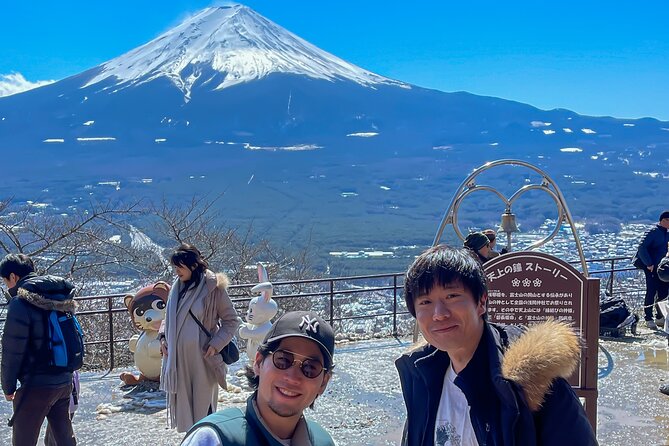
Your day centers on Mount Fuji Subaru Line 5th Station, above 2,300 meters. You get about 1 hour here, and the entrance fee is included in the tour price (listed as 2,100 Japanese yen per group). This is where the mountain starts to feel real, not just like a distant postcard.
At this altitude you might catch views of the Fuji Five Lakes far below, and on clear days you can even run into that famous sea of clouds effect. Even if visibility isn’t perfect, being up there is still a different experience than viewing Fuji from the plain.
Do note the weather reality. The 5th station visit may be canceled depending on conditions. If that happens, you’ll want to treat the rest of the day as the plan B—some people are surprised how enjoyable the lakes, shrines, and volcanic sights still are when Fuji is playing hide-and-seek.
What you can do to help: wear layers. Higher up can feel colder, and you’ll be standing around for views and photos.
Lake Kawaguchiko and Oishi Park: two ways to enjoy Fuji views
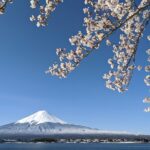
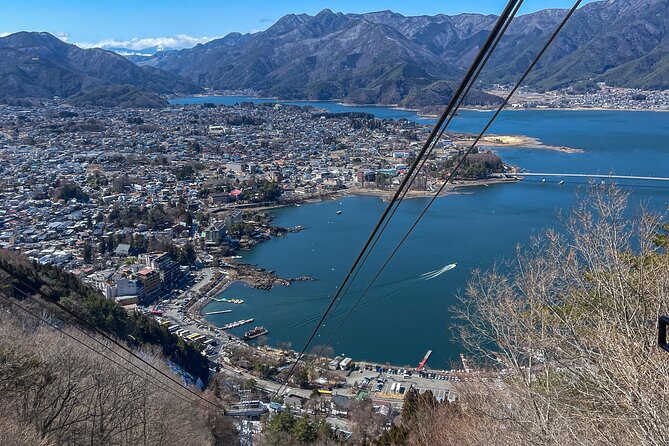
After the height of the 5th station, the tour drops you into classic scenery around Lake Kawaguchiko. This stop has about 1 hour of time. Lake Kawaguchiko is a popular Fuji-lake choice because you get strong sightlines of the mountain from the water’s edge.
This is also an easy place to think about comfort. The area has onsen culture, and Japanese visitors are big on soaking near the lake. If you’re the type who wants your day trip to end with a warm reset, you can ask about adding a hot spring stop on the way back (it’s mentioned as recommended if you tell the provider in advance).
Then comes Oishi Park, a short 10-minute stop with free admission. The point here is simple: get a clear Fuji view without visual clutter, and see how the scenery changes when flowers are in the mix. Even if you only have a few minutes, Oishi Park’s layout is designed for quick, strong compositions—perfect when you want photos but not a long hike.
If you’re the kind of traveler who likes to take your time, use the car time wisely: ask the driver to adjust your pacing so you’re not sprinting from one photo spot to the next.
Chureito Pagoda: iconic postcard views (and about 400 stairs)
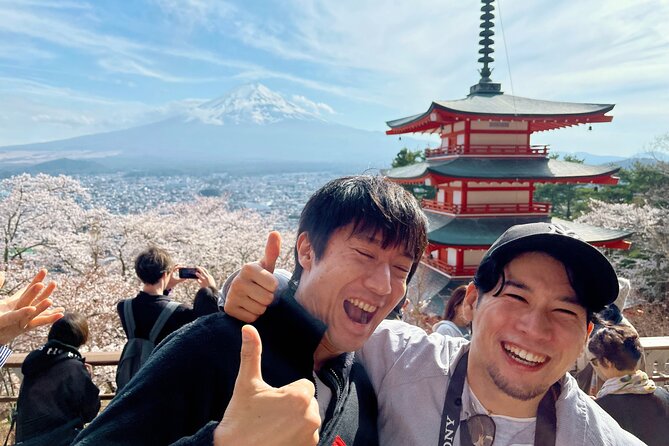
Chureito Pagoda is the stop most people recognize from travel guides and postcards. You’ll get about 40 minutes here, and admission is free. The view is famous for a reason, but here’s the part you should know: reaching the spot involves climbing around 400 stairs.
That’s not a deal-break for most people, but it is a real consideration if you have knee issues, are carrying heavy bags, or simply don’t like stairs after a long day already started at sea level in Tokyo. If you’re unsure, plan on pacing yourself on the way up and down. You can still enjoy the scene without racing to the top.
The upside: this is one of those moments where you’ll feel like you’re in the heart of Fuji tourism culture, not just looking at it from the outside. And because it’s free, you’re spending time, not tickets.
Oshino Hakkai ponds: UNESCO-area vibes without the big theme-park feel
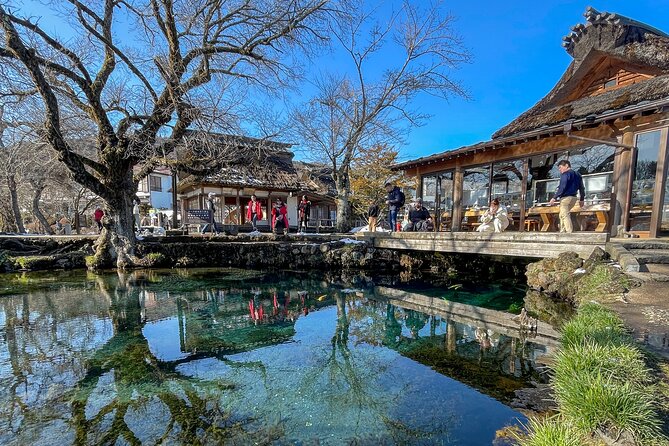
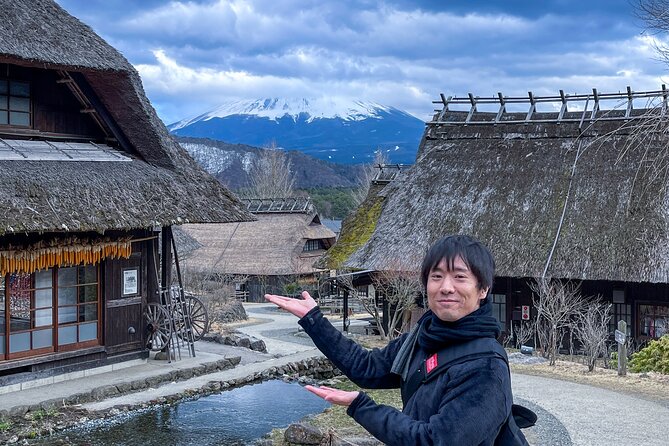
Next is Oshino Hakkai, a 25-minute stop. The ponds here are known as eight ponds, and the area is connected to the UNESCO World Heritage site Mount Fuji. This is a calmer kind of sightseeing than the staircase-heavy pagoda stop.
The ponds are the star. If you like places where you can slow down and watch water and stone instead of chasing the next viewpoint, this stop delivers. Admission isn’t included here, so you’ll want to have a bit of cash or a card ready for entry.
This is also the kind of stop where the timing matters. If you arrive during a busier moment, it may feel like a short walk between photo angles. If you arrive with better luck on crowd levels, you’ll enjoy the quieter atmosphere around the ponds and surrounding village-like streets.
Kitaguchi Hongu Fuji Sengen Jinja Shrine: ancient trees and long views
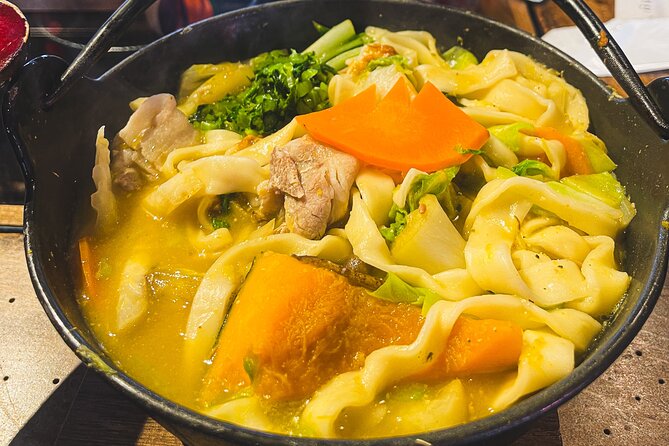
A highlight that often gets overlooked on quick Mt. Fuji routes is the shrine stop: Kitaguchi Hongu Fuji Sengen Jinja Shrine in Fujiyoshida. You’ll have about 30 minutes here, and admission is free.
This shrine is part of the UNESCO World Heritage site connected to Mount Fuji and has over 1,900 years of history. You’ll also notice old-growth trees, including the Fujitaro Cedar (and other ancient trees mentioned for the site). Even if you don’t read Japanese signage, it’s one of the places where the mountain theme feels spiritual rather than just scenic.
A smart way to enjoy this stop: treat it like a break. If the day feels like nonstop sightseeing, shrines can reset your rhythm. Take a slower walk, breathe, and let your eyes adjust from mountain views to details like tree trunks, rooflines, and stone paths.
Funatsu Tainai Jugata Lava Tree Mold: a volcanic stop with personality
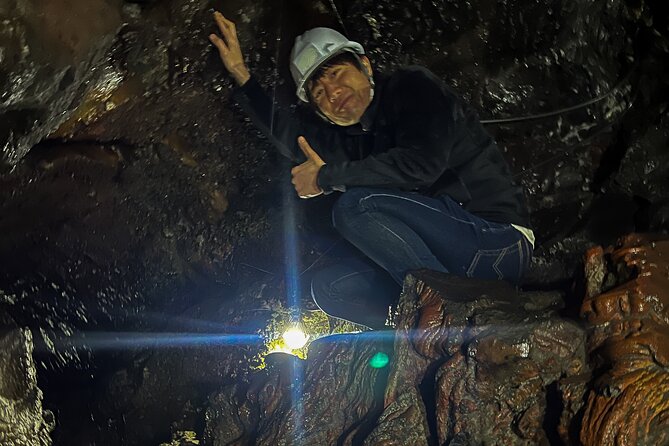
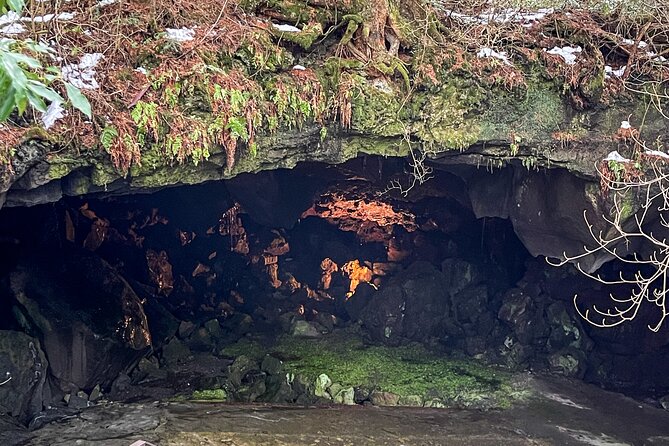
This tour also includes a quirky, distinctly Fuji-shaped stop: Funatsu Tainai Jugata Lava Tree Mold. You’ll spend about 25 minutes here, and admission is not included.
It’s a cave formed by volcanic activity, referred to as a lava tree mold. The name matters less than the experience: it’s described as being like a womb. That’s a strong cultural detail and part of why this stop feels different from the usual Mt. Fuji highlights. It’s not just another viewpoint. It’s a look at how the mountain’s eruptions shaped the land.
If you’re into geology or you enjoy learning how places got their look, this stop adds value. It also balances the day: after lakes and pagoda stairs, this kind of indoor or sheltered sightseeing can feel like a breather.
How the English-speaking driver and co-driver shape your day
The driver experience is a major part of the value here. You’re getting an English-speaking Japanese driver/guide plus a co-driver in the passenger seat, and safety is explicitly prioritized. In practical terms, it means you’re not stuck guessing at directions or losing time when something goes off plan.
The name John appears in the feedback, and Naoki is mentioned as the co-driver in the passenger seat for those experiences. Even if your driver is someone else, the setup is the same: one person focused on driving and communication, another positioned to help and support. For a long day with multiple stops, that matters.
The tour is also described as customizable. That doesn’t mean chaos. It means you can adjust your pace and priorities while staying inside a realistic 12-hour structure. If you care more about photography than shopping, or you want slower shrine time and quicker pagoda time, this kind of flexibility helps.
Also nice: the information states there are no overtime charges unlike some tour models. In other words, you’re paying for a day plan, not getting hit later when the itinerary runs slightly behind.
Price and value: does $586.38 per group make sense?
The price is listed as $586.38 per group, up to 5 people. That’s the key math. If you fill all five seats, you’re roughly at about $117 per person. If it’s just two people, you’re closer to $293 per person.
What you’re really paying for isn’t only the car. It’s the full package of:
- hotel pickup and drop-off in Tokyo
- an air-conditioned vehicle for a full day
- highway tolls, fuel, and parking
- an English-speaking driver/guide
- the Mt. Fuji 5th station entrance fee included for your group
Lunch and meals are not included, and only the 5th station entrance fee is guaranteed in the inclusions list. So you should expect to budget for food and a few other admissions if you want them.
Is it worth it? If you’re traveling with friends or family and want a stress-free route, yes. You’re essentially buying time and clarity. You avoid figuring out transit schedules, and you get local pacing guidance from a driver who can communicate in English.
If you’re traveling solo or as a couple and don’t mind trains, it may feel pricey. But a private day still has value if you want fewer crowds and more control over what you actually do at each stop.
Timing tips for lunch and crowds during a 12-hour day
Lunch isn’t included, and that’s normal for a day tour like this. The practical advice is to treat meals as part of your schedule, not an afterthought.
Peak lunchtime can get crowded at restaurants. If you want less waiting, plan to eat a little early or late. Since you can also bring snacks, consider a simple strategy: snack in the car, eat a proper meal when you find a calmer moment, then keep moving.
This is also a day where weather affects pacing. If it’s clear and Fuji views are strong, you’ll likely want more time looking and photographing. If it’s cloudy or windy, you may prefer quicker stops. Your driver’s flexibility helps you adapt without losing the whole plan.
Weather and contingency: what if Fuji is shy?
Mount Fuji is famously weather-dependent, and this tour is upfront that the 5th station might be canceled based on conditions. That’s not a small detail. The 5th station is the one stop tied directly to the mountain’s altitude experience.
If the tour gets canceled due to poor weather, the stated policy is that you’ll be offered another date or a full refund. That’s a relief, because you’re not gambling your entire plan on one forecast window.
A smart mindset: plan your clothing for layers, bring a good lens if you use one, and accept that the day might be more about lakes, shrines, and volcanic sights than the perfect mountain silhouette.
On the way back, the tour also suggests hot spring time is a good move. If you want that, tell the provider in advance so they can consider it inside the schedule.
Should you book this private Mt. Fuji tour from Tokyo?
Book it if you want a private, English-supported Fuji day with hotel pickup and a route built around major highlights. It’s especially good for small groups (up to 5) where the cost per person drops fast. If you don’t want to wrestle with train transfers, and you like the idea of adjusting pacing on the fly, this tour is a strong fit.
Skip it (or at least compare carefully) if your budget is tight and you’re comfortable using public transport. Also think twice if stairs are a concern, since Chureito Pagoda involves about 400 steps.
The biggest decision point is weather. If you’re flexible with dates and you’ll enjoy the lakes, shrine stops, and volcanic cave even if conditions limit the 5th station, this is a very satisfying way to do Mt. Fuji.
FAQ
How many people can join this private tour?
It’s limited to your group, with a maximum of up to 5 people per group.
How long is the tour from hotel pickup to drop-off?
The tour runs for about 12 hours total, from pickup to drop-off.
Is lunch included in the tour price?
No. Lunch and food/drinks are not included. The tour notes that you may want to eat early or late because lunchtime can be crowded.
What entrance fees are included?
Mt. Fuji Subaru Line 5th Station entrance fees are included (2100 Japanese yen per group). Admission for other stops is not included.
What if the weather is bad for Mount Fuji 5th station?
The visit to the 5th Station may be canceled depending on weather conditions. If the experience is canceled due to poor weather, you’ll be offered a different date or a full refund.
Do you get pickup from your Tokyo hotel?
Yes. Pickup and drop-off are included, and you should write your pickup address in the special requirements section.