
REVIEW · HUE
Hue – Danang – Hoi An: Private Car via Hai Van Pass and More
Book on Viator →Operated by Adventure Journey · Bookable on Viator
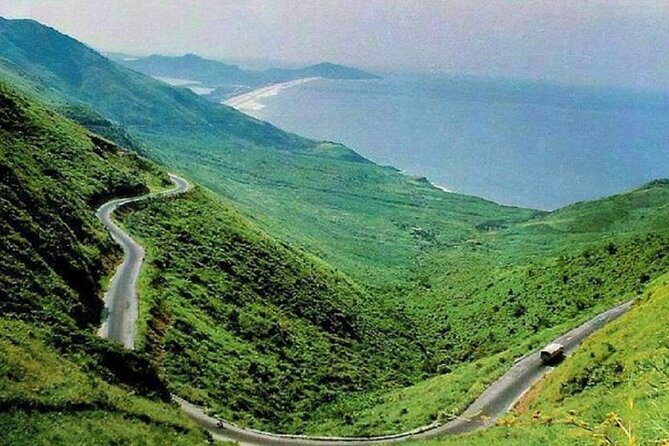
The Hai Van Pass turns a transfer into scenery. This private car ride picks you up door-to-door in Hue or Da Nang, and you can prearrange stops along the way with a private vehicle timed for the Hai Van Pass views. The only real catch: sightseeing entries and meals aren’t included, so build a little extra budget for tickets and lunch.
I like that the price is kept simple. It’s a flat fare for up to 3 travelers with no surge pricing, and you get an experienced driver with basic English plus a mobile ticket. For a day that can stretch from 3 to 10 hours, that “one fare, many options” setup is a great deal.
In This Review
- Key highlights worth your attention
- Entering the Hai Van experience: private car beats buses and trains
- How long this takes: 3 to 10 hours, depending on what you add
- Hue-to-Da Nang scenic stops: Lap An Lagoon, Lang Co, and Hai Van Pass
- Lap An Lagoon: quick beachy calm and seafood lunch potential
- Lang Co Beach: the storks-and-bay kind of view
- Hai Van Pass: cloud-mountain views plus old fort remnants
- Danang classics you can add: Marble Mountains and Monkey Mountain
- Marble Mountain: caves, sanctuaries, and stone-craft culture
- Monkey Mountain / Son Tra peninsula: pagoda views on the edge of the city
- Ba Na Hills: cable car up, Golden Bridge area near
- If you go farther toward Hoi An: An Bang Cemetery and My Son Sanctuary
- An Bang Cemetery: the so-called Tombs City of the Ghosts
- My Son Sanctuary: Champa-era architecture and UNESCO status
- The drivers and car comfort: what you can expect from the people behind the wheel
- Price and value: what $10 per person covers and what it doesn’t
- Things to watch before you book: the one risk to take seriously
- Who this private transfer suits best
- Should you book Hue to Da Nang via Hai Van Pass and More?
- FAQ
- What is included in the transfer price?
- Are pickup and drop-off included?
- How long does the transfer take?
- Can I prearrange sightseeing stops during the drive?
- Are tickets and food included?
- Is a tour guide included?
- What sightseeing stops are available?
- Is there free cancellation?
- Is this a private activity?
Key highlights worth your attention
- Private, door-to-door transport that avoids the hassle of transfers and waiting around
- Hai Van Pass driving with top views plus nearby photo stops like Lang Co
- You choose the stops, from beaches and caves to pagodas and heritage sites
- Comfort matters: air-conditioning and an easy pace for long scenic stretches
- Driver-led timing with frequent recommendations for where to eat and when to visit
Entering the Hai Van experience: private car beats buses and trains

On this route, the big win is not just getting from Hue to Da Nang. It’s that you get to experience the journey itself, especially the Hai Van Pass stretch. Instead of squeezing into public transport and losing control of your timing, you travel in a car or mini van with space to breathe and enough time for short stops.
The setup is also built for real travel days. Pickup is offered from your hotel area, and the service is described as door-to-door between Hue and Da Nang (and can connect toward Hoi An stops depending on your plan). That means you can start the day without lining up for taxis or figuring out routes.
One practical note: since this is a private transfer, you’re responsible for deciding how many stops you want. If you try to cram everything, the schedule can get full fast.
How long this takes: 3 to 10 hours, depending on what you add
The duration can run from about 3 hours to up to 10 hours. That range is the whole point. If you want the scenery with minimal interruptions, go more direct. If you want a “mini tour” on the way, stack stops like beaches, viewpoints, pagodas, mountains, or heritage sites.
Here’s the way I’d think about it:
- 3 hours-ish works best for a quicker Hue → Da Nang day with a couple of short scenic breaks.
- 5 to 7 hours is a sweet spot if you add major Danang-area stops (like Marble Mountains or Son Tra).
- Longer days (toward 10 hours) make sense if you also want Hoi An–side highlights like My Son Sanctuary.
Because stops are selected in advance with the driver, you can match the pace to your energy level. This is especially helpful if someone in your group prefers photos over walking.
Hue-to-Da Nang scenic stops: Lap An Lagoon, Lang Co, and Hai Van Pass
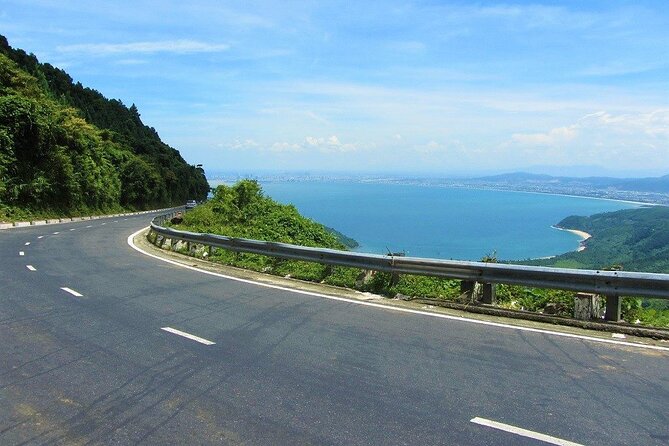
If you only do one thing on this trip, do the Hai Van Pass stretch. It’s described as the most scenic hillside roads in Vietnam, with a view from the top that includes sky, ocean, and surrounding mountain roads.
Lap An Lagoon: quick beachy calm and seafood lunch potential
Lap An Lagoon is a smaller lagoon with turquoise water on one side and a long beachfront on the other. If you arrive around lunch time, it’s a good excuse to eat seafood near the local restaurant and fishing village area.
Why it’s worth a stop: it gives you a softer, calmer counterpoint to the highway views. It’s also a good reset if you’ve been traveling and want a quick break without committing to a long hike.
What to watch: this works best as a short stop. If you expect a full beach day, you’ll likely lose time elsewhere.
Lang Co Beach: the storks-and-bay kind of view
Lang Co Beach is described as the Village of the Storks, right at the bottom of Hai Van Pass. It’s also known for being one of the world’s beautiful bays, and it sits at a point where you feel the shift between climatic zones.
Why it’s worth it: you get a classic “coast + mountain road” moment. It also sets up great photos because you’re watching the road you’ll soon climb.
What to watch: plan for wind and sun. Even if the drive is scenic, the coast can feel strong on exposed spots.
Hai Van Pass: cloud-mountain views plus old fort remnants
Hai Van Pass (also called the Cloudy Pass) is a top driver for Vietnam road trips for a reason. The road is well maintained, ascends from the coast above 1,000 meters, and at the top you can see remnants of old fortifications.
A key detail: most through-traffic runs through a tunnel at the base of the mountain, so this road is mostly for tourists. That usually means a calmer driving experience and more chances to pull over safely for photos.
What you’ll enjoy: the slow, scenic climb and the chance to pause. You also get a better sense of why this area matters historically, since the pass includes visible remnants of past defenses.
Danang classics you can add: Marble Mountains and Monkey Mountain

Once you reach Da Nang, the stops turn more “city culture + viewpoints + caves” than highway scenery. This is where your transfer starts to feel like a real day trip.
Marble Mountain: caves, sanctuaries, and stone-craft culture
Marble Mountains are known for cave entrances, tunnels, and the possibility of climbing to the summit of Thuy (Water) Mountain. Inside, you’ll find Buddhist sanctuaries in the caves, which adds a spiritual feel to the climb.
Practical payoff: the area is also known for stone sculpture making and stone-cutting crafts nearby. Even if you don’t buy anything, it helps you understand how people build their local economy around the stone.
What to watch: cave routes and stairs mean this isn’t a “sit down and snack” stop. If your group has mobility limits, you may want to keep it short.
Monkey Mountain / Son Tra peninsula: pagoda views on the edge of the city
Son Tra peninsula sits about 10 km northeast of Da Nang city. The service description frames it as a big chunk of land that surrounds Da Nang Bay, and it pairs nicely with a viewpoint stop at Lady Buddha Pagoda (also called Linh Ung Pagoda).
Why it works: you get a sweeping sense of the coastline and the peninsula without having to commit to hours of hiking. It’s a popular spot for a reason—views here are the point.
What to watch: treat it as a viewpoint stop first. If you also want long trails, plan extra time, especially if the route is part of a bigger 7–10 hour day.
Ba Na Hills: cable car up, Golden Bridge area near

Ba Na Hills is described as a hill station and resort area in the Truong Son Mountains west of Da Nang. The service notes it’s sometimes compared locally to Da Lat, and it also points out a French colonial history starting in 1919.
The big draw is transportation up to the hill area via the Ba Na Cable Car. It’s described as holding a world record for the longest non-stop single track cable car at 5,801 meters. And near the resort area you’ll find Linh Ung Pagoda and major attractions like the Golden Hand Bridge.
What you’ll enjoy: this is a “change of scenery” stop. You leave coastal and city views and move into a higher, cooler, attraction-heavy zone.
What to watch: Ba Na can easily turn into a time-sink. This is worth it if your group wants the iconic highlights, but if your goal is heritage sites or beaches, you may want to shorten your time there.
If you go farther toward Hoi An: An Bang Cemetery and My Son Sanctuary

This transfer can connect your route toward Hoi An-side sights. Two options from the provided list stand out because they change the tone of your day: An Bang Cemetery and My Son Sanctuary.
An Bang Cemetery: the so-called Tombs City of the Ghosts
An Bang Cemetery is described as a tranquil village site near Thuan An Beach, about 20 km east of Hue. It’s commonly known as City of Ghosts, with hundreds of colorful tombs and mausoleums in different shapes.
Why it’s interesting: it’s a cultural site that feels local and quiet. Even if you’re not into cemeteries, the scale of the artwork and architecture tends to grab people’s attention.
What to watch: it’s also an emotional place for many people. Keep the pace respectful and avoid treating it like a casual photo walk.
My Son Sanctuary: Champa-era architecture and UNESCO status
My Son Sanctuary is described as an area with Hindu-like architecture connected to the Champa Kingdom. It’s about 69 km from Da Nang city and around 45 km from Hoi An Ancient Town, and it was recognized as a UNESCO World Heritage Site in 1999.
Why it’s valuable: this is the kind of stop that adds meaning to your coastal route. Instead of only scenery, you’re looking at Central Vietnam’s older cultural layers.
What to watch: heritage sites can require walking and uneven ground. Plan comfortable shoes, and remember this isn’t usually a 20-minute stop.
The drivers and car comfort: what you can expect from the people behind the wheel

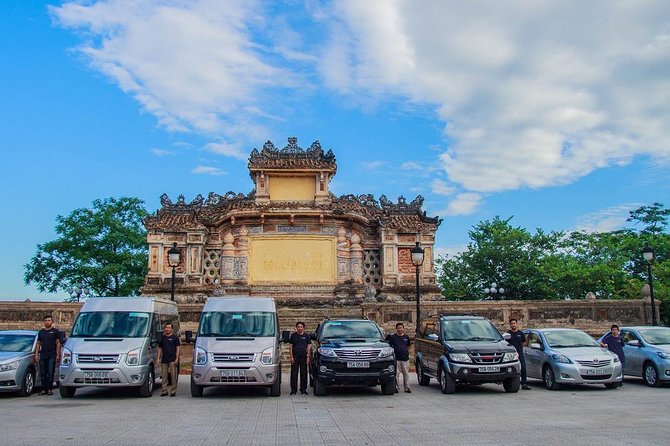
This service emphasizes an experienced and friendly driver who speaks basic English. In the feedback attached to this service, certain names pop up with a theme of energy, punctuality, and helpful local information, including Bo, Viet, Bi, Hung, and Nhan.
That matters more than it sounds. When you have a driver who can explain what you’re passing, you spend less time guessing and more time enjoying. It also helps with timing—like when to stop for views or where lunch makes sense.
Comfort-wise, the car or mini van is described as air-conditioned, with fuel, road toll, and parking included during sightseeing transfers. One review also mentioned WiFi in the car, but it’s not listed as a guaranteed inclusion, so I’d treat it as a nice bonus if it appears.
Small practical tip: when the driver’s English is limited, Google Translate-style tools can bridge the gap fast for stop choices and timing.
Price and value: what $10 per person covers and what it doesn’t

The listed price is $10.00 per person, and the service states it’s a flat fare for up to 3 travelers. It also highlights no hidden fees or surge pricing.
That’s value because it removes the classic “transfer math.” You’re not negotiating taxi costs, paying different amounts by the hour, or getting hit with surprise add-ons for roads. And since fuel, tolls, and parking are included during the transfer portion, the day stays predictable.
What’s not included:
- Food and drinks
- Tickets to sightseeing places
- Tipping or gratuities for the driver
- A tour guide (available with surcharge)
So think of your money in two buckets:
1) Transport and driving time: handled by the flat fare.
2) Your personal sightseeing costs: entrances and meals you choose at stops.
If you’re traveling as a group of 2–3, the “up to 3 travelers per flat fare” point can make this one of the better bargains for Vietnam’s coastal route—especially compared with paying for multiple taxis or losing time to public transport connections.
Things to watch before you book: the one risk to take seriously
Most of the described experience focuses on smooth, safe driving and punctual pickup. Still, one strongly negative note reported unsafe driving behavior, including abrupt changes in direction and concerns about handling.
I can’t predict what your driver will be, but you can reduce risk with simple steps:
- Confirm your pickup time and location clearly before you go.
- Set expectations for the pace and stop length when you arrange sightseeing.
- If anything feels off—like speeding, sudden stops, or unclear route decisions—say something right away.
Private transport is safer than random coordination, but it still depends on the driver. That’s the one variable you can’t fully control.
Who this private transfer suits best
I’d recommend this for you if:
- You want door-to-door convenience between Hue and Da Nang without public transport stress.
- Your group has mixed interests, like one person wanting beaches and another wanting heritage or caves.
- You prefer planning stops in advance rather than improvising once you’re already tired.
- You’re traveling with kids or anyone who benefits from a car and AC on long road stretches.
It’s also a good match if you’re chasing the Hai Van Pass drive as a highlight, not just an in-between stage.
You might want a different style of trip if:
- You want every stop guided by a formal tour guide included in the price (a guide is available with surcharge).
- You’re trying to squeeze in too many “major attraction” stops in one day and risk rushing through everything.
Should you book Hue to Da Nang via Hai Van Pass and More?
Yes, book it if you want a smooth, private way to turn a transfer into a scenic day. The combination of private comfort, the option to stop at places like Lap An Lagoon, Lang Co, and Hai Van Pass, and the flexibility to add Danang or Hoi An–area highlights is strong value for the money.
Do it with one mindset: plan your stops so the day feels enjoyable, not chaotic. If you keep your lineup realistic and budget for tickets and meals, this transfer becomes one of the smartest ways to experience Central Vietnam’s coastal highlights without wasting time.
FAQ
What is included in the transfer price?
Fuel, road tolls, and parking fees during sightseeing transfers are included, along with an air-conditioned car/mini van and an experienced basic-English speaking driver. Sightseeing stops are available depending on the options you choose.
Are pickup and drop-off included?
Yes. Pickup is offered from your hotel area, and the service is described as door-to-door between Hue and Da Nang (with sightseeing stops arranged along the way, and your plan can extend toward additional sights).
How long does the transfer take?
It can take about 3 to 10 hours, depending on whether you do a direct transfer or add sightseeing stops.
Can I prearrange sightseeing stops during the drive?
Yes. You can choose a direct transfer or include options for sightseeing stops on the way, and you can prearrange stops with your driver.
Are tickets and food included?
No. Tickets to sightseeing places and food and drinks are not included.
Is a tour guide included?
A tour guide is not included in the base service. A tour guide is available with a surcharge.
What sightseeing stops are available?
Stops mentioned include Lap An Lagoon, Lang Co Beach, Hai Van Pass, An Bang Cemetery, Marble Mountain, Monkey Mountain/Son Tra with Lady Buddha Pagoda, Ba Na Hills (including the cable car area and Golden Hand Bridge), and My Son Sanctuary.
Is there free cancellation?
Yes. You can cancel for a full refund up to 24 hours in advance of the experience’s start time.
Is this a private activity?
Yes. It’s private, and only your group participates.