
REVIEW · ATHENS
Athens Highlights: Half-Day Private Tour With a Local
Book on Viator →Operated by Transfer To Athens · Bookable on Viator
Athens in five hours, without the stress. This private highlights loop is a smart way to see Athens’ big names without wrestling buses, lines, and parking. I like the hotel/Airbnb (and Piraeus port) pickup plus a comfortable vehicle with A/C, Wi‑Fi, and bottled water built in.
I also like that you can choose a morning or afternoon start and customize how hard you want to go. The drivers can bring local context, and the best experiences often come down to communication and pacing—people have praised guides like Maria (port pickup and traffic wizardry), Nico (especially helpful with mobility needs), and Stefano (clear WhatsApp/text updates and good ticket advice).
One drawback to plan for: major sites require separate entrance tickets, and the driver is not described as a licensed on-site tour guide. If you want a deep, official narration at each monument, you may need to request a licensed guide (availability can vary).
In This Review
- Key points to know before you go
- Why this 5-hour Athens car circuit works for first-timers
- Price and the entrance fees you’ll still pay
- Acropolis: the 60-minute window that needs a ticket plan
- Acropolis Museum: why it’s more than a ticket add-on
- Syntagma Square and the Greek Parliament Evzones show
- Panathenaic Stadium: marble that connects two Olympics
- Mount Lycabettus: the viewpoint stop that makes the route feel complete
- Academy of Athens: neoclassical symbolism for people who like details
- Ancient Agora of Athens: ruins you can actually imagine
- Getting the most from your driver: local insight, plus realistic expectations
- Who this half-day tour suits best
- Should you book it?
- FAQ
- Is this tour private or shared?
- How long is the tour?
- Are entrance tickets included in the price?
- Does the tour include pickup and drop-off?
- What size vehicle will we get?
- What’s included during the drive?
- Can we customize what we see?
- What do we need to show up with for tickets?
Key points to know before you go
- Private, door-to-door pickup from Athens city center and Piraeus port, with a sign and a real human to find you
- Luxury transport with Wi‑Fi, A/C, and bottled water, plus Sedan (1–3) or Minivan (4–7) sizing
- Flexible timing: pick a morning or afternoon departure and adjust the pace
- Big-ticket sites on the route, but entrance fees are separate (Acropolis, Acropolis Museum, Ancient Agora)
- Drivers provide local insight, not licensed site guiding, which changes how much you’ll hear inside monuments
- Traffic matters, so early departures are often the difference between smooth and stop-and-go
Why this 5-hour Athens car circuit works for first-timers
Athens looks simple on a map. On the road, it’s a different story. This tour is built around a private vehicle so you spend more time at sights and less time figuring out how to get between them.
You’ll also get a format that’s ideal for your first visit: a classic sweep of the Acropolis area, then a pivot through central landmarks (Syntagma Square, the Parliament, the Panathenaic Stadium), and finally a viewpoint moment on Mount Lycabettus before ending with the Ancient Agora. It’s the kind of route that helps you connect pieces of Athens history without feeling like you missed something essential.
Price and the entrance fees you’ll still pay
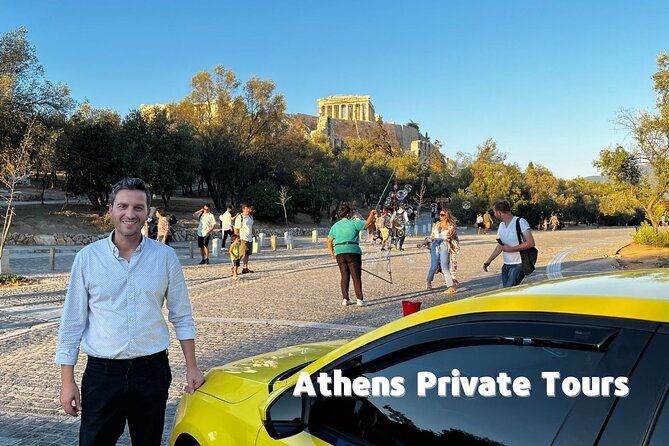
The tour price is $127.35 per person for about five hours. What you’re really paying for is the private transport, pickup/drop-off, and an English-speaking driver who can manage the timing and crowd flow.
Then there’s the part you should budget for separately:
- Acropolis: €30 per person (you must purchase in advance; limited availability)
- Acropolis Museum: €20 per person
- Ancient Agora of Athens: €20 per person
- Greek Parliament: free (as listed)
- Mount Lycabettus: free (as listed)
- Panathenaic Stadium: listed as admission ticket not included (the exact fee isn’t stated here, so confirm at the ticket area)
- Gratuities are not included
You’ll also see National Archaeological Museum (€12 per person) listed as an entrance fee not included. That’s a “heads up” item if your plan ever shifts during customization.
My practical take: if you already know you’ll want Acropolis + the Museum + the Agora, your total cost still makes sense because you’re bundling the transportation and tight scheduling. If your group is more into viewpoints and street life than paid museums, you can feel the added entrance costs quickly—so tell your driver what you want and what you can skip.
Acropolis: the 60-minute window that needs a ticket plan

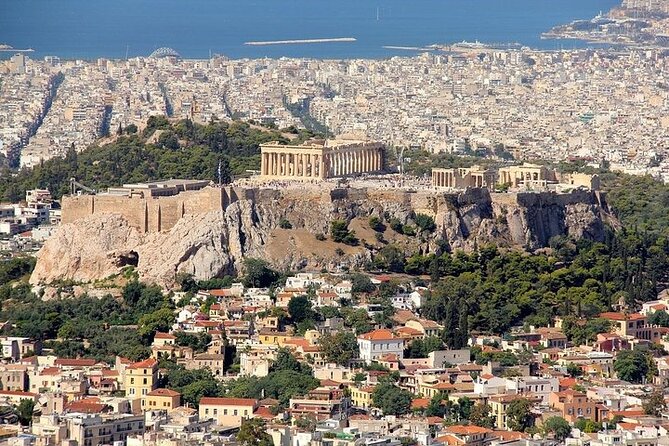
The Acropolis stop is the headline. You’ll be walking on marble paths above the city, taking in the Parthenon, the Erechtheion with its Caryatid columns, and the massive Propylaea that once framed the approach to the sacred hill. The big pay-off here is the scale—this is where Athens turns from modern city to ancient idea.
But here’s the reality check: the Acropolis ticket is not included and is described as limited availability, so don’t treat this as something you can solve last-minute. If you want a smooth entrance, buy ahead and arrive ready for a ticket check.
Timing inside a one-hour stop can be tight. You’ll likely see the major viewpoints and key buildings from your route, but you won’t have hours to wander every corner. If your group likes photos, pick a comfortable pace and don’t stop every 20 steps unless you truly mean to.
Also consider this if you’re traveling with mobility limits: the tour includes hotel pickup and flexible pacing, and some guides have helped with accessibility needs, but you should still plan for walking on uneven historic ground.
Acropolis Museum: why it’s more than a ticket add-on
Right at the foot of the Acropolis, the Acropolis Museum is a modern building with a clear mission: show you the art and objects from the Sacred Rock in a way that makes sense visually.
The standout here is the Parthenon Gallery, where surviving Parthenon marbles are displayed in sequence beneath glass walls with direct views of the temple itself. You’re not just looking at sculptures—you’re seeing context, order, and how the pieces relate.
The museum stop is about 45 minutes, and that’s a good length for first-timers who don’t want a full museum marathon. You’ll get the emotional impact (and the “oh, that’s why it matters” feeling) without exhausting your day.
A small drawback: if you end up paying for Acropolis tickets and you’re tempted to rush the museum, you’ll feel like you bought a separate attraction you didn’t fully use. Aim to slow down enough to take in the Parthenon Gallery instead of treating it like a quick corridor.
Syntagma Square and the Greek Parliament Evzones show
From the Acropolis area, the tour shifts into central Athens with a stop at Syntagma Square and the Hellenic Parliament in the neoclassical Former Royal Palace.
The main moment here is the Tomb of the Unknown Soldier and the ceremonial changing of the guard by the Evzones in traditional uniform. Even if you’re not a ceremony person, this is one of those short stops that resets the mood. You go from stone monuments to living national symbolism right in the middle of the city.
It’s listed as about 15 minutes, and that’s perfect for catching the guard moment without burning time you might want for the Acropolis and Museum.
Panathenaic Stadium: marble that connects two Olympics

Next is Panathenaic Stadium, also called Kallimarmaro. This is one of the most memorable Athens landmarks because it’s both ancient and modern in a direct way.
The stadium is the only all-marble stadium in the world (as described here), originally tied to the Panathenaic Games, then rebuilt in white Pentelic marble. In 1896, it became the venue for the first modern Olympic Games, which gives this stop a built-in story about continuity, not just ruin.
You’ll have about 10 minutes, enough to walk in, look at the oval marble setting, and picture the arena when it was full. If you’re a sports fan, you’ll get extra value here; if you’re not, it still hits because of the visual contrast—white marble in the middle of busy Athens streets.
Mount Lycabettus: the viewpoint stop that makes the route feel complete

Mount Lycabettus is where the tour rewards you for making it through city driving and paid entries. The summit gives you panoramic views stretching from the historic center toward the distant blue waters of the Saronic Gulf.
It’s about 20 minutes on the mountain, with options to reach the top via a scenic walk through pine paths or by funicular. At the summit sits the small Chapel of St. George, plus a terrace and café area.
This is a good stop to time intentionally. You’ll get different moods depending on the day’s light, and sunset can be a big draw. Even if you’re not chasing a perfect golden-hour photo, Lycabettus helps you “zoom out” and understand where everything sits relative to each other.
One practical consideration: it’s a viewpoint area, so comfortable shoes matter more than you might expect. Also, if your group doesn’t like stairs, choose the funicular option in advance when possible.
Academy of Athens: neoclassical symbolism for people who like details

The Academy of Athens is easy to overlook if you’re sprinting from one famous site to another. But it’s visually strong: neoclassical design, Ionic columns, and sculptural elements tied to wisdom and learning.
The façade includes symbolic figures like Athena and Apollo, plus statues of philosophers Plato and Socrates flanking the entrance. The building also connects to the idea of Greece’s educational tradition, inspired by the ancient Academy founded by Plato.
This stop doesn’t scream for attention like the Acropolis, but it’s a satisfying breather between heavy hitters. It’s also a reminder that Athens isn’t only about ancient stone—it’s about how ideas have been celebrated in architecture across centuries.
Ancient Agora of Athens: ruins you can actually imagine
The Ancient Agora was the social and political heart of classical Athens—commerce, politics, philosophy, and daily life all happening under the same sky.
You’ll spend about 45 minutes, and the time is well used because the Agora is made of several “anchors” that help you build a mental picture. As you walk, you’ll see the Stoa of Attalos, which has been rebuilt as a museum housing artifacts from everyday life. You’ll also encounter the Temple of Hephaestus, one of the best-preserved Doric temples in Athens.
Here’s the value: Agora ruins give you a different kind of “wow” than the Acropolis. The Acropolis feels like a monument you look up at. The Agora feels like a place people argued, traded, worshipped, and negotiated. That context turns scattered stones into a functioning city in your head.
The ticket for the Agora is €20 per person and is not included, so include that in your budget decision early.
Getting the most from your driver: local insight, plus realistic expectations
This tour’s backbone is the driver. The best part is that you can get day-of help with pacing and logistics, especially with tricky traffic.
In multiple strong experiences, drivers communicated clearly ahead of time and handled the “find you at the port/hotel” moment smoothly. People have praised guides like Stefano for clear pre-trip messaging and good ticket booking advice, and Maria for excellent port pickup plus navigation through intense traffic. Others highlighted Panos for managing luggage and making the day feel fun and organized.
Still, manage expectations on the guiding style. The drivers are described as local experts but not licensed tour guides who can provide detailed, official narration inside sites. If you want that level of deep storytelling at every stop, the notes say you can request a licensed tour guide depending on availability. That can matter a lot for visitors who expect a talking-guide experience rather than a driver-led highlights circuit.
One more practical tip from real-world quirks: luggage can affect vehicle choice. If your group has extra bags, tell them exactly how many and what size to avoid a vehicle mismatch. In at least one case, the operator solved it by sending a bigger vehicle without extra cost—but the smoother move is to prevent it early.
And finally: traffic. Athens traffic can swallow time. If you’re booking for a day when you dislike delays, choose an earlier start when possible.
Who this half-day tour suits best
This works best for:
- First-time visitors who want the big anchors of Athens in one organized sweep
- Groups who value private comfort (A/C, Wi‑Fi, bottled water) and door-to-door pickup
- People who want flexibility—morning or afternoon—and the option to adjust pacing
- Travelers who like history but don’t want a full-day museum sprint
It may not be the best fit if:
- You want a licensed, in-depth guide narration inside every site without any gaps
- Your group wants a slower, linger-at-every-wall experience (the total time is about five hours)
- You hate the idea of paying separate entrance tickets for multiple stops
Should you book it?
I’d book this if your goal is a smooth first hit at Athens: Acropolis + Museum + a few central landmarks, with a viewpoint finale on Lycabettus. The value is strongest when you show up with Acropolis and Agora tickets handled ahead of time, and you’re ready to follow your driver’s rhythm.
I would skip or rethink it if you’re hoping the driver will function like a full licensed guide at every monument, or if your group has low patience for extra ticket lines and traffic delays. In that case, you’ll be happier investing in a plan that guarantees deeper on-site guiding.
Bottom line: for many visitors, this is a practical way to get oriented fast, see the icons, and still feel relaxed while doing it.
FAQ
Is this tour private or shared?
This is a private tour/activity, meaning only your group participates.
How long is the tour?
It’s about 5 hours (approximately).
Are entrance tickets included in the price?
No. Entrance fees are not included. Acropolis (€30 pp), Acropolis Museum (€20 pp), and Ancient Agora of Athens (€20 pp) are listed as separate costs, while the Greek Parliament stop is free.
Does the tour include pickup and drop-off?
Pickup and drop-off are included for Athens hotel/Airbnb residences and Piraeus Port, and the Athens city center pickup/drop-off is without extra charge. Airport pickup/drop-off depends on vehicle type and may cost extra.
What size vehicle will we get?
Groups of 1–3 use a luxurious Sedan vehicle, while groups of 4–7 use a spacious Minivan.
What’s included during the drive?
The vehicle includes Wi‑Fi, A/C, and bottled water. You’ll also get an English-speaking tour driver.
Can we customize what we see?
Yes. Because it’s private, you can customize the program according to your needs.
What do we need to show up with for tickets?
All excluded entrance fees must be purchased and paid directly on site on the day of the tour. The Acropolis ticket is noted as needing advance purchase due to limited availability.