REVIEW · HUE VIETNAM
DMZ Half-Day Tour from Hue: Vinh Moc Tunnels
Book on GetYourGuide →Operated by Hue Transfers · Bookable on GetYourGuide
That line between North and South still feels close. This DMZ half-day outing from Hue pairs the symbolism of the Hien Luong Bridge with the real-world shock of the Vinh Moc Tunnels. I especially like the way the route walks the 17th-parallel story in order, instead of tossing random war sites at you.
I also like the practical comfort: a private car picks you up from your Hue hotel or homestay, with a driver who speaks basic English and even keeps things moving on your schedule. In the best moments, you might get extra local context from a proper guide at the tunnels, like Thach, who brought the tunnel history and firsthand survival connections into focus.
One consideration: the tunnels are underground. If you have claustrophobia, this isn’t for you, and it’s also not recommended for limited mobility due to walking and confined spaces.
In This Review
- Quick hits
- The DMZ feels real when you follow the border line
- Private car pickup from Hue: less hassle, more time for the story
- Hien Luong Bridge: a short stop with heavy meaning
- Ben Hai River: the DMZ’s center, along the 17th parallel
- Vinh Moc Tunnels: the underground village that changes your sense of time
- Claustrophobia check and walking reality
- Timing: why it’s billed as half-day, but feels like a full mission
- Value and pricing: why $24 can be a smart deal
- Guides and drivers: the difference you’ll feel in the tunnels
- What to expect on the drive: scenery and how the day flows
- Who should book this DMZ half-day from Hue
- Should you book this DMZ Half-Day Tour to Vinh Moc Tunnels?
- FAQ
- Where does the tour start in Hue?
- How long is the DMZ half-day tour from Hue?
- What stops are included on the tour?
- Is there a tour guide at Vinh Moc Tunnels?
- What is included in the price?
- Are entrance tickets included?
- What should I bring for the visit?
- Is the tour suitable for people with claustrophobia?
- Can I cancel and get a full refund?
Quick hits
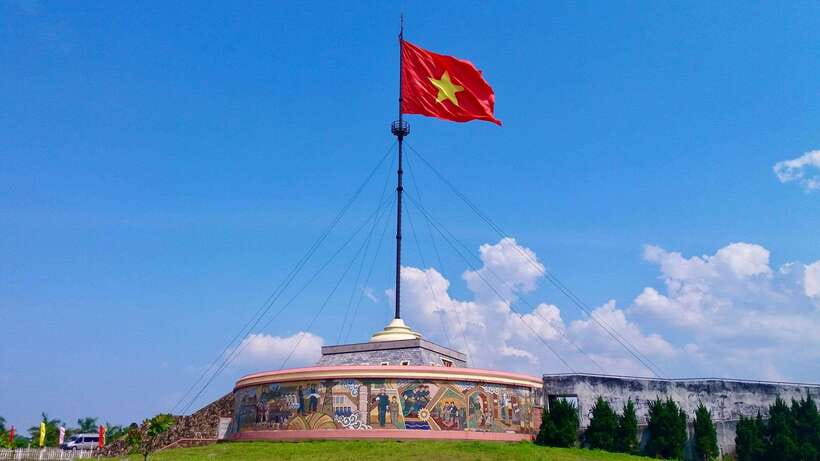
- Hien Luong Bridge photo stop on the historic border line after the 1954 Geneva Accords
- Ben Hai River visit along the 17th parallel, the center line of the DMZ
- Vinh Moc Tunnels underground village survival stories, built in 1965
- Private door-to-door car/van pickup in Hue with bottled water in the vehicle
- Bring comfortable shoes and a hat; you’ll walk more than you think
- Smoking is not allowed during the tour
The DMZ feels real when you follow the border line
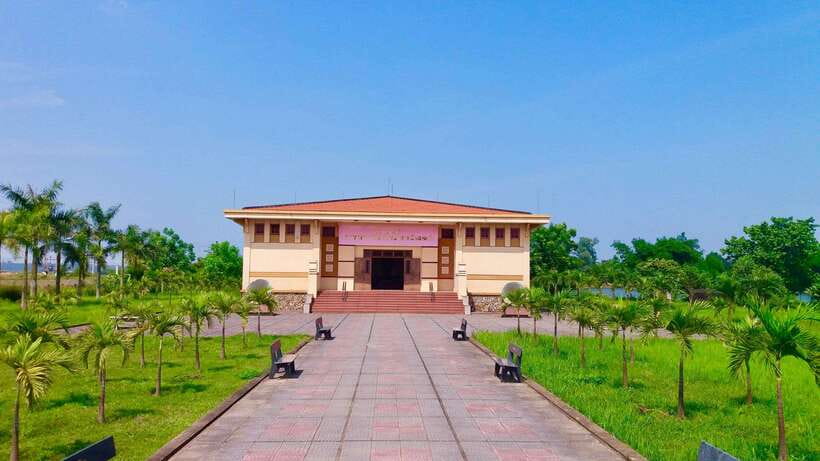
A DMZ tour can turn abstract fast. Here, the route keeps tightening the story. You start with a bridge that marked the border after the Geneva Accords, then move to the river that anchored the 17th parallel, then you go underground where people literally had to live through bombing.
What makes this work is the pacing. You get a photo moment where the history has a shape, then you get a short, focused stop where the border becomes geography, and then you spend real time in the tunnels—long enough to feel what it means to disappear underground.
Private car pickup from Hue: less hassle, more time for the story
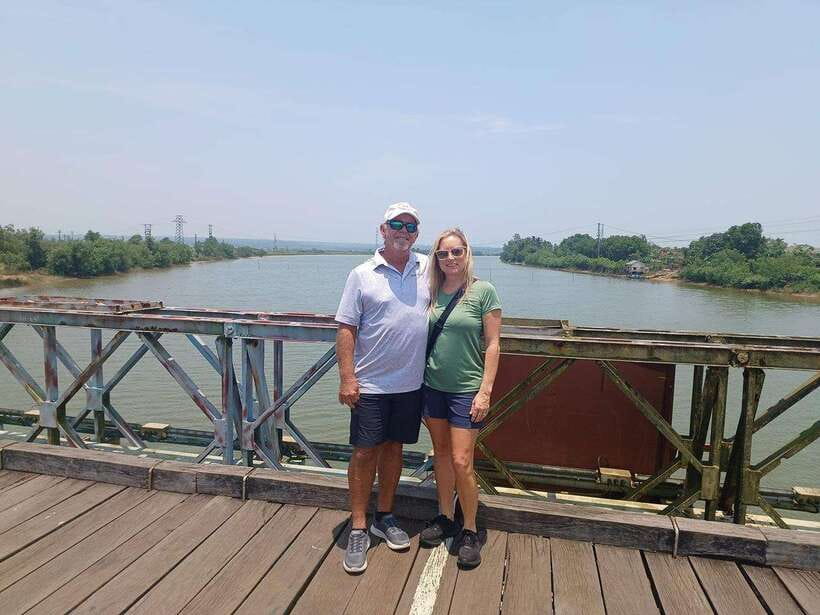
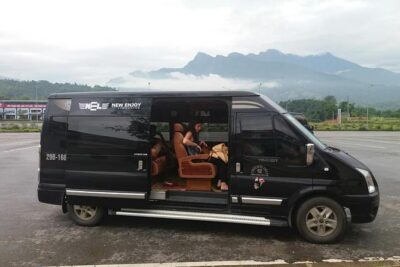
This tour runs in a private format. That means you’re not herded into a big group at the last second. The driver meets you at your hotel lobby in Hue (if you choose pickup), and you go from there by car/van.
The total duration listed is 330 to 510 minutes. In plain terms, it’s a full chunk of the day, not a quick half-hour detour. But it also means you’re not spending your time figuring out transport between sites. On routes like this, that convenience matters more than you’d think, especially when the main draw is one concentrated area.
Also pay attention to where you end up. Depending on your option, you can drop off back in Hue, or continue on to Hội An or Phong Nha – Ke Bang National Park. That’s a nice way to stitch the DMZ stop into a bigger Vietnam plan instead of backtracking.
Hien Luong Bridge: a short stop with heavy meaning
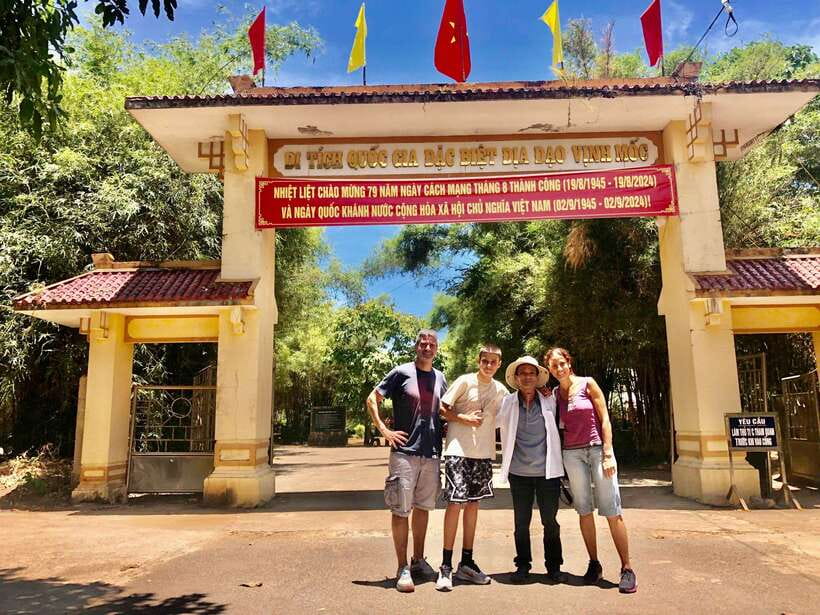
Hien Luong Bridge is a photo stop, about 20 minutes. It’s brief by design. You’re there to see the landmark and connect it to the line it once represented.
The key detail to remember: this bridge was tied to the border between North and South Vietnam after the 1954 Geneva Accords. It’s not just a structure for pictures. It’s a reminder that peace and reunification weren’t just slogans—they were mapped out in places like this.
If you’re the type who likes context, this is your moment to slow down for a minute before moving on. Look at the span, then mentally tie it to the idea of a dividing line that people had to live beside.
Ben Hai River: the DMZ’s center, along the 17th parallel
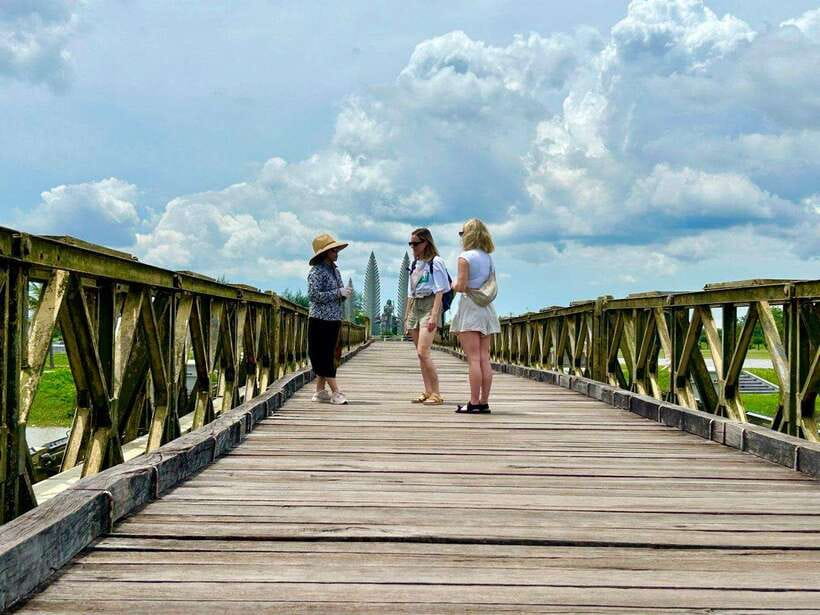
Next comes the Ben Hai River visit, around 15 minutes. This stop is shorter, but it’s one of the most important links in the logic of the DMZ.
The Ben Hai River flows along the 17th parallel, and it formed the center of the DMZ. The DMZ wasn’t a random “buffer area.” It was set up to separate zones and reduce direct conflict pressure, with demilitarized space on each side.
You don’t need to be a military history nerd for this to land. You just need to grasp that borders can be rivers, not only fences. When you’re standing by the river’s line, the whole idea of “demilitarized” stops feeling like a label and starts feeling like a geography lesson with human consequences.
Vinh Moc Tunnels: the underground village that changes your sense of time
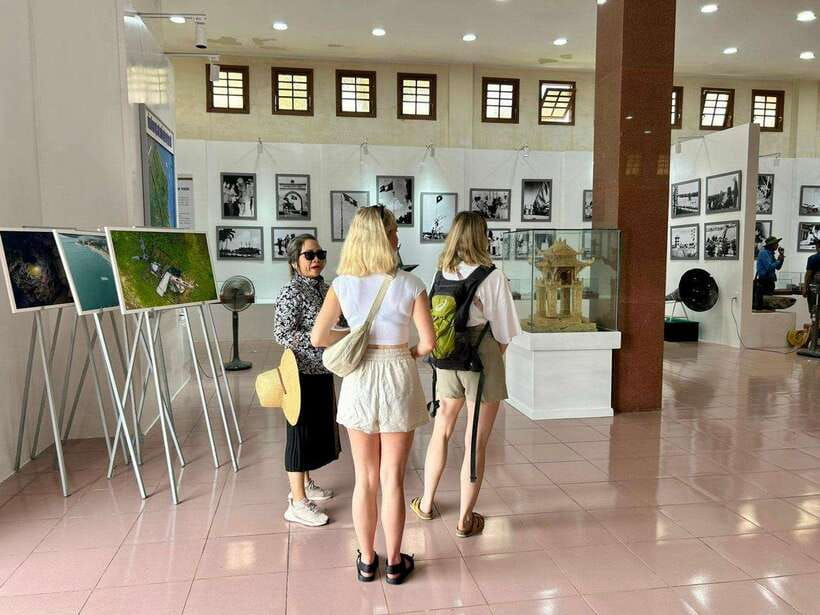
This is the main event. You’ll have a photo stop at Vinh Moc Tunnels for about 1 hour, then a guided tour portion for roughly 30 minutes. That mix is important. The photo time lets you take in the scale and the entrances, and the guided segment helps you understand what you’re actually looking at.
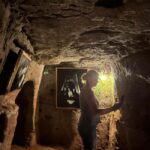
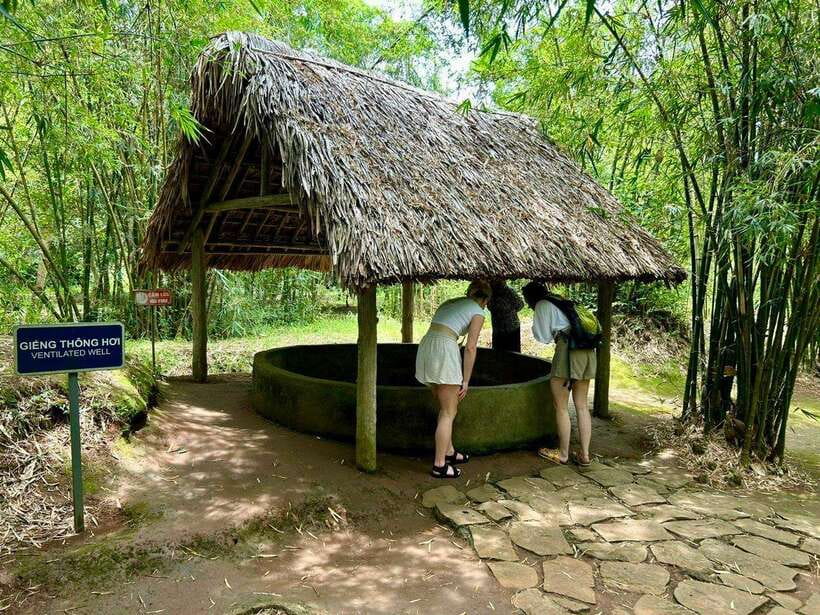
These tunnels were built in 1965, and they’re remembered as an underground village where residents survived during intense bombing. That phrasing matters. This wasn’t just sheltering in a pinch. It was living, working, and organizing life below ground under threat.
A practical way to prepare mentally: don’t expect an easy stroll. Even with a guide, you’re moving in and around underground spaces that feel tight and shut in. If you’re lucky, your guide will connect what’s visible to wartime survival patterns—like how people used the underground environment to reduce exposure.
One detail from strong experiences: having a guide who can bring the human side is a big difference. In some tours, you may meet a guide like Thach, who has talked with villagers and descendants connected to the tunnel era. When that happens, the tunnels stop being “impressive engineering” and start being a story about adaptation.
Claustrophobia check and walking reality
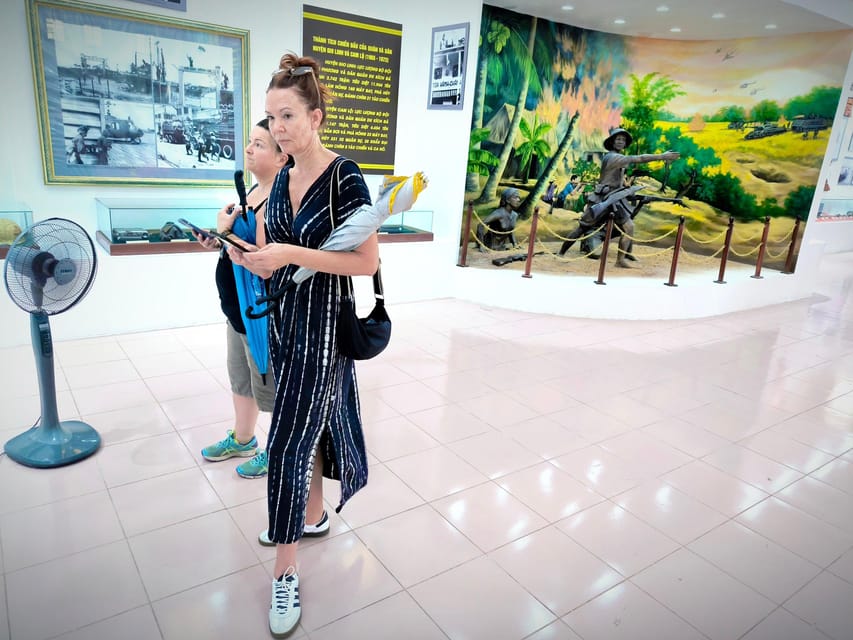
Let’s be blunt: this tour includes going underground, and it’s not recommended for people with limited mobility. It’s also not suitable if you have claustrophobia.
Even if you’re comfortable in enclosed spaces, plan for some “body logistics.” Wear comfortable shoes. You’ll have a moderate amount of walking, and you’ll want stable footing when you’re in areas that feel dimmer and more enclosed than daylight.
Bring a hat and use sunscreen. Weather can vary, and daylight stops can be sunny while tunnel areas feel cooler. In other words, you’ll want to be prepared to layer mentally: warm outside, calmer inside.
And yes, bottled water is provided in the car. Still, I like having extra water on hand because your visit includes outdoor time and travel.
Timing: why it’s billed as half-day, but feels like a full mission
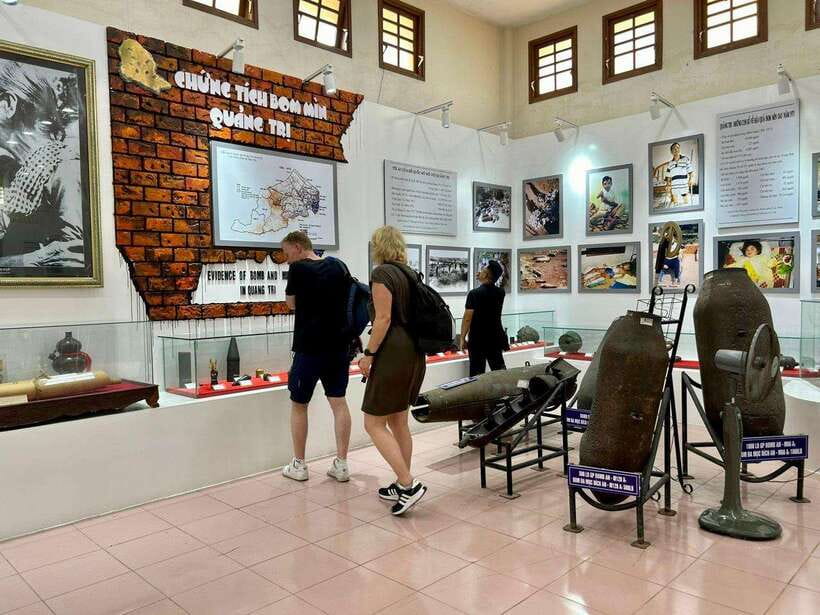
You’re going to spend most of your time on transportation and those DMZ sites. Since the tour length is 330 to 510 minutes, it covers a good portion of the day—from pickup to drop-off.
The most efficient mental model is:
- one stop to set the history (bridge, short photo time)
- one stop to ground the geography (river, brief visit)
- one place that takes over your attention (tunnels, photo + guided portion)
That last one is where “half-day” can feel smaller than it is. You won’t be able to rush the tunnels without missing the point. If you’re the type who wants to read every panel and ask questions, plan on stretching a bit at Vinh Moc.
Value and pricing: why $24 can be a smart deal
At about $24 per person, the price can feel low for a private, door-to-door car/van experience. The value comes from the combination of things you’d otherwise piece together yourself.
You get:
- private car/van with hotel pickup in Hue
- a basic English-speaking driver
- bottled water in the vehicle
- road tolls and parking fees included
- a tour guide is optional, depending on your setup
What’s not included: entrance tickets and meals. That’s normal for this style of tour, but it’s worth planning for so you don’t arrive thinking everything is fully covered.
The real value is the “friction” you remove. Driving time and coordination time are the invisible costs on day trips. Here, you’re paying to avoid that, and you’re investing that time into the places that matter.
Guides and drivers: the difference you’ll feel in the tunnels
The driver experience tends to shape how smooth your whole day feels. In strong matches, the driver is punctual, professional, and careful on the road. Some drivers also build flexibility into the day—like handling extra stops or drop-offs without turning it into a headache.
At the tunnels, a guide can make a big impact. When you get someone who can explain both the timeline and the human survival angle, your tunnel visit becomes clearer fast. Some guides also have strong local connections, including conversations with people linked to the tunnel community and their descendants.
If you don’t get a full guide experience, the tunnel portion can feel more like you’re looking at a site and then filling gaps yourself. Still, even then, the physical scale and the underground design will do a lot of the work for you.
What to expect on the drive: scenery and how the day flows
The trip is structured around a concentrated set of stops, but the drive matters too. On the way back, you may travel through the Hai Van pass, which can add a scenic boost after the heavier history work. That’s not guaranteed in the details you’re given, but it’s an example of the kind of pleasant rhythm you can get between stops.
Bottled water is in the car, and you’ll have time built in for a photo break at each major location. The driver will handle the route and timing so you can focus on where you are rather than where you need to be next.
Who should book this DMZ half-day from Hue
This tour is a good fit if you want:
- a focused DMZ overview without spending the day wrestling with transportation
- the bridge-to-river-to-tunnels sequence that makes the border story easier to grasp
- a private-car setup that keeps your day flexible
It’s not a good fit if:
- you have claustrophobia
- you struggle with walking or enclosed spaces
- you’re looking for a “relax and roam” type of day
If you’re short on time in Central Vietnam but want something that feels grounded in real places, this is one of the stronger bets from Hue.
Should you book this DMZ Half-Day Tour to Vinh Moc Tunnels?
If you’re deciding, here’s my straight take: book it if you want a concentrated, place-based look at Vietnam’s DMZ story—with comfort getting there and enough time to actually understand the tunnels.
Skip it if enclosed spaces make you uneasy, or if you need a low-movement itinerary. The tunnel portion is the heart of the tour, and it’s not soft-pedaled.
If you can handle underground spaces and you’re curious about how history became geography and then became shelter, this is the kind of day that sticks.
FAQ
Where does the tour start in Hue?
Pickup is available from your hotel or homestay in Hue. The driver meets you at your hotel lobby if you choose the pickup option.
How long is the DMZ half-day tour from Hue?
The tour duration is listed as 330 to 510 minutes, depending on your selected time and routing.
What stops are included on the tour?
You’ll visit Hien Luong Bridge, the Ben Hai River area along the 17th parallel, and Vinh Moc Tunnels.
Is there a tour guide at Vinh Moc Tunnels?
A tour guide is optional, but there is a guided tour portion at the tunnels (about 30 minutes). Your experience may vary depending on the guide arrangement.
What is included in the price?
Included items are a door-to-door private car/van, a basic English-speaking driver, bottled water in the car, optional tour guide, and road tolls and parking fees.
Are entrance tickets included?
No. Entrance tickets are not included.
What should I bring for the visit?
Bring comfortable shoes and a hat. It’s also recommended to bring sunscreen and water to stay hydrated.
Is the tour suitable for people with claustrophobia?
No. The Vinh Moc Tunnels visit involves going underground and is not suitable for people with claustrophobia.
Can I cancel and get a full refund?
Yes. Free cancellation is available up to 24 hours in advance for a full refund.