REVIEW · HUE VIETNAM
Hue: Royal Tombs & Pagoda Tour By Dragon Boat & Private Car
Book on GetYourGuide →Operated by Hue Friendly Travel Company · Bookable on GetYourGuide
That first boat ride can make Hue click.
This Hue Royal Tombs outing pairs a 30-minute Perfume River cruise with three of the most striking Nguyen Dynasty mausoleums, plus a stop at Hue incense making. I love how the tombs feel spread out and peaceful rather than packed, and I also love the contrast between court-era stone symbolism and the living craft at Thuy Xuan incense village. One possible drawback: the dragon boat portion can feel a bit short and the river ride is not always the serene postcard moment you hope for, especially if you are sensitive to noise or pollution.
I also like the built-in pacing. Hotel pickup and an air-conditioned private car mean less time sweltering between sites, and it is easy to slow down because this is a private group. Names you might hear from drivers and guides like Hai or Trung show up in the way they explain the tombs and architecture, but the bigger win is simply having English support so you can connect details to what you are actually looking at.
If you want a super-relaxed day with lots of wandering and cafes, this might feel tight because it is designed to hit key sights in a 3–5 hour window. Also, entrance fees are extra and paid on-site, so it helps to keep some cash ready.
In This Review
- Key highlights to look for on this Hue royal tombs tour
- Perfume River dragon boat to Thien Mu Pagoda: the smooth start
- Thien Mu Pagoda: Hue’s oldest spiritual landmark in plain sight
- Minh Mang Tomb on Cam Khe Mountain: UNESCO and traditional form
- Khai Dinh Tomb on Chau Chu Mountain: the most unusual design
- Tomb of Tu Duc: lakes, gardens, and a king’s retreat
- Hue Incense Village in Thuy Xuan: make something, not just look
- The rhythm of the tour: private car help and smart pacing
- Price and what you should budget for in real life
- Timing: why the 3–5 hour window works for some, not for all
- Who should book this Hue Royal Tombs and Pagoda tour
- Should you book this tour?
- FAQ
- What does this Hue Royal Tombs and Pagoda tour include?
- How long is the tour?
- Which places do you visit?
- Are entrance fees included?
- Do I need cash for the sights?
- Is this tour private?
- Is an English guide available?
- Can I add the Imperial City?
Key highlights to look for on this Hue royal tombs tour
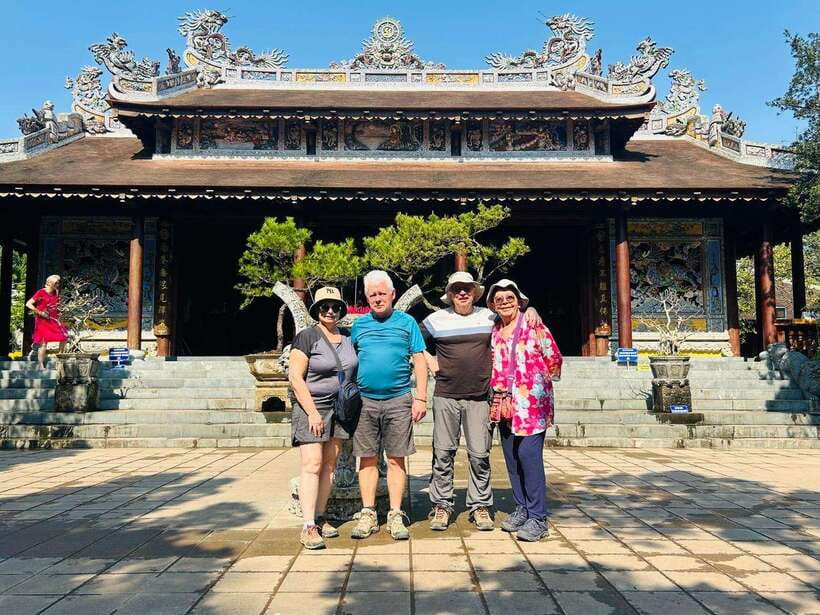
- Private dragon boat on the Perfume River tied to your visit of Thien Mu Pagoda
- UNESCO Royal Tombs: Minh Mang and Khai Dinh get special attention in this itinerary
- Tu Duc Tomb in a narrow valley with gardens and lakes you can actually feel
- Khai Dinh Tomb’s mixed Asian and European-style design that looks unlike most Hue tombs
- Hue Incense Village in Thuy Xuan where you can learn and make incense
- Hotel pickup, A/C private car, bottled water, and English help so you are not figuring everything out alone
Perfume River dragon boat to Thien Mu Pagoda: the smooth start
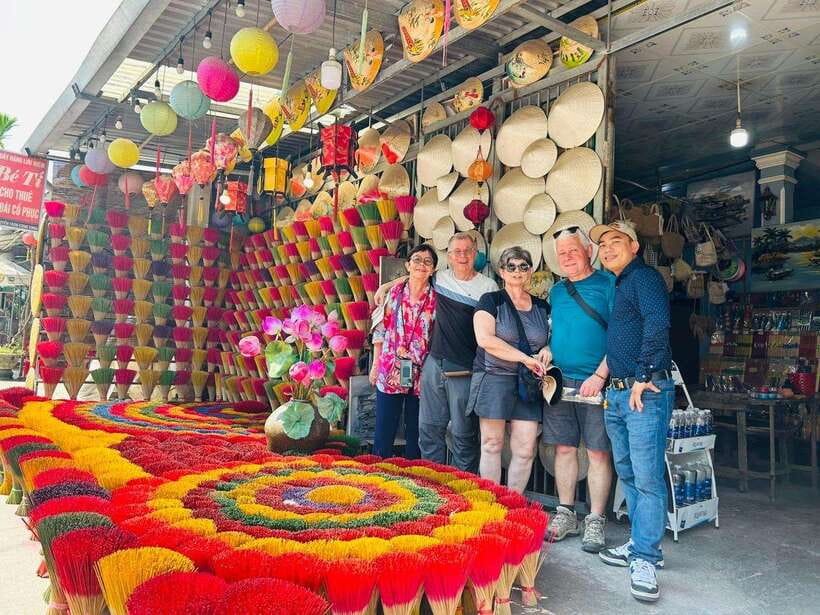
The day starts with hotel pickup in Hue and then you head toward the river for a private dragon boat cruise. The boat time is about 30 minutes, and it is part of the plan to reach Thien Mu Pagoda by water. If you have ever toured temples by foot and car only, this adds a different rhythm. You glide instead of march, and that small change matters when the heat is building.
One more practical note: because it is a boat ride, what you get is the river as it is, not the river as it looks in marketing photos. Some people find the ride more noisy than scenic, and others are fine with it because the payoff is what you do next—Thien Mu Pagoda.
Thien Mu Pagoda: Hue’s oldest spiritual landmark in plain sight
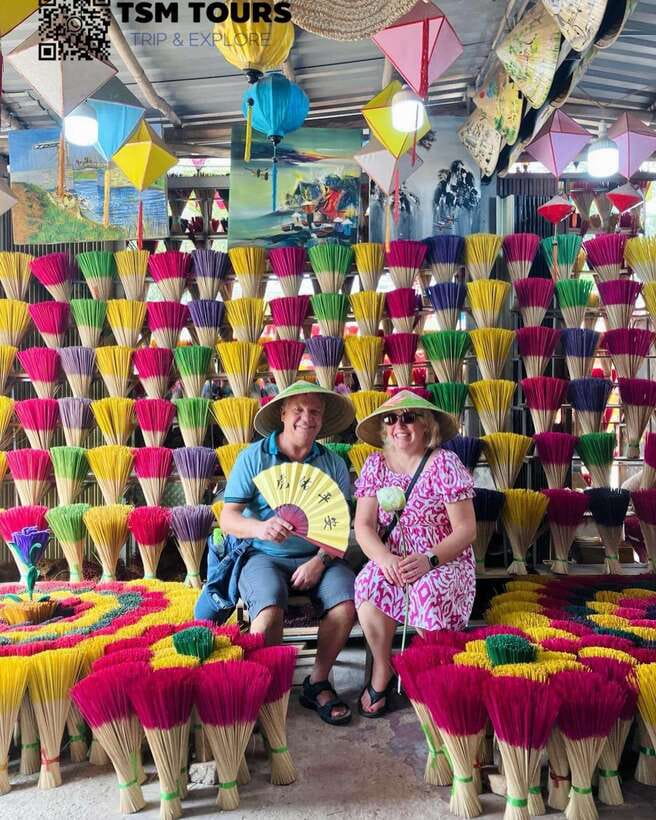
Thien Mu Pagoda is described as the oldest religious structure in Hue, and it is also one of the most impressive. It dates back to the 17th century, and it is tied to the legend of a local woman with spiritual connections. That legend angle is not just trivia. It helps you notice how the pagoda’s presence feels anchored in local belief, not imported style.
When you visit, take a slow lap and look at the pagoda as a whole before you hunt for the details. The setting along the river makes it feel like a real place of devotion, especially since monks and religious activities continue here. I find that the pagoda hits best when you treat it as a living site rather than a photo stop.
If you are tight on time, focus on two things:
- The pagoda’s main structure and how the river setting frames it
- The surrounding grounds, since the calm there is the point
Minh Mang Tomb on Cam Khe Mountain: UNESCO and traditional form
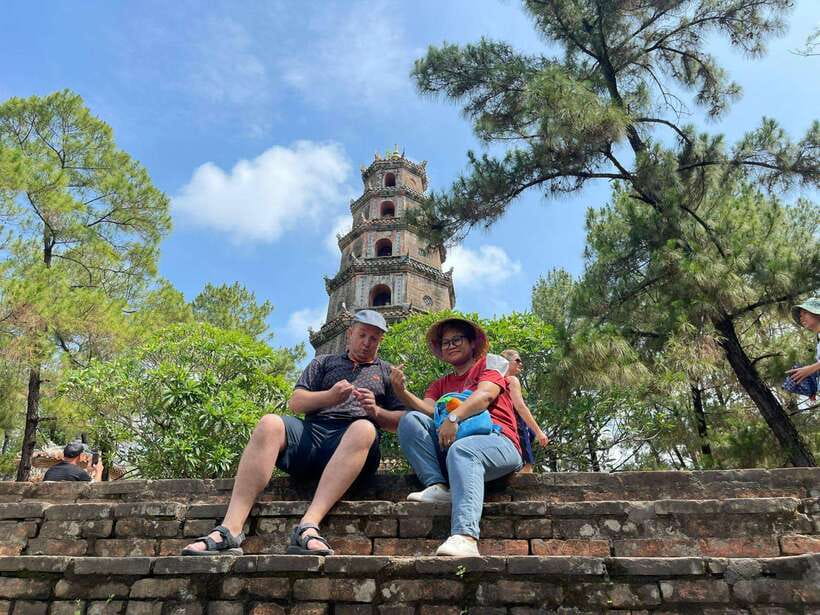
Next you move to the Minh Mang Tomb, the mausoleum of Emperor Minh Mang, the second emperor of the Nguyen Dynasty. This stop sits on Cam Khe mountain, and it is a UNESCO World Heritage Site. The “why it is worth your time” is how much traditional design language you can read in the layout.
Minh Mang’s tomb is often about balance and symmetry—the kind of architecture that rewards patient looking. Even if you only spend a short time inside the complex, you will usually get more out of it if someone explains how the structures and pathways relate to royal ideology. This is where having an English-speaking driver or a guide makes a difference. A driver like Vu or Hai often provides helpful context on what you are seeing while you are moving through the grounds.
Practical tip: bring a little patience for uneven ground and sun. Your car gets you from site to site, but tomb walking is still tomb walking.
Khai Dinh Tomb on Chau Chu Mountain: the most unusual design
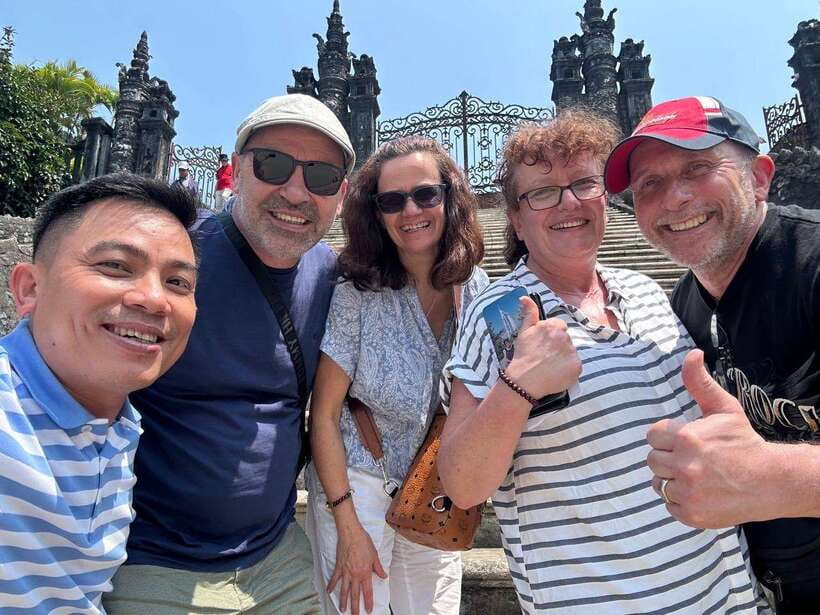
The Khai Dinh Tomb is for people who want something that feels more experimental. It belongs to Emperor Khai Dinh, the twelfth emperor of the Nguyen Dynasty, and it also sits on a mountain—Chau Chu—as a UNESCO site.
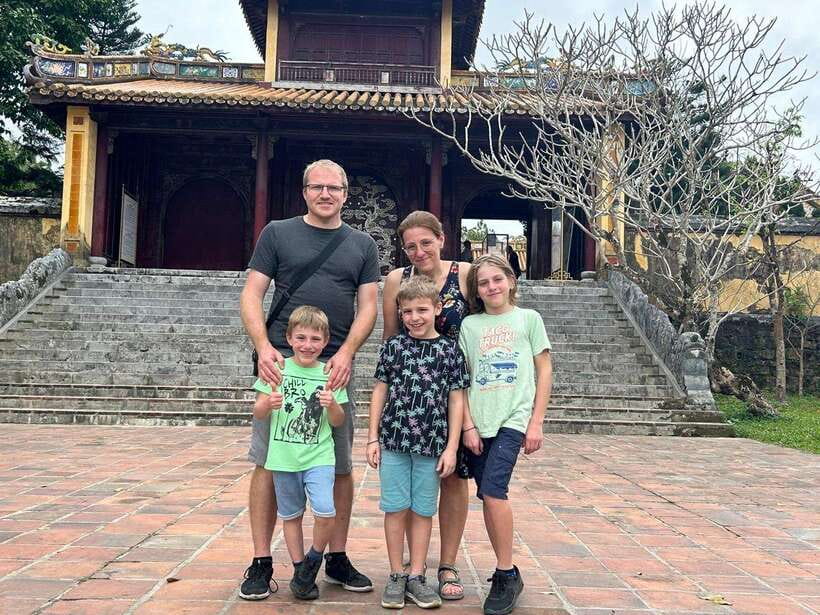
Here is the standout: the architecture uses a mix of Asian and European-style design. That combination can look strange at first glance if you expect everything to be purely imperial-traditional. But if you pause and let your eyes adjust, the contrast becomes part of the story of the era. It is a visual reminder that Hue’s court culture was not isolated from outside influences.
If you only have one “wow” tomb in this half-day plan, Khai Dinh is often the one people remember. It is the stop that tends to feel most visually different.
Tomb of Tu Duc: lakes, gardens, and a king’s retreat
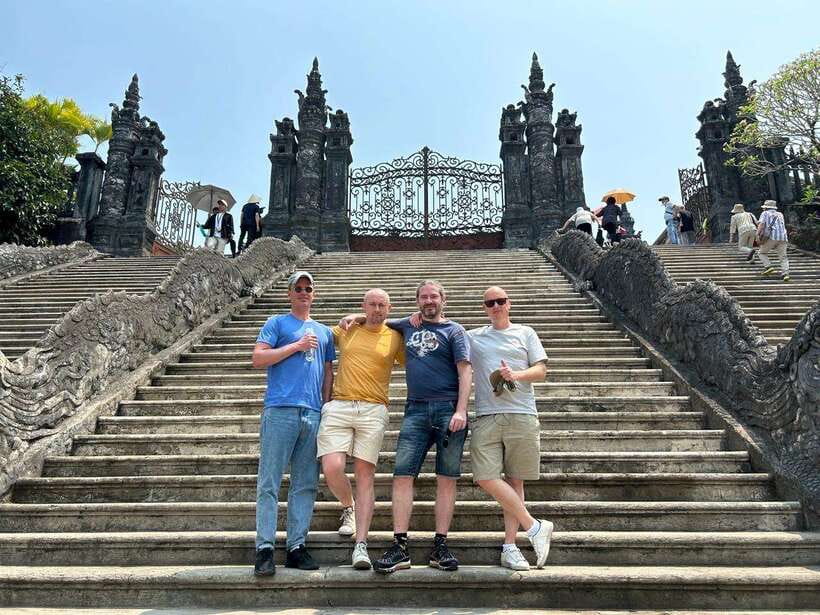
Then comes Tu Duc Tomb, which is set in a narrow valley near Thuong Ba village, Thuy Xuan commune, Hue city. This tomb is famous for the way it reflects the king’s personal world. Tu Duc is said to have retreated here from the Citadel to compose poetry or go hunting.
What I love about this stop is the environment. It is not just stone. It has gardens, lakes, and a sense of enclosure that makes it feel like a private retreat rather than a public monument. When you walk through the grounds, you can imagine why the setting mattered to him. Even in hot weather, the landscape gives you little pockets of calm.
Potential drawback: because Tu Duc is “experience-based,” if you rush, you might miss what makes it special. So if your timing is tight, at least slow down for the garden-and-lake sections before you head onward.
Hue Incense Village in Thuy Xuan: make something, not just look
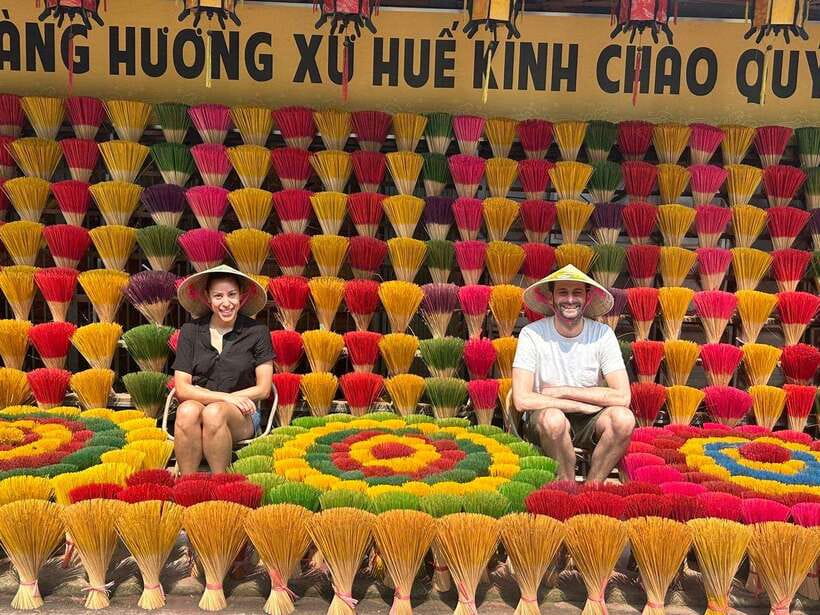
The tour includes a stop at Thuy Xuan incense village, often called Hue incense village. This is a nice break from tomb architecture. You get to step into a craft space and see how incense is made, and you can also try making incense with people there.
This part is valuable because it turns history into a sensory memory. Tombs are visual and symbolic. Incense is smell-based and practical. If you pick up a bundle of incense sticks later, you will probably remember the people and process more than the exact museum facts.
It also helps that the village area is described as beautiful and colorful, which makes it easier to enjoy even if you are tired. I usually recommend using this stop to reset your body temperature and energy.
The rhythm of the tour: private car help and smart pacing
This is designed as a private group tour with pickup and drop-off at your hotel. You ride in a new air-conditioned vehicle, and you get bottled water. That might sound like standard good service, but in Hue’s heat it changes your day. You are not waiting outside temples, and you are not losing time to haggling or figuring out transport between widely spaced sites.
About guides: the tour includes an English-speaking driver, and a tour guide is included when you choose the private option. In practice, some tours like this have the driver explain on the go, while the full guide may be separate. I suggest you double-check what option you select so you know who will accompany you at each monument gate. Either way, having English support is the difference between seeing tombs and understanding them.
Pacing is also flexible in a private setup. The best driver-guide teams like those named in past experiences, such as Hai or Trung, tend to keep things smooth without trying to sprint you through. That matters when you want time to look slowly at carving, gates, and layouts.
Price and what you should budget for in real life
The listed price is $22 per person for this 3–5 hour experience. That is a strong value if you want three tombs plus Thien Mu Pagoda without arranging separate transport. The private dragon boat and private car are usually the cost drivers on tours like this, and those elements make the price feel reasonable for the amount of ground you cover.
But you should budget extra for entrance fees, since they are not included. The tour data also specifies that you pay cash only at the entrance for Royal Tombs (and Imperial City if you add it). That means you should bring some cash in advance, not rely on card payments.
There is also an optional add-on: you can add the Imperial City for an extra $8 (200,000 VND). This is worth considering if you have more time or you want a fuller picture of Hue’s royal world. If you only want the tombs plus the pagoda and incense, you can skip that and still get a complete, satisfying arc.
Meals and drinks are not included beyond water. If you are sensitive to low energy, plan where you will eat after you get dropped back at your hotel.
Timing: why the 3–5 hour window works for some, not for all
The tour duration is 3–5 hours, and it depends on the starting time you choose. This is a half-day plan that fits well if:
- you are short on time in Hue
- you want the highlights without a full day tour
- you like structured sightseeing with minimal logistics
It may be less ideal if:
- you want long, unhurried museum-style wandering
- you hate crowds and need extra time to escape them
- you want a deep, multi-hour photography session at every stop
The silver lining is that the tombs themselves are not all equally time-hungry. If you decide you only want to spend longer at one of the UNESCO tombs, you can still make it work in the overall schedule because the car and pickup keep the day efficient.
Who should book this Hue Royal Tombs and Pagoda tour
Book this if you want a balanced Hue day that mixes:
- royal architecture (Tu Duc, Minh Mang, Khai Dinh)
- a major spiritual site (Thien Mu Pagoda)
- a hands-on culture stop (Thuy Xuan incense village)
It is especially good for couples and small groups who like private transport and dislike waiting around. It also works well for first-timers because the main “Hue royal story” is covered in one go.
If you are the type who only wants one or two tombs, you might feel slightly overwhelmed by three in one sitting. Still, if you are interested in how each emperor’s tomb expresses different design ideas, this set of three is a smart comparison.
Should you book this tour?
I think this is a good booking choice if your goal is to see the key Hue monuments efficiently, with English support and private comfort. The value is strongest when you treat it as a highlights tour that connects dots: boat to pagoda, pagoda to tomb ideology, tomb gardens to incense craft.
Skip it or adjust expectations if you are hoping the dragon boat ride will be a quiet, scenic highlight by itself. The real payoff is the tombs and pagoda, with the boat acting as a means to an atmospheric start.
FAQ
What does this Hue Royal Tombs and Pagoda tour include?
It includes hotel pickup and drop-off, a private dragon boat, a vehicle with A/C, an English-speaking driver, tour activities as mentioned, bottled water, and a tour guide if you choose the private option that includes one.
How long is the tour?
The duration is listed as 3–5 hours. Starting times depend on availability.
Which places do you visit?
You visit Thien Mu Pagoda by dragon boat, Minh Mang Tomb, Khai Dinh Tomb, Tomb of Tu Duc, and Thuy Xuan incense village.
Are entrance fees included?
No. Entrance fees are not included. Royal tomb and Imperial City entrances require cash payment at the site.
Do I need cash for the sights?
Yes. The tour notes that entrance fees for the Royal Tombs and Imperial City are cash only at the entrance.
Is this tour private?
Yes, it is listed as a private group.
Is an English guide available?
An English-speaking driver is included. A tour guide is included if you select the private option that provides one.
Can I add the Imperial City?
Yes. You can add the Imperial City for an extra $8 (200,000 VND), and payment is handled when the trip ends.