REVIEW · KYOTO
Private car tour in Kyoto (up to 9)
Book on Viator →Operated by KSK-Tour · Bookable on Viator
Kyoto is easier with your own car. This private, air-conditioned day is built for smooth visiting, with pickup that helps you skip the public-transport scramble, and a guide who keeps the whole route moving. I like having Sanjusangendo, Nijo Castle, Kiyomizu-dera, Nishiki Market, and Gion in one day without bouncing between train stations. The main thing to plan for: admission fees and lunch are not included.
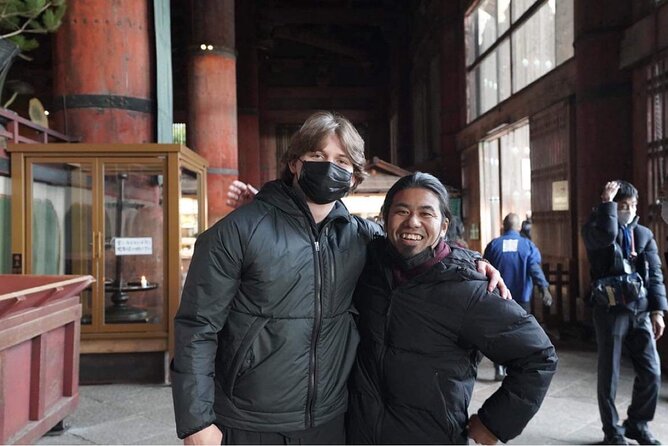
What really makes the day work is the guide. In different bookings, the host is described as Kosuke (often called Ko) and also as Katsuke, and the common thread is clarity and flexibility. He’s praised for being on time, driving a clean, comfortable vehicle for groups up to 9, and for answering questions with confidence. One practical tip that came up in feedback: he may even bring slippers for parts of shrines/temples where you’re expected to go barefoot.
In This Review
- Key highlights you’ll feel right away
- Why a private Kyoto car tour saves your energy
- The 7-hour pacing: 5 stops, and how to think about timing
- Sanjusangendo Temple: 1000 golden statues and a long wooden hall
- Nijo Castle (built 1603): samurai-era architecture you can actually feel
- Kiyomizu-dera: that veranda view and temple etiquette
- Nishiki Market: the kitchen of Kyoto and how to shop smarter
- Gion: geisha district vibes without the stress
- Price and value: is $375 worth a private day up to 9?
- Who this tour is best for (and who might want something else)
- The small details that improve the day
- Should you book this private Kyoto car tour?
- FAQ
- What’s the duration of the Kyoto private car tour?
- How many people can this private tour accommodate?
- Is pickup included, and where does it start?
- Are admission fees included for the temples and sites?
- Is lunch included?
- What does the tour price ($375) include?
- Do I receive a mobile ticket?
- Is it fully private (just my group)?
- What if the weather is bad?
Key highlights you’ll feel right away
- Pickup + air-conditioned car: You start off calmer, and you stay comfortable for the full 7 hours.
- A guide who adapts: If you want more time shopping or more time at a temple, the pace can shift.
- Big-name Kyoto landmarks, efficiently: Five major stops without the headache of transfers.
- Nishiki Market strategy: You get a focused hour in the kitchen-of-Kyoto zone with 150+ food shops and restaurants.
- Bare-foot friendly help: Past groups mentioned slippers for specific shrine areas where shoes aren’t allowed.
- Private format up to 9: Only your group participates, so you can actually talk and ask questions.
Why a private Kyoto car tour saves your energy
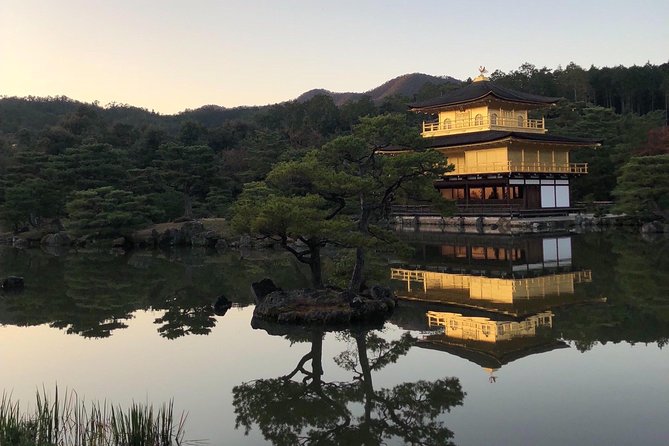
Kyoto has a talent for slowing you down. Even if you know where you’re going, you still fight walking, transfers, and time lost to crowds. A private car tour solves that. With pickup offered and parking fees included, you get the kind of day plan where logistics don’t eat your sightseeing time.
In practice, this matters most when you pack in multiple top sights. Your guide can manage the route and the order in a way that feels realistic, instead of forcing you to sprint from one bus stop to another. And because the vehicle is air-conditioned, the day stays comfortable even if the weather turns warm or humid.
The 7-hour pacing: 5 stops, and how to think about timing
This is an about-7-hours private experience starting at 9:00 am, aimed at getting you through five major areas. That’s a solid plan, but it’s also a reminder: each stop is roughly an hour. You’re not getting a slow, hour-by-hour wander in only one temple complex; you’re collecting the highlights and moving on.
Here’s how to make that work in your favor:
- If you’re the type who loves photos, prioritize your “must-see views” first at each stop, then enjoy the details second.
- If you want shopping time at Nishiki Market or wandering time in Gion, keep expectations realistic—there’s a lot to see in those areas, but you won’t do everything in one hour.
- Bring patience for lines where they exist. The private setup helps with transit, not crowds.
Sanjusangendo Temple: 1000 golden statues and a long wooden hall
Your morning starts at Sanjusangendo Temple, famous for its long wooden building lined with 1000 beautiful golden Buddhist deity statues. That “number” matters because the space is designed for visual impact. It’s not just one impressive object; it’s an entire room that feels like it goes on and on.
What you’ll likely enjoy most:
- The visual rhythm. The statues create repetition that feels almost hypnotic.
- The scale. A single hour is enough to take in the hall’s main features and still look around calmly.
What to watch for:
- Admission is not included, so budget for entry fees if you want to go inside.
- Because it’s a major attraction, it can feel popular. Going earlier in the day helps, and starting at 9:00 am is a smart move.
Nijo Castle (built 1603): samurai-era architecture you can actually feel
Next up is Nijo Castle, a historic castle built in 1603 by the samurai shogun leadership. Even if you’re not a “castle person,” it’s a great stop for two reasons: it gives context for Japan’s political power in the early Edo period, and it’s designed for visitors to understand how authority shaped daily life.
In a one-hour slot, you’ll want to focus on:
- How the architecture communicates rank and control.
- The overall layout of the site—where you are vs. what you’re meant to notice.
Potential drawback:
- Like Sanjusangendo, admission fees aren’t included. Also, inside areas may require slower walking, so if your group hates standing in line, plan for it.
Kiyomizu-dera: that veranda view and temple etiquette
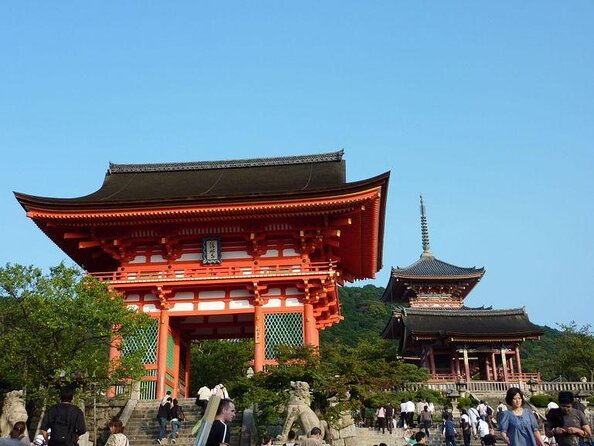
Kiyomizu-dera is all about the view. From the open veranda located on the hill, you get the kind of scene that makes people stop talking and just look. The setting is part of the experience: the temple’s layout is meant to frame a panorama, not just house a worship hall.
How to enjoy this stop in an hour:
- Spend a few minutes first finding the best viewpoint, then go back for details.
- Keep an eye on how people move through the complex. It’s easy to get turned around in a large temple area, especially if you’re mixing photo stops with shrine etiquette.
Practical etiquette note from past feedback: some shrine areas require you to be barefoot, and the guide has been known to bring slippers for that situation. Don’t assume everyone will have them, so it’s worth asking your guide what shoes rules apply during your visit.
Again, admission is not included, so plan your budget.
Nishiki Market: the kitchen of Kyoto and how to shop smarter
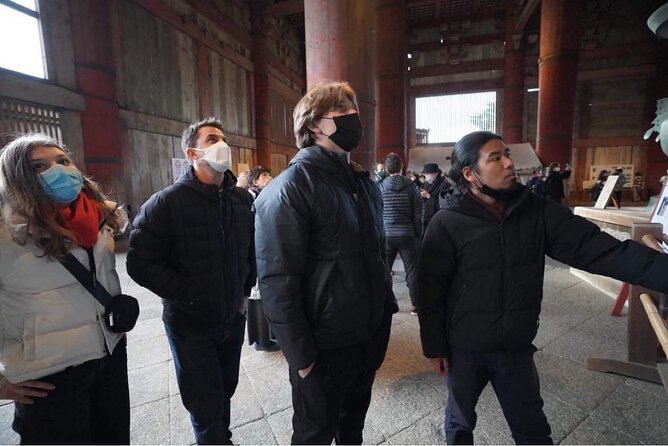
Nishiki Market Shopping District is often called the kitchen of Kyoto, and that reputation is earned. The area features plenty of authentic foods sold through roughly 150 shops and restaurants. In other words, it’s not one street—it’s a dense cluster where every turn tempts you.
You get about an hour here, which is just enough for a “tasting and browsing” plan if you don’t try to do it all. Here’s the approach I recommend:
- Pick a few flavors or categories before you arrive (something sweet, something savory, and something you can’t get at home).
- Move first, then slow down. It keeps you from getting stuck in the busiest pockets.
- Use your guide as a shortcut. Even if you don’t copy a specific recommendation, asking what’s worth trying can save time.
What’s not provided: lunch. But your guide may suggest where to eat, and feedback highlights that one recommended Japanese restaurant left people very impressed. If you want this to become a real meal stop instead of just snacks, ask early—so you’re not hungry when the hour ends.
Gion: geisha district vibes without the stress
Finish with Gion, the world-famous district known for geisha culture. Even if you don’t plan to track down anyone in costume, the area still delivers atmosphere—old-style streets, photogenic corners, and the feeling that Kyoto has a slower rhythm right here.
In a private tour format, you can enjoy Gion without the usual “where do we stand?” confusion. Your guide can point out what to pay attention to and help your group avoid dead-end loops.
The main consideration: Gion is popular. If your group wants lots of photographs, expect short waits and crowded sidewalks. That’s normal here. The private car doesn’t eliminate crowds, but it prevents crowds from controlling your whole day.
Price and value: is $375 worth a private day up to 9?
$375 for about 7 hours sounds like a lot—until you think about what you’re buying. You’re paying for:
- Private transport for your group (up to 9 people)
- Parking fees
- An air-conditioned vehicle
- Pickup offered
- A guide who can adapt the order and pacing
So the real value question is how many people are in your group. If it’s just one or two people, it’s more of a convenience premium. If you’ve got a small family or friend group, it can become a smart way to keep your day efficient and comfortable.
Also consider the trade-off: admission fees and lunch aren’t included. That means your total spend will be higher than $375 once you add entry tickets. Still, it’s often easier to handle budgeting when the transport and guide time are already covered.
Who this tour is best for (and who might want something else)
This fits you best if:
- You want major Kyoto highlights without public-transport juggling
- Your group includes people who prefer shorter walking bursts between big stops
- You value an English-speaking guide who can explain what you’re seeing and adjust based on your interests
- You’re traveling with up to 9 people and want one plan that works for everyone
It might be less ideal if:
- You want a very deep, slow exploration of one temple complex (this is a multi-stop highlights day)
- You’d rather handle everything independently and skip guide time entirely
The small details that improve the day
A private tour is often won or lost on the details. Here are the ones that show up in good experiences:
- Clean, comfortable vehicle for a full day with a group of 9.
- On-time pickup, which matters because Kyoto sightseeing days unravel quickly when you start late.
- Flexibility: if your group wants more time at Nishiki Market or you’d like a different order of attention, it’s not a rigid factory schedule.
- Bare-foot readiness: slippers can help if shrine rules require it.
- Lunch guidance: even though lunch isn’t included, having the guide point you to a reliable place takes stress off the day.
Should you book this private Kyoto car tour?
If your goal is a stress-free Kyoto highlights day—temples in the morning, shopping midday, Gion in the late part of the day—this is a very sensible booking. The strongest reason to choose it is the combination of private transport + flexible, English-speaking guidance for groups up to 9, all with pickup and included parking.
I’d book it if you want to maximize your limited time and still feel cared for. I’d think twice only if you already plan to spend the whole day wandering at a slow pace, or if you hate paying separate admission fees and would rather fold everything into one big package.
FAQ
What’s the duration of the Kyoto private car tour?
It’s listed as approximately 7 hours.
How many people can this private tour accommodate?
It’s a private tour for groups of up to 9 people.
Is pickup included, and where does it start?
Pickup is offered, and the start time is 9:00 am. The meeting point is near public transportation.
Are admission fees included for the temples and sites?
No. Admission tickets are not included.
Is lunch included?
No. Lunch is not included.
What does the tour price ($375) include?
It includes parking fees and an air-conditioned vehicle.
Do I receive a mobile ticket?
Yes. A mobile ticket is provided.
Is it fully private (just my group)?
Yes. It’s a private tour/activity, and only your group participates.
What if the weather is bad?
The experience requires good weather. If it’s canceled due to poor weather, you’ll be offered a different date or a full refund.