REVIEW · LOS ANGELES
O.J. Simpson & Menendez Brothers True Crime Driving Tour of L.A.
Book on Viator →Operated by Grave Line Tours · Bookable on Viator
LA has a darker side.
This O.J. Simpson & Menendez Brothers driving tour strings together film-industry sites, luxury addresses, and Westside neighborhoods tied to the cases, with smartphone-friendly visual extras built into the ride. You get a tight route with lots of recognizable Los Angeles landmarks—then you hear how they connect into one long, tragic timeline.
I like that the pace stays manageable for a subject this heavy. You’re on the road for about 3 hours, in a small group (max 8), with a short break mid-tour for coffee and light snacks you can buy.
One thing to consider: this is not a “light” history tour. It includes domestic violence and murders, plus courtroom themes, and it’s not recommended if you’re easily upset by extreme subject matter.
In This Review
- Why This Tour Works Better Than a Random Stop-and-Search
- From Ovation Hollywood to the Westside Timeline
- Hollywood’s Power Centers: DGA, Hertz, and the Entertainment World
- Beverly Center to Tryst: Luxury Shopping and the Fear Factor
- West Hollywood Stops: AIDS-Era Community and Chosen Family
- Beverly Hills Confession Sites: Oziel’s Office and Elm Drive
- UCLA and the Pressure Theme: A “Normal Life” That Wasn’t
- Brentwood Memorials and “After” Spaces: Sunset, Gretna Green, and Rockingham
- San Vicente Boulevard: The Everyday Corridor That Became Evidence
- Starbucks, Mezzaluna, Ben & Jerry’s: Last Normal Outings
- 875 South Bundy Drive and the Timeline Snap
- The 405 Chase and the Surrender Moment
- What Makes Blaze’s Storytelling Feel Fair and Effective
- Price and Value: Is $93.08 Worth It?
- Who Should Book This, and Who Should Skip
- Should You Book O.J. Simpson & Menendez Brothers True Crime Driving Tour of L.A.?
- FAQ
- How long is the O.J. Simpson & Menendez Brothers true crime driving tour?
- What is the price per person?
- What language is the tour offered in?
- Where does the tour start and where does it end?
- Is a mobile ticket used?
- Are snacks included?
- How big is the group?
- Is the tour recommended for sensitive situations?
- What happens if weather is bad?
Why This Tour Works Better Than a Random Stop-and-Search
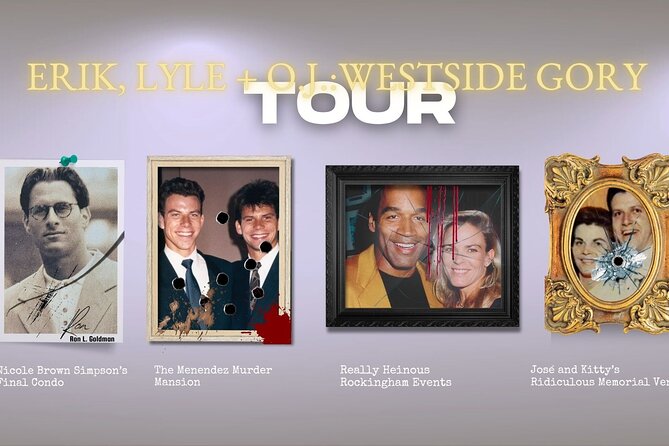
- A single storyline across two major cases: You’ll see how places linked to Simpson and the Menendezes connect beyond just the geography.
- Small-group touring: A maximum of 8 people makes it feel more personal than a big bus.
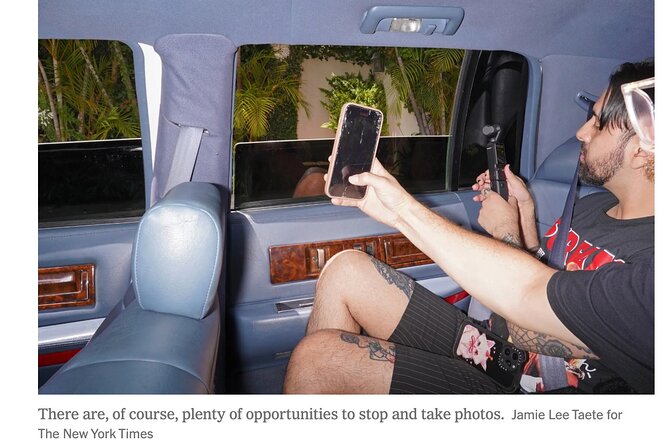
- Narration + visual support: You get access to background materials for your smartphone, and the guide uses clips/media when appropriate.
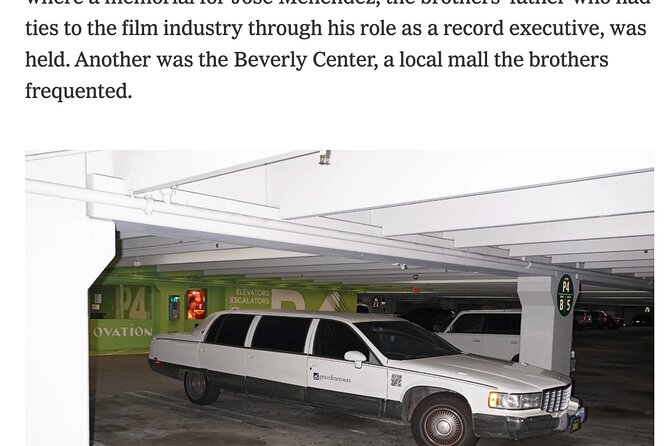
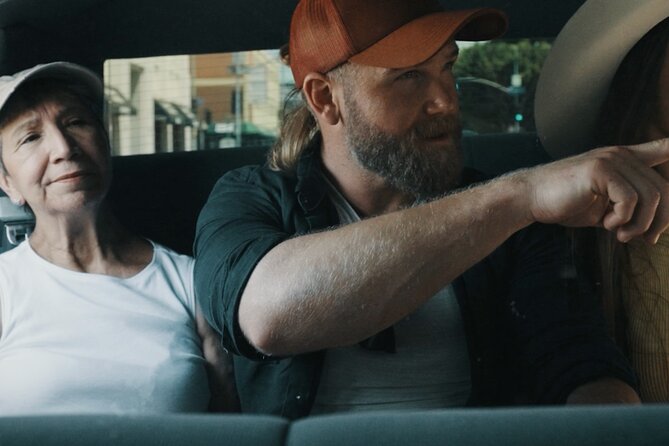
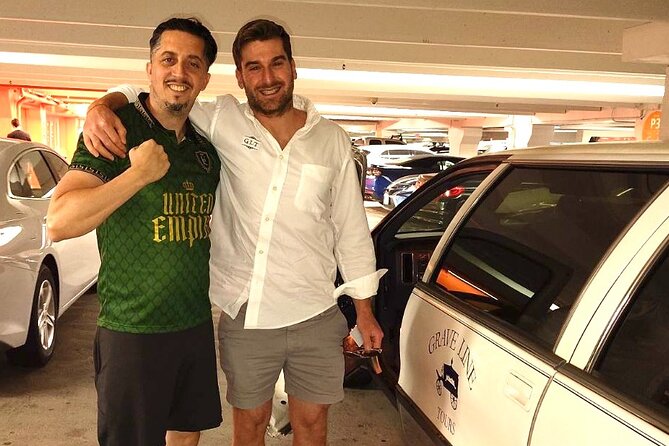
- Comfort in transit: It’s run in an older limo, with one person doing the driving while the guide tells the story.
- Frequent “you-are-here” landmarks: Big, specific addresses keep the timeline grounded.
From Ovation Hollywood to the Westside Timeline
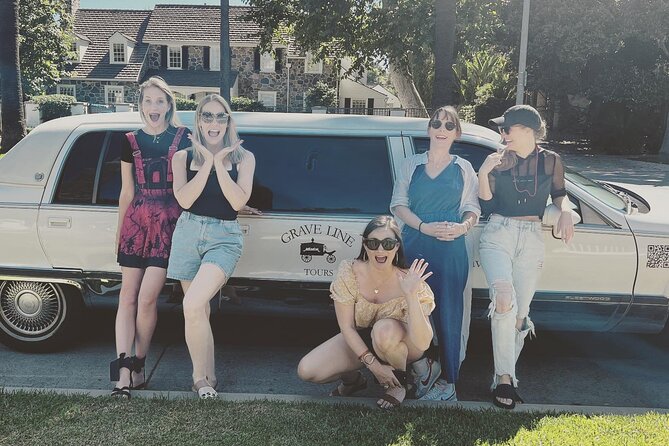
You start at Ovation Hollywood, 6801 Hollywood Blvd, with the tour running at 10:30am and ending back at the same meeting point. It’s set up for an easy morning launch—near public transportation—and the tour uses a mobile ticket, so you don’t need to worry about printing anything.
What I found smart about the structure is that it builds context as you go. Hollywood isn’t treated as “background noise.” It’s treated like an engine—where careers, media power, and public attention shaped what happened next.
Hollywood’s Power Centers: DGA, Hertz, and the Entertainment World
The tour kicks off at the Directors Guild of America theater on Sunset Boulevard, where José and Kitty Menendez’s memorial service pulled in industry elites just days after the 1989 murders. Even if you only know this case through documentaries, this stop gives you a real sense of how tightly Los Angeles true-crime lives next to entertainment institutions.
From there, you head to an unassuming Hertz Rent a Car location, where the story links to one of the most surreal “wrong-place, wrong-time” intersections in modern pop culture. The Menendez family story connects to sports marketing history because José Menendez helped enable the groundbreaking national spokesperson moment that made O.J. Simpson a household name.
This is where the tour earns its keep. It doesn’t treat each case like a separate headline. It points out how celebrity systems can create visibility, money, and pressure—all of which become part of the courtroom narrative later.
The practical takeaway: the first stretch is dense with names and connections, so if you like to take notes on your phone, start early.
Beverly Center to Tryst: Luxury Shopping and the Fear Factor
Next comes the Beverly Center, a huge multi-level mall on the edge of Beverly Hills and West Hollywood. In the 1980s and 1990s, it was the place for luxury retail, and after the murders, Erik and Lyle Menendez were reportedly spotted there making big, designer-heavy splurges. That detail matters because the tour frames it as more than “spending.” It becomes evidence in the public understanding of motive, greed, and self-image.
Then you move to the former location of Tryst nightclub at 401 N. La Cienega Boulevard. The stop looks at an intimate early-1990s nightlife scene, and then shifts hard into what happened there: O.J. Simpson confronting and terrorizing Nicole Brown Simpson and her date, Keith Zlomsowitz, during a night out. Even when the location is quiet now, the guide’s job is to show how that personal violence pattern wasn’t a sudden twist. It was a preview of what would later define the broader case.
A note on tone here: you’re not just hearing scandal. You’re hearing how control can masquerade as romance—or how violence can grow out of jealousy and repeated escalation.
West Hollywood Stops: AIDS-Era Community and Chosen Family
At this point, the tour takes you into West Hollywood, not just as a location, but as a living social history. You’ll hear how the area became a haven for the LGBTQIA+ community during the AIDS crisis—an epicenter of grief and also a base for activism and healthcare advocacy.
Then you visit a longtime West Hollywood gay club that survived through the 1980s and 1990s, when it served both as sanctuary and battleground. The story focuses on chosen families and visibility in the face of homophobia, which adds a contrast to the more heteronormative, celebrity-centered angle you’ll see elsewhere on this route.
Why this matters for your trip: this part of the tour keeps the narrative from becoming a single-note celebrity tragedy. It reminds you that L.A. was changing in multiple directions at once—and communities were surviving while famous families and media narratives were being watched.
Beverly Hills Confession Sites: Oziel’s Office and Elm Drive
Beverly Hills is where the tour sharpens into “case mechanics.”
First, you stop at a small park off Santa Monica Boulevard in Beverly Hills, connected to Dr. Jerome Oziel and the therapy sessions that led to Erik Menendez breaking down. The story here lands on the moment Erik admitted: We did it. We killed our parents. Even if you don’t know the full confession arc, this green-space setting makes it feel less like a courtroom moment and more like a human collapse.
Next is Rodeo Drive, the world’s elite luxury strip. You’ll hear how Nicole and O.J. Simpson, plus José, Kitty, Lyle, and Erik Menendez, were often around those palm-lined blocks, shopping in high-end stores. This is not just tourist gawking. The tour treats it as symbol: wealth, status, and the performance of a life that would later be examined under a microscope.
Then you go to Dr. Jerome Oziel’s office at 435 North Bedford Drive, a discreet professional setting that becomes central to the case. This stop covers the idea that Oziel held pivotal therapy sessions with Erik and Lyle and became a key witness. The building itself may look like any office suite, but the story is anything but ordinary.
You also get a corner stop at Rodeo Drive and Brighton Way tied to Nicole Brown Simpson’s jealous confrontation moment involving O.J. Simpson and two women. And you’ll visit the former Daisy nightclub at 326 North Rodeo Drive, a members-only restaurant and disco where Nicole worked in 1977 before meeting Simpson.
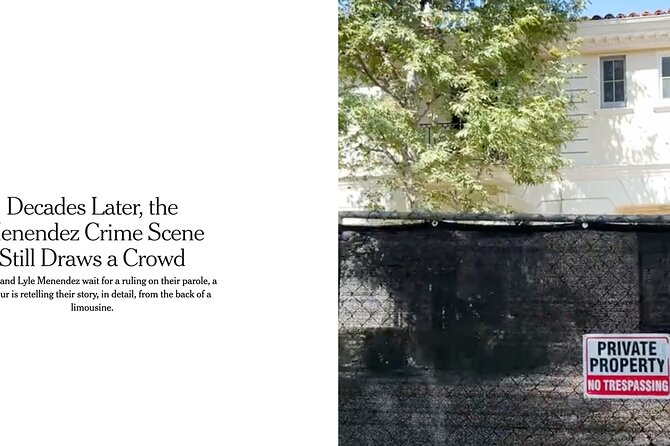
Finally, the tour lands at the infamous Beverly Hills mansion at 722 North Elm Drive, where Lyle and Erik Menendez killed their parents José and Kitty in the home’s TV room on August 20, 1989. The Mediterranean-style 1927 villa still sits behind gates. It’s one of those stops where the location does the talking: the outside may look like a normal mansion, but the story makes it feel like a sealed-off stage from another era.
The sensitive but useful angle: you’re learning how the case moved from private life into public scrutiny, and how everyday luxury locations became part of the evidence web.
UCLA and the Pressure Theme: A “Normal Life” That Wasn’t
Another stop centers on Erik Menendez being accepted to UCLA, symbolizing a chance to live independently and have something like a normal college experience. The tour then contrasts that dream with how José Menendez allegedly forced commuting and forbade dorm living.
Even without walking through campus, this stop carries a strong message for the overall story: control wasn’t only about what happened on the worst day. It was part of the long-running pattern.
Brentwood Memorials and “After” Spaces: Sunset, Gretna Green, and Rockingham
The tour’s emotional center shifts as you move into Brentwood.
You’ll visit St. Martin of Tours Catholic Church on Sunset Boulevard for Nicole Brown Simpson’s funeral, where about 200 friends, family members, and celebrities gathered under heavy media scrutiny. O.J. Simpson attended with their children, and the church stop reframes the case from a “headline” into an actual community moment of grief.
Then you head to the former site of O.J. Simpson’s Rockingham estate at 360 North Rockingham Avenue. The original house is gone, but the address remains a magnet for true-crime fans because it was where he lived, hid from police, and later surrendered.
Next is Nicole’s rented home on Gretna Green Way, described as a refuge during separation, and tied to a chilling 911 call where she begged police for help as Simpson raged outside. The location today reads like a quiet residential street, which makes the story hit harder.
San Vicente Boulevard: The Everyday Corridor That Became Evidence
One of the most practical stops on the whole route is San Vicente Boulevard. The tour treats it like a corridor of routine—O.J.’s office, gyms, and the everyday rhythm of their lives, including places Nicole frequented.
This stop also ties to key “last moments” details and the way investigators and attorneys built a timeline out of normal errands and date nights. The guide references that Mezzaluna once sat along this stretch, and that Ron Goldman sometimes modeled nearby—details that make the narrative feel closer to real life than TV drama.
From here, the tour reaches a set of locations that many people find haunting precisely because they’re not famous in the way palaces are. They’re ordinary corners.
Starbucks, Mezzaluna, Ben & Jerry’s: Last Normal Outings
You get a scheduled coffee break at a Brentwood Starbucks—a cozy neighborhood spot that the tour frames as an unassuming landmark. It’s also included as the 20-minute stretch with free admission noted for this stop.
From there, you move to Ronald Goldman’s apartment at 11663 Gorham Avenue, described as a modest 13-unit building behind a neighborhood shopping plaza. The tour connects this location to the idea that he showered and changed, then made a detour returning Nicole’s mother’s forgotten glasses before heading out again.
Then comes the former Mezzaluna Trattoria site on San Vicente Boulevard, where Nicole shared her final dinner with family on June 12, 1994, before returning home to Bundy Drive. The restaurant closed, and the space is now occupied by other businesses, but the address still functions like a bookmark in the narrative.
You also visit the former Ben & Jerry’s location in Brentwood, connected to an ice cream outing Sidney and Justin Simpson had with family the evening Nicole and Ron Goldman were murdered.
These stops all work for one reason: they show how a tragedy collided with normal family life. You don’t just hear about death. You hear about the moments right before it.
875 South Bundy Drive and the Timeline Snap
The tour’s next major emotional anchor is Nicole Brown Simpson’s condominium at 875 South Bundy Drive. This is described as the quiet, tree-lined complex where she and Ron Goldman were murdered on June 12, 1994. The story includes that bodies were found just inside the front gate and on the small front walkway.
After that, you pass a key West Los Angeles intersection tied to reports of O.J. Simpson driving his white Ford Bronco recklessly shortly after the murders. The guide frames it as a likely point along the alleged escape route—one of the many “timeline” locations that trial-watchers fixated on.
Then the story reaches its most famous modern-media moment.
The 405 Chase and the Surrender Moment
You end with the notorious low-speed chase on Los Angeles freeways, with Simpson riding in a white Ford Bronco and leading police cars and news helicopters down the 405. The tour also ties it to live TV viewership, and the pursuit ending when the Bronco returned to Simpson’s Brentwood estate and he surrendered in the driveway.
This stop matters because it turns the case into something that was both local and national. Even if you’ve seen clips before, the tour format forces you to connect the media spectacle back to real street geometry and real time.
What Makes Blaze’s Storytelling Feel Fair and Effective
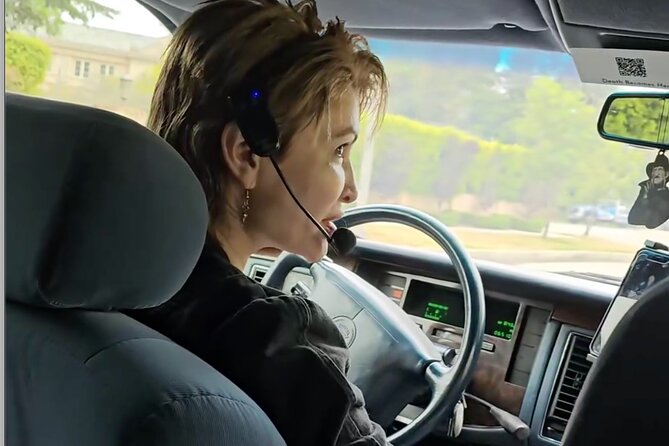
A big reason this tour gets strong feedback is the guide. The narration is driven by Blaze, and the presentation style keeps it moving: one person does the driving while Blaze tells the story, and the tour uses clips/media bites at appropriate moments.
I also like how the tone is set from the start. The aim is facts with context, not shock for shock’s sake, and the tour balances information with respect for the victims. You’ll still feel how dark it is, but you won’t feel like the guide is riding the story for entertainment value.
Price and Value: Is $93.08 Worth It?
At $93.08 per person for about 3 hours, the price is in the “worth it if you love this topic” zone. You’re paying for several things at once: a structured route across multiple neighborhoods, a single narrative tying two separate crimes together, and the comfort of staying in a vehicle instead of stitching together rides and parking on your own.
The small group size (max 8) also helps your experience feel more like a guided drive than a mass excursion. Add in the smartphone background materials and the planned coffee stop, and the tour feels built for learning, not just sightseeing.
The main reason this price can be a miss: if you’re not into true crime storytelling, this route will feel heavy quickly. But if you are, the value comes from the density of linked locations in a short time.
Who Should Book This, and Who Should Skip
Book it if:
- You’re a true-crime fan who wants the story connected to real L.A. addresses.
- You care about the entertainment-industry angle and media impact, not just the crime details.
- You prefer a guided drive with narration and visual support rather than doing everything solo.
Skip it if:
- You’re sensitive to content involving murders, domestic violence, or emotionally intense courtroom themes.
- You want a casual “see the sights” day. This isn’t that kind of tour.
Should You Book O.J. Simpson & Menendez Brothers True Crime Driving Tour of L.A.?
I’d book this if you want a tight, guided Westside route that links the cases through neighborhoods, institutions, and everyday places people recognize. The combination of small group size, Blaze’s storytelling, and the smartphone-friendly visual materials makes it feel like you’re learning with structure, not chasing clues.
But if you’re even slightly worried about your emotional bandwidth, take the tour warning seriously. This is a tour built around real tragedy and real evidence trails. If that’s what you can handle, you’ll likely feel like the three hours move fast—in the best way.
FAQ
How long is the O.J. Simpson & Menendez Brothers true crime driving tour?
It runs for about 3 hours.
What is the price per person?
The price is $93.08 per person.
What language is the tour offered in?
The tour is offered in English.
Where does the tour start and where does it end?
It starts at Ovation Hollywood, 6801 Hollywood Blvd, Hollywood, CA 90028, and it ends back at the same meeting point.
Is a mobile ticket used?
Yes, the tour uses a mobile ticket.
Are snacks included?
Snacks are not included. There is an opportunity to purchase coffee and light snacks about halfway through the tour.
How big is the group?
The tour has a maximum group size of 8 travelers.
Is the tour recommended for sensitive situations?
It is not recommended for travelers sensitive to extreme subject matter or who get emotionally upset by disturbing content.
What happens if weather is bad?
This experience requires good weather. If it’s canceled due to poor weather, you’ll be offered a different date or a full refund.
If you want, tell me your dates and whether you’re visiting Hollywood, Beverly Hills, or Brentwood anyway. I can help you place this tour in the best order with nearby stops.