REVIEW · BHUBANESWAR
Bhubaneshwar city tour in a private car with professional guide
Book on Viator →Operated by 5 Senses Walks · Bookable on Viator
Temples in one day, properly explained. This private Bhubaneswar city tour strings together Kalinga-style landmarks with a professional guide, starting with the big hits like Lingaraja Temple and ending at the Jain cave sites around Khandagiri and Udayagiri. I like that it includes hotel pickup and drop-off, so you skip the hassle of figuring out rides early. Only consideration: it’s an 8-hour schedule, so wear comfy shoes and expect some time in the car.
I also loved the mood shift from Ashoka’s 260 BC battle at Dhauli to quiet reflection at the Shanti Stupa. The guide’s walking explanations turn stone carvings and layout into a story you can follow, and it’s a great fit if you enjoy architecture and everyday religious life. There may also be time for a classical dance-cultural stop such as Bharatnatyam if your specific program includes it, so ask ahead if that’s on your list.
In This Review
- Quick highlights you’ll care about
- Why This Bhubaneswar Tour Feels Like a Story, Not a Checklist
- The Private Car Schedule: Smooth Mornings, Long Days
- Stop 1: Lingaraja Temple and the Core of Kalinga Spiritual Life
- Stop 2: Rajarani Temple’s Sandstone Colors and 11th-Century Craft
- Stop 3: Mukteswara Temple for Carving Lovers
- Stop 4: Dhauli and Ashoka’s 260 BC Turning Point
- Stop 5: Dhauligiri Shanti Stupa and a 1972 Message of Peace
- Stop 6: Khandagiri Caves and Jain Ascetic Life
- Stop 7: Udayagiri Caves for Ornate Jain Carvings
- Bharatnatyam and the Power of Story Through Motion
- Price and Value: When $120 Makes Sense
- Guide Quality: The Difference Between Looking and Understanding
- Lunch and What to Expect from the Food Break
- What to Wear and Bring for Temple + Cave Legs
- Should You Book This Bhubaneswar Private Car Tour?
- FAQ
- How long is the Bhubaneswar city tour?
- Does the tour include hotel pickup and drop-off?
- Is lunch included, and are drinks included?
- Are entrance tickets included for the temples and caves?
- Is this tour private?
- What time does the tour start?
Quick highlights you’ll care about
- A temple-to-peace route that moves from Kalinga religion to Buddhist reflection
- Free and included admissions spread across the day (no surprise ticket scrambling)
- Hotel pickup and drop-off in a private car for an easier start and finish
- Professional guidance with real names mentioned, like Surya and Sarad
- Lunch included (and at least one guest noted the vegetarian meal as a highlight)
- Cave time at Khandagiri and Udayagiri, focused on Jain history and carvings
Why This Bhubaneswar Tour Feels Like a Story, Not a Checklist
Bhubaneswar works best when you have a guide who can connect what you’re seeing to why it matters. This tour is built around that idea: you hop between major temples and sacred sites, and the explanations help you read the symbolism instead of just walking through stone corridors.
Two things I especially like about this format are the route logic and the time with a pro. You get a full day plan (about 8 hours) without the stress of self-navigation, and you also get someone who can point out what to notice in the architecture and carvings.
The one catch is that it’s a lot of stops in one go. If you get tired easily—heat, steps, and the sheer number of impressive facades—plan to pace yourself and lean on the guide for smart priorities.
The Private Car Schedule: Smooth Mornings, Long Days
The day starts at 8:30 am, with hotel pickup and drop-off included. That matters in Bhubaneswar, where the easiest day is the one where your transport is handled and your first stop happens on time.
You’ll be in a private car with a professional guide, and the tour runs for about 8 hours. This is not a “sit and relax” half-day situation. It’s a move-and-see day, so bring patience and plan to step in and out of temples with short bursts of time.
Lunch is included, but drinks are not. I’d plan on bringing water or budget for non-alcoholic drinks during breaks, especially because you’ll be outdoors at a few of the sites.
Stop 1: Lingaraja Temple and the Core of Kalinga Spiritual Life
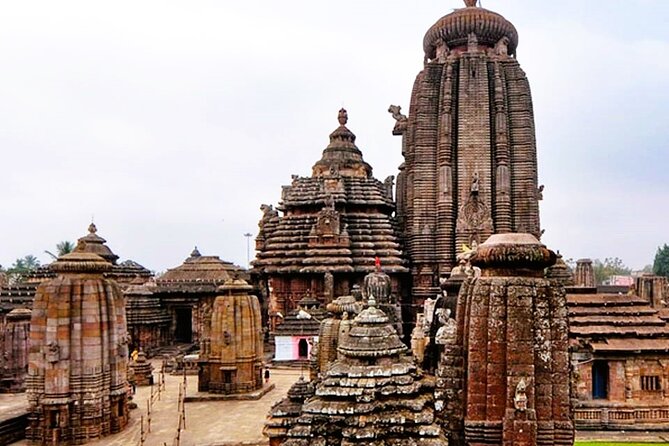
Your first major stop is Lingaraja Temple, described as the most famous temple in Bhubaneswar. It’s built in a Kalinga style using sandstone and laterite, and it’s dedicated to Harihara, a combined form of Vishnu and Shiva.
Why this stop works: Lingaraja gives you a foundation for the rest of the day. Once you understand what Lingaraja represents—this blend of major Hindu traditions—you’ll spot recurring themes as you move between other shrines and temple structures.
Practical tip: the time here is about 30 minutes with the admission ticket free. That’s enough for orientation and a careful look, but not enough to wander slowly for an hour. If your style is slower, use those minutes to watch details: the stone textures, the carvings, and how the space pulls your eyes upward.
Stop 2: Rajarani Temple’s Sandstone Colors and 11th-Century Craft
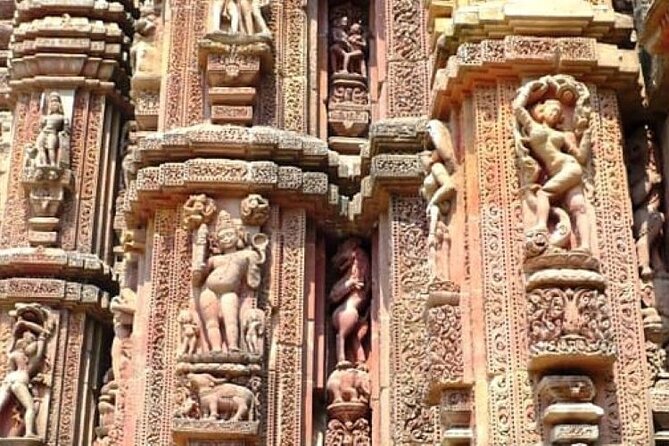
Next up is Rajarani Temple, a temple from the 11th century built from reddish and yellow sandstone. The local name of that stone is linked to the temple’s nickname, so the material itself is part of the identity.
What you’ll like here is how it’s less about sheer size and more about character. Different stone tones and the way they catch light can make the carvings feel more readable, even when you’re moving on a tight schedule.
This stop is also about 30 minutes, and the admission ticket is free. The downside of “free” is you might rush because there’s no ticket line to pace you. Slow down anyway for a better look at the craftsmanship and the overall layout.
Stop 3: Mukteswara Temple for Carving Lovers
Then you’ll visit Mukteswara Temple, built in the 10th century by the Somavamsi dynasty. It’s dedicated to Lord Shiva and is known for its detailed carvings and sculptural work.
This is the stop for you if you like seeing religion expressed through art craft. Mukteswara is a strong counterpoint to the larger landmark energy of Lingaraja. It’s where the day starts to feel more tactile—hands, patterns, and figures rendered in stone.
You’ll typically have about 20 minutes, with admission ticket free. That’s short, so go in with a plan: look for the biggest visual motifs first, then circle back for smaller details before you leave.
Stop 4: Dhauli and Ashoka’s 260 BC Turning Point
Now the mood changes. Dhauli is the site of an ancient battle fought in 260 BC, where Emperor Ashoka won but later changed after seeing the bloodbath.
I like this moment because it connects a political event to a spiritual shift. You’re not just viewing a monument; you’re walking into the historical hinge that explains why peace became such a strong theme in the region.
Admission here is included, and you’ll have around 30 minutes. Since this is also an outdoor site, it can feel longer in the heat. Take shade breaks when you can and keep your water strategy in mind.
Stop 5: Dhauligiri Shanti Stupa and a 1972 Message of Peace
After Dhauli, the tour goes to the Dhauligiri Shanti Stupa, often called the Peace Pagoda. The current structure was built in 1972 through an Indo-Japanese collaboration, involving the Japan Buddha Sangh and the Kalinga Nippon Buddha Sangh.
This stop works because it adds another layer to the day’s theme: not just the past battle, but the modern desire to create spaces for reflection. Even if you’re not a Buddhism expert, the stupa gives you an easy focal point for quiet attention.
You’ll have about 30 minutes, with admission ticket included. If you’re taking photos, do it early or later in the session—midday light can make glare and shadows tricky near stone surfaces.
Stop 6: Khandagiri Caves and Jain Ascetic Life
Next are the Khandagiri Caves, described as dwelling retreats or cells of ancient Jain ascetics. These were built in the second century BC during the reign of King Kharavela of the Kalinga Kingdom.
This is where the day becomes more “historical reading” than “temple visiting.” Caves like these aren’t just scenery—they’re evidence of daily life: places designed for quiet living, study, and devotion.
You’ll have about 30 minutes, and admission is included. Cave time can feel uneven depending on how much walking you do on uneven ground, so keep an easy pace. If you want to understand the carvings, ask the guide to point out what you’re seeing before you start moving too quickly.
Stop 7: Udayagiri Caves for Ornate Jain Carvings
The last big stop is Udayagiri Caves, known for finely and ornate carvings built during the 1st century BCE. It’s believed many caves were carved as residential blocks for Jain monks.
If Khandagiri is about the sense of ascetic space, Udayagiri leans more toward artistry—the kind you can lose yourself in when you have a moment to slow down. This is also a good ending because carvings make you think about technique and time.
You’ll have about 30 minutes, with admission ticket included. The only drawback is that 30 minutes goes fast. If you’re a detail person, focus on a handful of carvings and let those be your “main characters” for the day.
Bharatnatyam and the Power of Story Through Motion
This tour experience is presented with an arts angle too: classical Indian dance storytelling through expressions and emotions, plus the use of actions, footwork, and hand gestures to represent everyday objects, animals, and feelings.
In the materials you have, this dance portion is tied to Bharatnatyam, a dance style often taught and demonstrated through a studio setting. One note from the experience mentions visiting a dance studio, learning about how the storytelling works, and then watching dancers demonstrate the style.
Here’s the practical way to handle this: because your temple-day plan is tight, you should confirm whether your specific day includes a dance studio stop. If it does, plan for a short but meaningful switch from stone details to body language and expression.
Price and Value: When $120 Makes Sense
The price is $120.00 per person for about 8 hours in a private car with a professional guide. That might sound steep until you look at what’s included: hotel pickup and drop-off, lunch, and all taxes, fees and handling charges.
It also matters that entrance costs are handled for several of the day’s key sites: some temple admissions are free, while other places (like Dhauli/Shanti Stupa and the two cave areas) have admission listed as included. In a self-planned day, that’s where costs and time get messy.
Where you get extra value is the private format. If you care about explanations—why each temple looks the way it does, what dynasties shaped the sites, and how the sacred geography connects—having a guide becomes part of what you pay for, not just an add-on.
If you’re traveling solo, this price can still be fair when you want a full day without hassle. If you have a travel partner, it often feels easier to justify because you share the car and guide time.
Guide Quality: The Difference Between Looking and Understanding
Two guide names show up in the experience notes you shared: Surya and Sarad. Surya is described as punctual and well informed, and he adjusts the day to what you can realistically see. Sarad is praised for explaining architecture and history tied to the Kalinga kingdom and its dynasties.
This is the part you should not underestimate. In temple country, the same building can either be just a pretty shape or a meaningful symbol, depending on whether someone helps you notice what to look for. A good guide can connect details across stops so the day feels like one coherent narrative.
You’ll also likely appreciate that your guide isn’t just reading facts. They should point out things you can see right then—stone carving motifs, structural choices, and how the sites relate to the spiritual themes of the region.
Lunch and What to Expect from the Food Break
Lunch is included. One of the notes highlights the vegetarian food as a pure delight and rich in the right flavors, which is exactly what you hope for on a day that stays active and outdoors.
Since drinks are not included, you’ll want to plan around hydration. Bring a water bottle if you like, and if you’re prone to sun headaches, carry a small snack or choose slower breaks so you don’t push too hard between stops.
What to Wear and Bring for Temple + Cave Legs
You’ll be walking through temples and cave areas, so treat this like a day of comfortable movement, not sightseeing in stiff shoes. Choose footwear you trust on uneven ground and bring something to cover your shoulders and dress in a respectful way.
Other practical items that help: sunglasses, a hat, and sun protection. Cave areas can feel cooler, but you’ll still likely spend time in direct sun at points, especially around the more open sacred sites.
If you’re planning to photograph, remember stone surfaces can reflect harsh light. Taking a few minutes to reposition for better angles can turn “casual photos” into pictures that actually show the carvings.
Should You Book This Bhubaneswar Private Car Tour?
Book it if you want a full, organized day that mixes major temples, Jain cave sites, and a peace-focused stop with a clear historical thread. You’ll get the comfort of pickup/drop-off, lunch, and a guide who can connect the dots between what each site represents.
Skip or rethink if you hate packed schedules. With seven stops across roughly eight hours, it’s best for people who enjoy seeing a lot in a day and are okay with short time windows at each site.
If you’re specifically hunting for Bharatnatyam or a dance-studio component, confirm first that your day includes that part. If it’s included, it can be a satisfying contrast—body storytelling after hours of stone storytelling.
Overall, this is a smart choice when you want Bhubaneswar’s sacred sites with explanations, not just a ride and a camera.
FAQ
How long is the Bhubaneswar city tour?
The tour runs for about 8 hours (approx.).
Does the tour include hotel pickup and drop-off?
Yes. Hotel pickup and drop-off are included.
Is lunch included, and are drinks included?
Lunch is included. Drinks are not included.
Are entrance tickets included for the temples and caves?
Some are free and some are included. Lingaraja Temple, Rajarani Temple, and Mukteswara Temple list admission ticket as free. Dhauli Peace Pagoda and Dhauligiri Shanti Stupa include admission tickets. Khandagiri Caves and Udayagiri Caves also include admission tickets.
Is this tour private?
Yes, it’s a private tour/activity with only your group participating.
What time does the tour start?
The start time is 8:30 am.