REVIEW · NEW DELHI
5 Days Delhi Agra Jaipur Golden Triangle Tour with Private car and Driver
Book on Viator →Operated by Indo Routes · Bookable on Viator
Five days in India, and you’ll see three eras back-to-back. This private Delhi–Agra–Jaipur Golden Triangle tour is built around UNESCO world heritage sites and a private car with an English-speaking driver, so you spend less time negotiating and more time looking. The main heads-up: monument entrance fees are not included, so your final cost depends on how many ticketed sites you choose.
I like the way the plan balances the big “wow” moments with enough time to actually take them in. One possible drawback to keep in mind is that not every stop is ticket-free—some of the most famous places in Agra and Delhi do require paid entry.
In This Review
- Key highlights worth caring about
- The Golden Triangle in five days: the smart way to do Delhi, Agra, Jaipur
- Private car logistics: AC comfort, Wi‑Fi, and a driver who handles the driving
- Delhi day: Red Fort, Qutub Minar, Humayun’s Tomb, and the modern contrast
- Red Fort (2 hours, entrance not included)
- Qutub Minar (1 hour, entrance not included)
- India Gate (30 minutes, free)
- Humayun’s Tomb (1 hour, entrance not included)
- Swaminarayan Akshardham (1 hour, entrance not included)
- Agra day: Taj Mahal and the “how did they build this?” feeling
- Taj Mahal (2 hours, entrance not included)
- Agra Fort (2 hours, entrance not included)
- Tomb of Itimad-ud-Daulah, aka Baby Taj (1 hour, entrance not included)
- Fatehpur Sikri on the way to Jaipur: a red-stone time machine
- Jaipur forts and palaces: Amber, City Palace, and the pink-city iconography
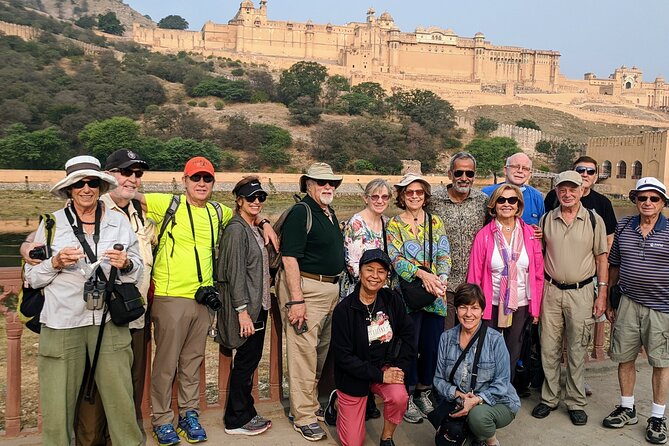
- Amber Fort (2 hours, entrance not included)
- City Palace of Jaipur (2 hours, entrance not included)
- Hawa Mahal (30 minutes, free)
- Jal Mahal (30 minutes, free)
- Jaigarh Fort (1 hour, entrance not included)
- Albert Hall Museum (1 hour, entrance not included)
- Timing and pacing: how to handle a long day without feeling rushed
- Price and value: what you get for $539.95, and what you’ll still pay
- Practical tips that will save you time (and sanity)
- Who this private Golden Triangle tour is best for
- Should you book this 5-day private Golden Triangle?
- FAQ
- How long is the tour?
- Is this tour private?
- What transportation is included?
- Does the price include entrance fees?
- Are pickup and drop-off included?
- Is accommodation included?
- What’s provided during the trip in the car?
- What is the cancellation policy?
Key highlights worth caring about
- Door-to-door comfort: AC, sanitized private car, Wi‑Fi, and bottled water throughout
- Driver-led flow: professional English-speaking driver and office support to keep timing realistic
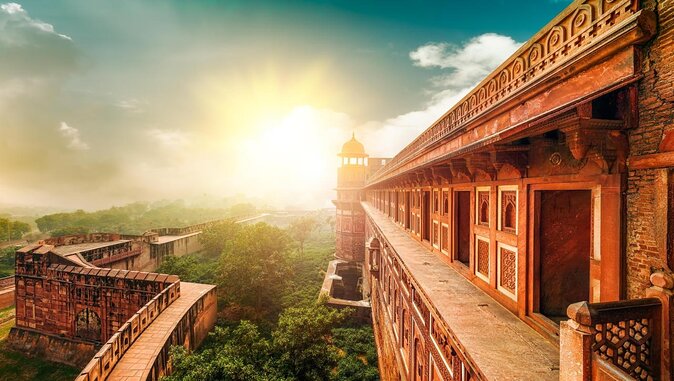
- UNESCO-focused route: major heritage sites across Delhi, Agra, and Jaipur (8 listed overall)
- Old Delhi to Mughal Agra to Rajput Jaipur: architecture changes every day
- Time-friendly pacing: set visit windows like 2 hours at Red Fort and 2 hours at the Taj Mahal
- Optional hotels with breakfast: 4 nights included when you choose the hotel option
The Golden Triangle in five days: the smart way to do Delhi, Agra, Jaipur

The classic Golden Triangle works because it’s not just about famous landmarks. You’re also moving through distinct layers of India’s story: Sultanate-era Delhi, Mughal-era Agra, and Rajputana-style Jaipur. In a short trip, this “change of scenery every day” effect is exactly what you want.
With a private car and driver, you also avoid the common pain points. You’re not timing your own hops between neighborhoods, and you’re not guessing at the best way to route around traffic. That matters in Delhi, where a 20-minute delay can turn into an hour.
This trip also helps you manage energy. Instead of sprinting across a city in the dark, you get clear stop blocks (like Humayun’s Tomb at 1 hour, Qutub Minar at 1 hour, Taj Mahal at 2 hours). I appreciate that structure, because it’s easier to plan photos, breaks, and your own pace.
Private car logistics: AC comfort, Wi‑Fi, and a driver who handles the driving
This tour includes an air-conditioned private car that’s described as clean and sanitized, plus a professional English-speaking driver. You’ll also have Wi‑Fi in the car, along with mineral water bottles during the trip, and seasonal fruits and cookies while traveling.
Why does this feel like value? Because Golden Triangle routes are distance-heavy. Between Delhi and Agra, and then Agra to Jaipur, you’ll spend real time on the road. When that road time is comfortable (AC, water, a driver who knows the city flow), your sightseeing days feel calmer.
Car type changes based on group size:
- 1–2 people: four-seater sedan
- 3–4 people: six-seater Innova
- 5–10 people: 11-seater Tempo Traveller/van
That matters if you’re traveling as a family or a small group—everyone has space without needing to split up.
Delhi day: Red Fort, Qutub Minar, Humayun’s Tomb, and the modern contrast
Day one is a strong Old Delhi-to-South Delhi mix, and it gives you a quick education in how Delhi layers time. Expect classic Mughal and Sultanate-era architecture first, then a blend with 20th-century and modern religious sites.
Red Fort (2 hours, entrance not included)
Red Fort served as a Mughal residence when the capital shifted from Agra to Delhi under Shah Jahan. It’s credited to architect Ustad Ahmad Lahori, a name that connects the fort’s story to other major Mughal projects.
Here’s what you’ll appreciate on the ground: the scale. It’s not just a building; it’s a whole power statement in stone. If you’re the type who likes to understand how empires expressed themselves, you’ll likely spend your full time and then some.
Qutub Minar (1 hour, entrance not included)
Qutub Minar is part of the Qutub complex and is UNESCO-listed. It’s a towering minaret/victory tower at 72.5 metres, and it started under Qutb Ud-Din-Aibak after he founded the Delhi Sultanate.
This stop is also great for photography because you see the monument’s vertical drama up close. Go in expecting it to feel taller than photos suggest.
India Gate (30 minutes, free)
India Gate is a war memorial dedicated to troops of British India who died in World War I. It’s fast, but it’s a good pause between bigger-ticket monuments—something you can handle even if you’re a bit tired.
Humayun’s Tomb (1 hour, entrance not included)
Humayun’s Tomb (built in 1570) is considered the first garden-tomb on the Indian subcontinent, and it inspired later design developments that culminated in the Taj Mahal.
This is one of those places where you slow down without realizing it. The garden layout gives you a natural rhythm for walking, looking, and resting your eyes.
Swaminarayan Akshardham (1 hour, entrance not included)
Akshardham is a Hindu temple and cultural-spiritual campus near Noida. It’s known for mixing traditional and modern presentation of culture and spirituality.
This final stop gives you contrast. After Mughal-era stone, you see a different kind of monument—one built for today’s visitors and ceremonies. If you like modern India as much as ancient India, this is a good landing point.
Agra day: Taj Mahal and the “how did they build this?” feeling
Day two is built around Agra’s Mughal centerpiece, with a full day of sights after check-in and lunch. You’ll get Taj Mahal time scheduled at 2 hours, plus two more major monuments.
Taj Mahal (2 hours, entrance not included)
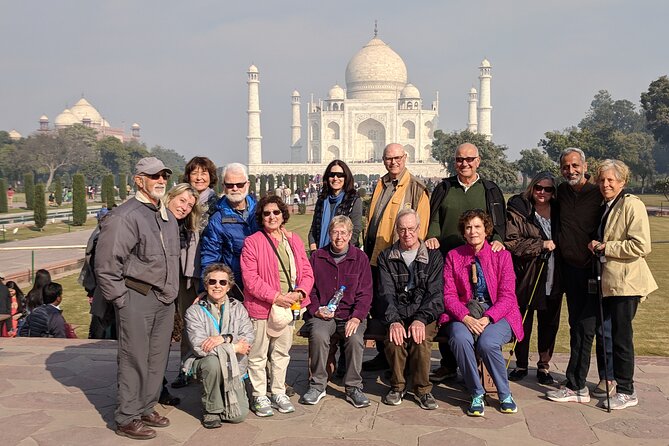
The Taj Mahal is an ivory-white marble mausoleum on the Yamuna’s right bank, commissioned in 1632 by Shah Jahan for Mumtaz Mahal. It also houses Shah Jahan’s tomb.
Even if you’ve seen it in movies, it hits differently in person. The scale and symmetry are obvious, but the details are what keep pulling you back for another look—arches, carvings, and the way the light changes across the stone.
Two hours is usually enough to do the main circuit without feeling like you’re rushing. If you want extra time for photos, treat this as your “don’t multitask” stop.
Agra Fort (2 hours, entrance not included)
Agra Fort is another UNESCO world heritage site and was a Mughal residence until the capital shifted to Delhi in 1638. It’s about 2.5 km from the Taj Mahal.
This stop is valuable because it gives context. If Taj Mahal feels like emotion, Agra Fort feels like governance and control. You start to understand how power was lived day-to-day.
Tomb of Itimad-ud-Daulah, aka Baby Taj (1 hour, entrance not included)
This mausoleum is often described as a “jewel box” and a draft of the Taj Mahal. In a tight schedule, that nickname matters: you see refined marble work on a smaller, more intimate scale.
If you’re trying to keep the trip from feeling repetitive, this is how you do it. It’s the same craft language, but in a different size and mood.
Fatehpur Sikri on the way to Jaipur: a red-stone time machine
On day three, you’ll travel from Agra to Jaipur, and you’ll stop at Fatehpur Sikri en route. It’s scheduled as a 2-hour visit.
Fatehpur Sikri was built by Mughal emperor Jalal-ud-din Mohammad Akbar in honor of the Sufi saint Sheikh Salim Chishti. The city is known for its red sandstone buildings and for combining Islamic and Hindu elements in its design, reflecting Akbar’s tolerant religious views and interest in literature, architecture, and fine arts.
Why it’s worth your time: it’s not just a single monument. It’s a whole setting—built to be seen as a city, not a postcard. In two hours you can still walk enough to feel how the space was planned.
And then you roll into Jaipur, check in, and get a breather. That matters because day four includes longer and more varied sightseeing.
Jaipur forts and palaces: Amber, City Palace, and the pink-city iconography
Day four is a packed but very “Jaipur-shaped” day. You’ll hit the big fort, the central palace complex, and multiple landmarks around the city.
Amber Fort (2 hours, entrance not included)
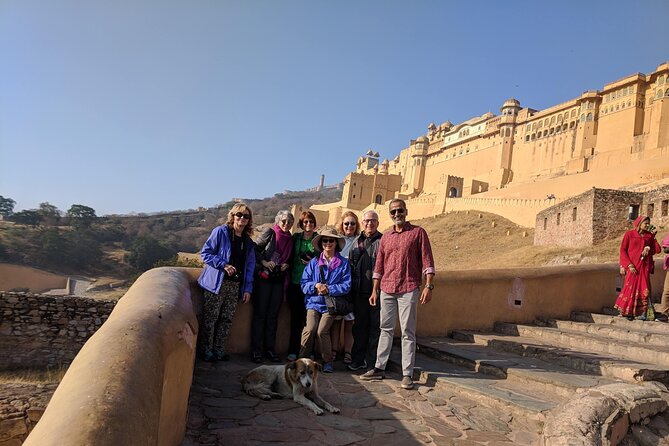
Amer Fort is known for Hindu design elements, with ramparts, gates, and cobbled paths overlooking Maota Lake. It’s also tied to the water story of the Amer Palace.
Amber Fort is a walk-through experience. You’ll see how the fort dominates the landscape and why the views from the top matter. Two hours gives you a realistic window to move at a comfortable pace.
City Palace of Jaipur (2 hours, entrance not included)
The City Palace is a cluster of courtyards, buildings, pavilions, gardens, and temples. Key structures include Chandra Mahal, Mubarak Mahal, and the Shri Govind Dev Temple, plus the City Palace Museum.
This is the cultural core if you want more than just photos. You’ll get a sense of how royal spaces worked—public-facing areas, private quarters, and religious elements in the same complex.
Hawa Mahal (30 minutes, free)
Hawa Mahal, the Palace of Winds, was built in 1799 in pink sandstone by Maharaja Sawai Pratap Singh. Its five-storey facade and jharokhas (latticed windows) blend Hindu and Islamic architecture.
Even with only 30 minutes, it’s the kind of stop that helps you orient yourself in Jaipur’s visual style. It’s also a quick stretch break if you’re carrying fatigue from the fort.
Jal Mahal (30 minutes, free)
Jal Mahal is a five-storey building on Man Sagar Lake where, when the lake is full, four floors are underwater and only the top is visible. It’s a photography-friendly viewpoint with nearby views of Nahargarh Hills.
This stop is scenic rather than museum-style. It’s a good use of time to reset your brain between denser palace and fort visits.
Jaigarh Fort (1 hour, entrance not included)
Jaigarh Fort connects to Rajput artillery production and includes the Jaivana cannon. The foundry where it was manufactured is located here.
This adds a different angle to Jaipur. Instead of focusing only on palaces and beauty, you see the military engineering side.
Albert Hall Museum (1 hour, entrance not included)
The Albert Hall Museum is named after Prince Albert of Britain and was built to entice him to visit Jaipur during his 1876 tour. It’s a smart final stop if you want one last dose of organized learning before dinner plans and travel-day fatigue.
Timing and pacing: how to handle a long day without feeling rushed
Across Delhi, Agra, and Jaipur, the visit windows are usually 1–2 hours per major site. That’s a workable structure, but it depends on your pace inside the monuments. If you like to linger, you’ll often want to treat the day like this: spend your energy on one or two “main” stops per day, and keep the others focused.
For example:
- In Delhi, Red Fort and Humayun’s Tomb are your main “time sinks.”
- In Agra, Taj Mahal is the anchor, and then you decide how much energy you have for Agra Fort and Baby Taj.
- In Jaipur, Amber Fort and City Palace are the heavy hitters, and the others are your picture-and-stroll breaks.
Also, remember that entrance fees are not included. That means you should budget for tickets in advance so you’re not surprised mid-day.
Price and value: what you get for $539.95, and what you’ll still pay
The price is listed at $539.95 per person for a 5-day private Golden Triangle with private car and driver. What you’re getting for that money is mostly the logistics plus comfort:
Included:
- Air-conditioned private car (clean and sanitized)
- Professional English-speaking driver
- Mineral water bottles, plus seasonal fruits and cookies
- Wi‑Fi in the car
- Hotel or airport pickup and drop-off
- Professional support from the office
- Mobile ticket
- GST
- Driver allowance
- 4 nights accommodation and daily breakfast if you choose the hotel option
Not included:
- Entrance fees to monuments & museums
- Gratuities
So the real value question is: do you want your own driver with AC and guided time blocks? If yes, this price is easier to justify. If you’re planning to navigate everything independently, you might spend less on transportation, but you’ll also lose the calm, and you’ll have to do more route work yourself.
One extra point on “value”: the trip is private, so you don’t have to merge your plans with strangers’ walking speed or priorities. That can be worth a lot on a 5-day schedule.
Practical tips that will save you time (and sanity)
Here’s how I’d prepare based on what’s included and what isn’t:
- Bring cash for entrance fees. Since monument tickets aren’t included, having some ready avoids friction.
- Plan for warm weather days. You’ll get water in the car, but you’ll still want a hat and sunscreen on outdoor fort/temple walks.
- Wear shoes you can walk in. Forts and old-city blocks include steps and uneven surfaces.
- Don’t over-pack your day plans. You already have time windows—your job is to match your pace to them.
- Use the car time well. Wi‑Fi is in the vehicle, so you can upload photos or check maps if you like, but keep your main mental energy for the monuments.
If you’re traveling as a family, the private setup is especially helpful because everyone can move at a comfortable rhythm instead of being forced into a group pace.
Who this private Golden Triangle tour is best for
This is a great fit if you want:
- A short trip that still covers Delhi, Agra, and Jaipur’s biggest icons
- Private transportation with an English-speaking driver
- A schedule with clear time blocks, so you’re not constantly guessing
- A mix of UNESCO sites and major architecture across Mughal and Rajput eras
It’s also a good choice for first-timers. If this is your first time in India, having someone coordinate movement and timing helps you focus on the sights rather than the logistics.
Should you book this 5-day private Golden Triangle?
Yes, if you want a calm, well-paced route between three major cities with the comfort of AC and a driver doing the hard parts. I’d especially recommend it if you hate the idea of spending your limited vacation hours on figuring out routes, bargaining for transport, or trying to coordinate timing yourself.
Skip it or adjust expectations if:
- Entrance fees and optional extras will stress your budget (since tickets aren’t included)
- You prefer total independence and don’t want a set sequence of stops
If you want the headline monuments plus a structured flow—without turning your trip into a navigation project—this Golden Triangle setup is a solid way to go.
FAQ
How long is the tour?
It runs for about 5 days, covering Delhi, Agra, and Jaipur with hotel pickup/drop-off where applicable.
Is this tour private?
Yes. It’s a private tour/activity, meaning only your group participates.
What transportation is included?
You get an air-conditioned private car and a professional English-speaking driver. Car size depends on group size (sedan, Innova, or Tempo Traveller/van).
Does the price include entrance fees?
No. Entrance fees to monuments and museums are not included.
Are pickup and drop-off included?
Yes. Hotel or airport pick-up and drop-off are included.
Is accommodation included?
Accommodation is included only if you book the option that includes hotels. In that case, it covers 4 nights, and daily breakfast is included.
What’s provided during the trip in the car?
You’ll have mineral water bottles, and seasonal fruits and cookies during travel. The car is also Wi‑Fi enabled.
What is the cancellation policy?
You can cancel up to 24 hours in advance for a full refund. If you cancel within 24 hours, the amount paid will not be refunded.