REVIEW · NEW YORK CITY
Private NYC tour by stretch limousine, choose 3 or 5-hour options
Book on Viator →Operated by New York Fun Tours · Bookable on Viator
New York feels calmer in a limo. This private stretch limousine tour lets you dodge crowds while a guide talks you through what you’re seeing, with real chances to hop out for photos. I especially love the hotel pickup and drop-off built into the plan—it keeps your day from turning into a subway scavenger hunt.
My other favorite part is how flexible the experience feels in practice. Guides like Jim and Nancy (and others you may be paired with) tend to adjust pacing and stops so your group can breathe, stretch, and get the shots you actually want. One thing to keep in mind: city closures and special events can affect driving routes—so if something like the UN is in the mix, your itinerary may shift.
In This Review
- Key things that make this limo tour work
- Why a stretch limousine makes sense in Manhattan
- The money question: what $989 really buys
- 3 or 5 hours: how the day changes
- West Village and SoHo: cobblestones, street style, and old-world architecture
- TriBeCa and Dumbo: Downtown creativity and bridge-photo energy
- Brooklyn Bridge crossing: the view everyone wants, minus the chaos
- Little Italy and Chinatown: two neighborhoods that feel like two different worlds
- 9/11 Memorial and Museum: a serious stop done with care
- Brookfield Place and the Financial District: where the city’s money pulse meets the river
- Midtown add-ons: St. Patrick’s Cathedral and the Flatiron shape your NYC view
- The guide and driver team: what service feels like in the real world
- Photo strategy and practical tips (so you don’t miss the good stuff)
- Who this limo tour is best for
- Should you book this private limo tour?
- FAQ
- Do we get hotel pickup and drop-off?
- How long are the private limo options?
- Can the route be customized?
- How many people can go on the tour?
- Is it good for young children?
- Is there free cancellation?
Key things that make this limo tour work
- Private limo comfort: you see a lot without the squeeze of public transit.
- Real photo moments: you’re not stuck looking only through tinted windows.
- A guide, not just a chauffeur: you get context while you ride.
- Lower Manhattan plus optional Midtown: a smart mix of neighborhoods and landmarks.
- Door-to-door within Manhattan: pickup and drop-off reduce hassle.
- Customizable timing: restroom breaks and extra stops happen when needed.
Why a stretch limousine makes sense in Manhattan
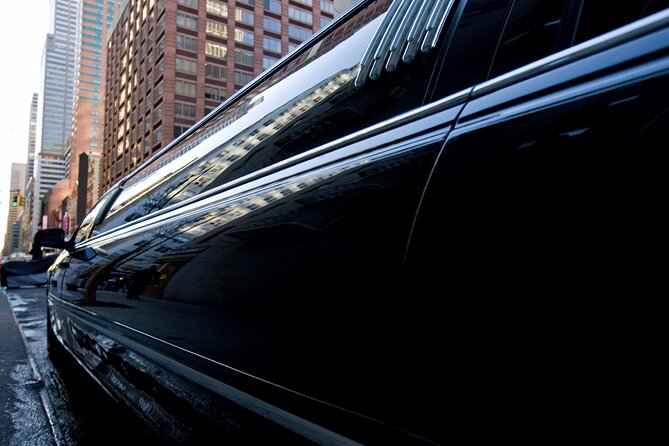
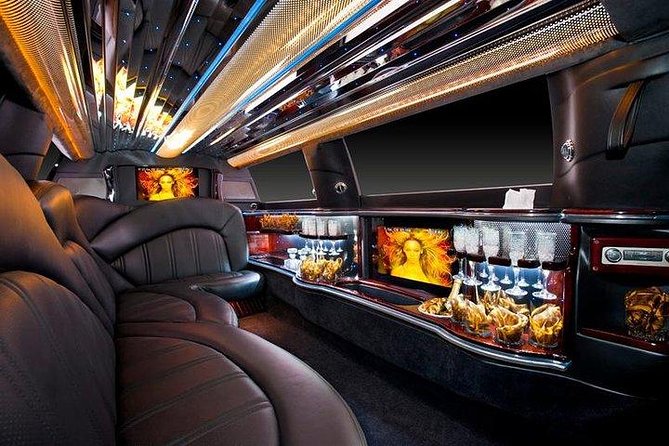
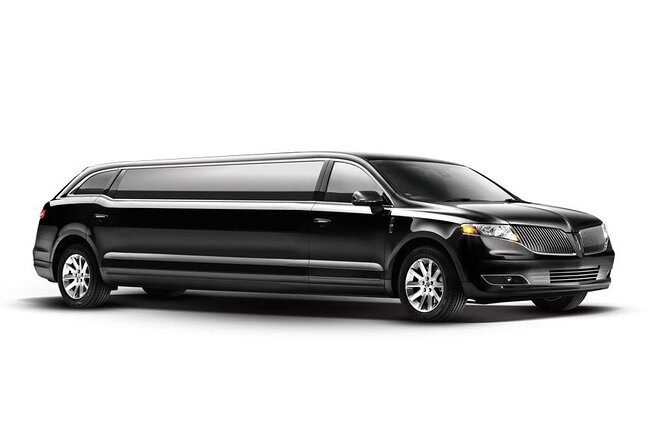
Manhattan is packed. That’s fun until you’re trying to move as a group while everyone else is also trying to move as a group. This tour’s biggest win is simple: you travel in a private stretch limousine with your own guide and chauffeur, so you can skip the worst of the crowds and still get a lot of ground covered.
The limo also changes the vibe. Instead of rushing between stops, you can actually sit back, look, and listen. You’ll learn why neighborhoods feel different from block to block, and you’ll get built-in chances to step out for camera time when a location is worth it.
The money question: what $989 really buys
At $989 per group (listed up to 6), you’re paying for three things at once: a private guide, private transportation, and the convenience of door-to-door service within Manhattan. If you’re used to paying separately for guides, taxis, and timed-entry tickets, this can start to feel like a bundled deal.
Here’s the practical way I think about value. If you’re going with friends or family who want to see a wide slice of NYC—West Village, SoHo, Chinatown, the 9/11 Memorial area, and the Financial District—doing it on your own usually turns into a pile of transit planning. This tour replaces that stress with a driver who navigates traffic and a guide who keeps the day moving.
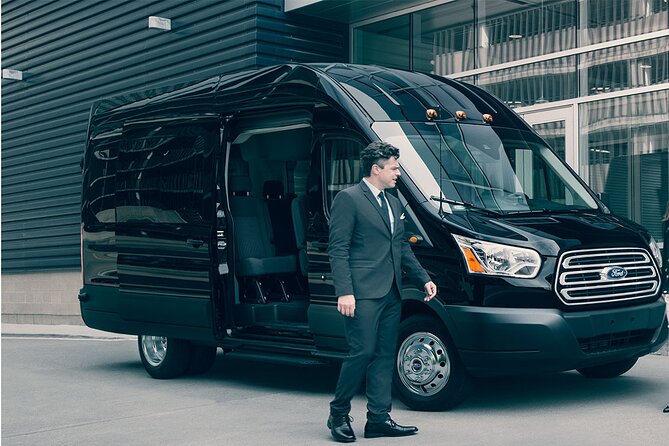
One note you should check before you book: the pricing is described as per group/vehicle up to 6, while the operator also states the vehicle can seat up to 13 passengers. That means the “right” setup depends on your group size. If you’re a larger party, it’s worth confirming how the operator is pricing and seating you.
3 or 5 hours: how the day changes

You’ll choose either a shorter (about 3 hours) or longer (about 5 hours) version. The difference isn’t just extra time—it’s how many neighborhoods and landmark areas you can fit without feeling like you’re sprinting.
In a shorter option, you’ll likely focus on Lower Manhattan highlights and key photo areas. In a longer option, you can add more of the Midtown layer and widen the range of architectural and landmark stops. The operator also notes you can customize the itinerary, so the “shape” of your day can shift based on your interests.
West Village and SoHo: cobblestones, street style, and old-world architecture
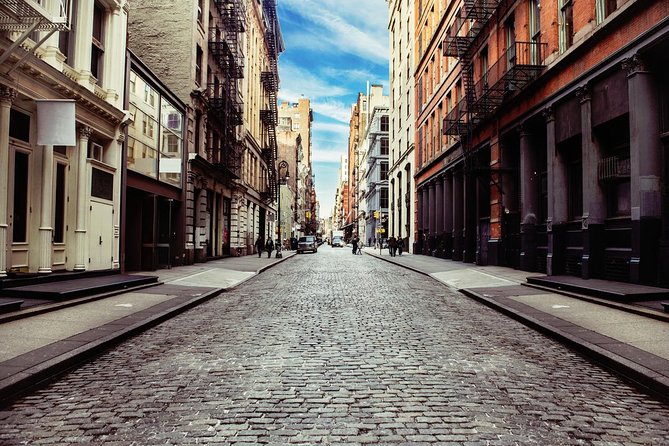
A lot of first-time NYC days start with the obvious towers. This one often begins in areas with texture—streets that feel like they have memories baked into them.
West Village is your early payoff. You’ll pass stylish blocks with Federal-style townhouses, small public squares, and that classic Greenwich Village feel that still looks human-scale compared with the rest of Manhattan. It’s also closely tied to modern cultural history, including the Stonewall Inn, which is associated with the 1969 riots that helped spark the gay rights movement. It’s the kind of area where a guide’s commentary helps you notice what you’d otherwise speed past.
Then comes SoHo. The big idea here is the architecture—many buildings are in the SoHo–Cast Iron Historic District, including the famous cast-iron elements. You’ll see why this neighborhood grew into a design and shopping magnet, and you’ll understand the “South of Houston Street” naming logic too. Side streets can be Belgian-block paved, which is one of those details you only appreciate when you’re moving slowly enough to look down at the street.
In both neighborhoods, the limo gives you a sweet balance: you get to see without wrestling for subway space, and you get photo moments when the streets are actually pretty enough to stop.
TriBeCa and Dumbo: Downtown creativity and bridge-photo energy
If West Village and SoHo are about streets and buildings, TriBeCa is about identity. TriBeCa’s history shifts over time—from farmland to residential land to mercantile activity—then toward artists and creative communities. You’ll also connect the neighborhood with the TriBeCa Festival, created after September 11 as part of an effort to help downtown rebound.
Then you head toward DUMBO (Down Under the Manhattan Bridge Overpass). This is where the day starts producing those “okay, that’s a great photo” moments. DUMBO is known as a top Instagram area, and it’s easy to see why once you’re there: the viewpoints and the street layout create strong framing for the skyline.
If you’ve never taken in the bridge area from the right angle, the limo routing can help. You’re not stuck doing only the long, crowded approach on foot. You get to position yourselves for the best views while the chauffeur handles the driving puzzle.
Brooklyn Bridge crossing: the view everyone wants, minus the chaos
The Brooklyn Bridge is the kind of landmark you can talk about for years and still want to see in person. It opened in 1883 and was the first fixed crossing of the East River. It was also the longest suspension bridge in the world when it opened.
What matters for you on this tour is not the trivia—it’s timing and comfort. Being able to get to the bridge area without public-transit transfers and with someone guiding where to stop makes the experience far less chaotic. You’ll likely get “drive-by” views plus at least one practical chance for photos.
Also, your guide can help you read what you’re looking at: suspension bridge span details, the deck height, and why this bridge became such a symbol of engineering confidence.
Little Italy and Chinatown: two neighborhoods that feel like two different worlds
This tour’s Lower Manhattan stretch intentionally pairs Little Italy with Chinatown, and that contrast is a big part of why the day stays interesting.
In Little Italy, you’ll get a quick sense of the neighborhood boundaries—how it sits next to Tribeca and SoHo, how it borders Chinatown to the south, and how it connects toward the Bowery and Lower East Side on the east. It’s also where you can see how “neighborhood identity” can remain strong even as the city changes around it.
Then comes Chinatown, one of the oldest Chinese ethnic enclaves in the US, and the one with the highest concentration of Chinese people in the Western Hemisphere. You’ll be within an area that has a huge population—estimated around 90,000 to 100,000—and where daily life is a mix of markets, restaurants, and streets full of energy. The guide’s job here is to make you understand what you’re seeing, not just where you are. You’ll be able to notice how the neighborhood has grown and why it holds cultural power.
If you care about food culture but don’t want your day hijacked by deciding which line is shortest, the limo setup is a smart compromise. You can enjoy the street scenes and decide later what to eat.
9/11 Memorial and Museum: a serious stop done with care
The National 9/11 Memorial & Museum is part reflection, part learning, and it deserves real attention in any schedule. On this tour, it’s built in as a stop within the World Trade Center complex, created to honor the victims of the September 11 attacks and the 1993 bombing.
The useful thing about having a guide is context. Standing in this area without interpretation can leave you with photos but not much understanding. With a guide, you’re more likely to connect the memorial’s meaning to the larger story of the site.
The tour data also lists admission as free for this stop, which can help you plan your time without worrying about ticket complications—though it’s always smart to confirm what’s included for your specific departure.
Brookfield Place and the Financial District: where the city’s money pulse meets the river
After you move through the memorial zone, the route often continues toward Brookfield Place, a shopping and office complex across West Street from the World Trade Center. You get Hudson River views, which is a nice contrast after more solemn streets.
Then you’ll head into the Financial District (FiDi), anchored by Wall Street. This is where New York’s wealth is generated and where major institutions cluster. You’ll hear how the district evolved, including the fact that New York was created in the modern-day Financial District in 1624.
This is also where the guide can help you “read” the scenery. It’s easy to see tall buildings and think it’s all the same. With commentary, you start to notice differences in the city’s corporate geography—where public space ends, where power sits, and why certain streets feel wider or more guarded.
Midtown add-ons: St. Patrick’s Cathedral and the Flatiron shape your NYC view
In the longer version (or if your routing includes it), Midtown landmarks can make your day feel more complete—like you’ve seen both the city’s downtown identity and its big-ticket landmark power.
Two standout stops in the Midtown layer often include:
St. Patrick’s Cathedral
A Catholic cathedral on a full city block between 5th Avenue, Madison Avenue, and 50th and 51st Streets, directly facing Rockefeller Center. Designed by James Renwick Jr., construction began in 1858, paused during the Civil War era, and was completed and dedicated in the late 1870s. The guide’s explanation helps you understand why it’s considered the largest Gothic Revival Catholic cathedral in North America.
The Flatiron Building
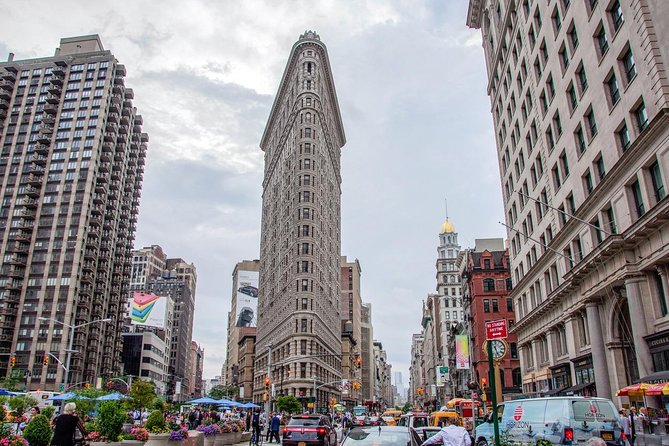
At 175 Fifth Avenue in the Flatiron District, this 22-story landmark sits on a triangular block formed by Fifth Avenue, Broadway, and East 22nd Street. It was originally called the Fuller Building, and it completed in 1902. The “Flatiron” name comes from the shape, and it’s one of those buildings that looks different depending on your angle—so timing and getting a good viewpoint matter.
These stops are short on paper but big in feel. They’re not just monuments; they’re useful anchors that help you orient yourself for the rest of your trip.
The guide and driver team: what service feels like in the real world
This tour lives or dies by people—especially the guide. The best experiences are the ones where the guide turns driving time into learning time, and where the driver handles traffic without making you feel like baggage.
I’ve seen examples of guides like Jim who were patient with older parents and coordinated stops for comfort, including restroom breaks and careful help getting in and out of the limo. Others like Nancy have been praised for energy, flexibility, and tailoring the itinerary on the fly. Laurie has also been mentioned as a flexible, enthusiastic guide who allowed route tweaks, including stopping for a pub request. And Antonio has been described as a true gentleman with deep city knowledge.
Drivers also play a huge role. People like Mohammad, Sam, Eddy, and Issac have been praised for smooth navigation through traffic and friendly professionalism. When traffic is messy, that skill is what keeps your tour from feeling like a series of delays.
There’s also a service layer before you even start: the operator has been noted as responsive and communicative when planning and when adapting to changes. If you like knowing what’s happening before you step out the door, that matters.
Photo strategy and practical tips (so you don’t miss the good stuff)
You will have opportunities to step out for photos, but you should plan like a New Yorker: time is real.
A few things that help:
- Bring a charged phone/camera and keep it easy to grab while the limo is stopped.
- Ask for the shot point: your guide can time stops for the angle that makes sense.
- Wear shoes you can walk in for 5–15 minutes if you’re getting out for photos at several stops.
- If you’re sensitive to viewing through tinted windows, plan on stepping out for the big photo moments.
Also, don’t ignore the human side. This is a private tour, so you can say what you want. If you want more time at one neighborhood vibe and less at another landmark, that’s part of the value.
Who this limo tour is best for
This is a strong fit if:
- You’re short on time and want a broad “NYC orientation” in one day.
- You’re traveling with family members who don’t want the stress of constant transfers.
- You care about both neighborhoods and landmarks, not just skyline photos.
- You want comfort first, especially in hot weather, rain, or when crowds are heavy.
It might not be ideal if:
- You want a lot of walking and don’t care about comfort.
- Your group has tiny kids who need child or baby seats—none are provided, and it’s not recommended for children aged 2 and under.
Should you book this private limo tour?
I’d book it when you want the city’s highlights with a calmer pace and less hassle than public transport. The combination of private limousine travel, hotel pickup/drop-off, and a guide who connects locations to history and culture is what makes the tour feel worth it.
If you do book, go in with a simple plan: decide which neighborhoods matter most, and be ready for small routing changes when the city throws road closures into the mix. With that mindset, this tour becomes a smart first-day move or a great way to turn a limited window in Manhattan into something richer than a checklist.
FAQ
Do we get hotel pickup and drop-off?
Yes. Pickup and drop-off are offered from hotels, residences, or a location you specify within Manhattan, including the cruise port. The tour is designed to be door-to-door.
How long are the private limo options?
You can choose approximately 3 hours or approximately 5 hours. The itinerary can be adjusted depending on how much time you select.
Can the route be customized?
Yes. The suggested itinerary can be adjusted and customized to your liking.
How many people can go on the tour?
The price is listed per group (up to 6). The operator also notes the vehicle can seat up to 13 passengers, so it’s worth confirming the setup for your exact group size.
Is it good for young children?
It’s not recommended for children aged 2 and under. The tour also notes that child or baby seats are not provided.
Is there free cancellation?
Yes. You can cancel for a full refund if you cancel at least 24 hours before the experience’s start time.