
REVIEW · NEW DELHI
Palaces and Forts of Royal Jaipur over 2 days from Delhi by private car
Book on Viator →Bookable on Viator
Jaipur feels like a live postcard when you go early. This 2-day Royal Jaipur route strings together forts and palace architecture with just enough time to actually enjoy them, not sprint through them. You leave Delhi at 7:00am by private car, then spend two focused days in the Pink City seeing places tied to Rajasthan’s royal power, astronomy, and daily life.
What I like most is the combo of big visuals and good explanations. At Amber Fort, the red sandstone and white marble aren’t just pretty; you can read the defensive logic in the walls, then catch that classic look toward Maota Lake. I also love that your guide can bring the sites to life—on this route I’ve seen guides like Neeraj and Balwinder make history feel practical, not dusty.
One consideration: not everything’s fully ticketed and food isn’t included. Hawa Mahal and Jal Mahal have admission tickets listed as not included, and food and drinks are on your own, so plan for lunch breaks and site snacks.
In This Review
- Key highlights
- Two Days From Delhi: Why This Itinerary Works
- Starting at 7:00am in Delhi: Comfort and Timing
- Amber Fort: Red Sandstone Power With Maota Lake Views
- Hawa Mahal: 1798 Jharokas and the Cool-Breeze Idea
- Nahargarh Fort: Ridge Views and Stories From 1857
- Day 2: Jal Mahal’s Floating Palace Illusion
- Jantar Mantar: The Giant Stone Sundial That Ends the Trip
- Price and Value: Is $333.34 a Good Deal?
- Guide and Group Experience: What Good Looks Like
- What to Pack and How to Make It Easier on Yourself
- Who This 2-Day Jaipur Fort-and-Palace Tour Suits Best
- Should You Book This Jaipur Route?
- FAQ
- FAQ
- What time does the tour start?
- How long is the Palaces and Forts of Royal Jaipur tour?
- Is hotel pickup and drop-off included?
- Is this a private tour?
- Does the tour include overnight accommodation?
- Is breakfast included?
- Are food and drinks included?
- Which sites have admission tickets included?
- Do I get a mobile ticket?
- When will I get confirmation after booking?
- What is the cancellation refund policy?
Key highlights
- Private Delhi–Jaipur car with hotel pickup and drop-off so you’re not timing buses and taxis
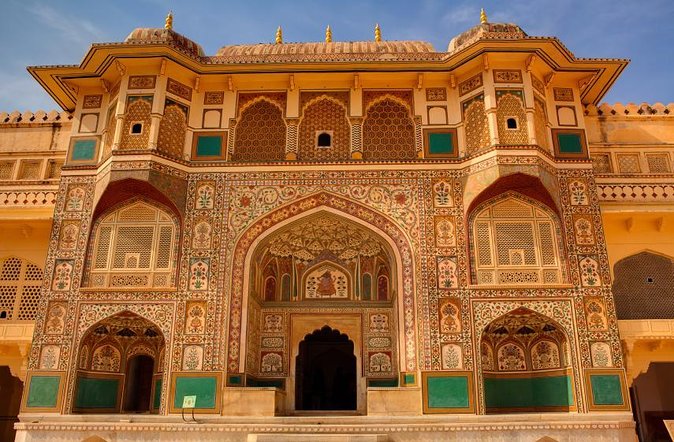
- Amber Fort + Maota Lake views paired with palace artistry on the walls
- Hawa Mahal’s 953 jharokas and the cool-breeze architecture idea
- Nahargarh Fort on the ridge with strong viewpoints over the Pink City
- Jal Mahal floating-on-the-lake look at Sagar Lake (the photo moment is real)
- Jantar Mantar’s Smarat Yantra giant stone sundial at the 18th-century observatory
Two Days From Delhi: Why This Itinerary Works
A lot of Jaipur trips feel like a checklist. This one feels more like a route. You start early enough to beat some of the worst heat and traffic, then you hit Jaipur’s most famous royal sights in an order that makes sense for walking and viewing.
Day 1 gives you the dramatic fort-and-palace hits: Amber, Hawa Mahal, and Nahargarh. Day 2 shifts to the Water Palace (Jal Mahal) and then finishes with Jantar Mantar, which is different from the rest because it’s about measurements—time, shadows, and the sky—more than royal glamour.
Also, the pace is built for a private car day. When you’re not negotiating rides between spots, you get more actual time at each stop. You’ll still want comfortable shoes. Rajasthan forts mean stairs, uneven stone, and sun.
Starting at 7:00am in Delhi: Comfort and Timing
The tour starts at 7:00am, and you drive out toward Jaipur right away. Arriving at Amber Fort around noon is a sweet spot for most people: you’re not waking up at midnight, but you still get a good chunk of daylight.
Private car matters here. You’re moving between sites that aren’t close enough to treat like a city-walk. Having hotel pickup and drop-off also cuts down the hassle if you’re staying in the city center.
Quick practical tip: bring sunglasses, a hat, and a refillable water bottle. Food and drinks aren’t included, so you’ll want a plan for snacks and lunch on your own.
Amber Fort: Red Sandstone Power With Maota Lake Views
Amber Fort is the kind of place that makes you stop talking for a minute. The mix of red sandstone and white marble isn’t just decoration. It looks like it was designed to impress visitors and intimidate attackers at the same time.
You arrive around noon and spend about 1 hour there, with an admission ticket included. The fort-pieces matter: Amber is a palace and fort built and completed over time by royal rulers such as Raja Man Singh I and Mirja Raja Jai Singh. You can see why the walls were so important—this was built to defend residents from all corners.
Then there’s the view toward Maota Lake. Even if the light isn’t perfect, the angle gives you a sense of the fort’s setting in the hills. It’s a simple detail, but it changes the whole experience. You’re not just looking at buildings; you’re seeing how the fort sits in its world.
Inside, look closely at the wall paintings and frescos made with precious materials. The point isn’t whether you can identify every element—it’s the feeling that royal life was meant to look like wealth and order, all at once.
Possible drawback: noon can be sunny. If you burn easily, plan to spend more time in shaded areas, and pace yourself through the more exposed stretches.
Hawa Mahal: 1798 Jharokas and the Cool-Breeze Idea
Hawa Mahal, or Palace of Wind, is the stop where Jaipur earns its nickname as a city of architecture tricks. The building was created in 1798, and it’s described as a five-storied honeycomb with 953 small windows called jharokas.
This is one of those sights where photos don’t fully show the scale. The façade looks like a lace pattern from far away, but up close you start to notice the repetitive lattice work and the structure built around those openings.
One unique detail you should remember: the palace is designed so that it’s said to be perennially flooded with a cool breeze, regardless of the season. Whether you feel the effect at the exact moment you visit, the design logic is still fascinating. It’s a reminder that “comfort” used to be engineered into buildings, not just an afterthought.
You’ll spend about 30 minutes here. Admission ticket is listed as not included, so you’ll likely pay separately on-site. That’s the one thing that can create friction, but it’s also normal for famous landmarks.
Practical move: go in with a quick goal. Don’t try to see every angle. Pick one main façade view, then spend your time observing the window patterns.
Nahargarh Fort: Ridge Views and Stories From 1857
Nahargarh Fort is where the tour swaps jewel-box details for wide views. It was built by Jai Singh II to strengthen Jaipur’s defenses, and it later had a different role during the Sepoy Mutiny of 1857 as a safety shelter for the wives of British Army officers.
That historical overlap is part of what makes Nahargarh more than just a viewpoint stop. You’re standing on the kind of ridge that planners would choose for visibility and protection. And you get striking views over Jaipur’s pink city areas from the rocky ridge of the Aravalli Hills.
You’ll have about 1 hour here, and the admission ticket is included. If you love viewpoints, this is a strong use of time. Late morning can still be bright, but you’re high enough to feel like you’re looking out rather than up against another wall.
Photo tip: if the sky is clear, you’ll get great contrast. If it’s hazy, focus on shapes and patterns rather than trying to capture distant buildings crisply.
Day 2: Jal Mahal’s Floating Palace Illusion
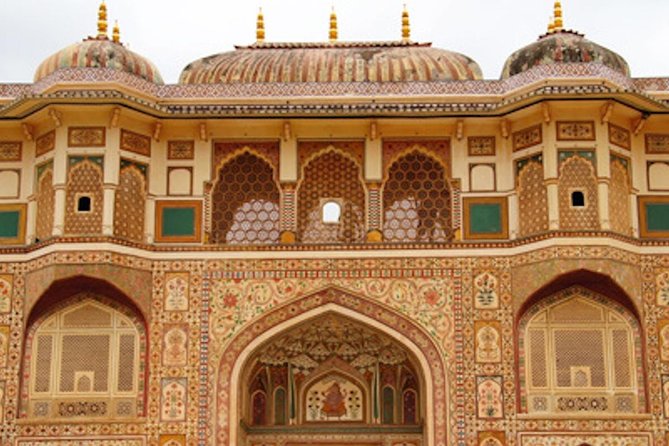
Jal Mahal, often called the Water Palace, is arguably the most photogenic stop on Day 2. This low-rise palace appears to float in the middle of Sagar Lake, and the light sand-colored stone against deep blue water is the whole visual point.
The tour starts your second day here, with about 30 minutes at the site. Admission ticket is listed as not included, so again, expect a separate cost. Even if you only get one good look, you’ll understand why it’s such an iconic image.
You’ll also hear the background: it was used as a shooting lodge for the Maharajah. That detail helps you see Jal Mahal as more than a romantic backdrop. It was part of leisure and status, connected to how royal life worked outside the main palace complex.
What to watch for: you may be walking around open areas, and you don’t have a long time buffer. Keep your pace steady and aim for one or two viewing spots rather than zig-zagging for the perfect angle.
Jantar Mantar: The Giant Stone Sundial That Ends the Trip
The final stop is Jantar Mantar, an 18th-century astronomical observatory built by Sawai Jai Singh in 1730. This is where the tour changes tone in a good way.
Instead of focusing on forts or windows, you’re looking at instruments designed to calculate planetary positions and fix astronomical tables. The whole idea is practical: better predictions meant better planning, and accuracy mattered.
You’ll have about 1 hour here, and admission ticket is included. There are 19 architectural astronomical instruments, built to measure time, shadows, and celestial positions through stone geometry.
The standout is Smarat Yantra, described as the world’s biggest stone sundial. Even if you’re not an astronomy person, you’ll likely find it impressive because the scale is so obvious. The point is: Jaipur didn’t just build for looks. It built for measurement.
If you want one last takeaway, make it this: in the same trip where you see defensive walls and royal elegance, you also see scientific thinking designed into the city.
Price and Value: Is $333.34 a Good Deal?
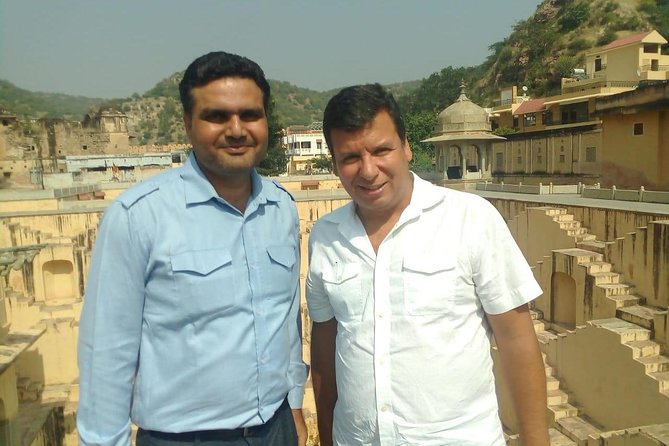
At $333.34 per person (for this 2-day private car experience), the value depends on what you care about most: comfort, time saved, and having someone sort the logistics.
Here’s what’s included:
- Overnight accommodation
- Breakfast
- Hotel pickup and drop-off
- Private car
- Guide
- All taxes, fees, and handling charges
That inclusion list matters. Delhi–Jaipur driving isn’t just “getting there.” It’s also about getting in and out smoothly, arriving at the right time for key stops, and not losing half a day to transport wrangling.
What’s not included:
- Food and drinks
- Admission tickets for Hawa Mahal and Jal Mahal (Amber, Nahargarh, and Jantar Mantar have tickets listed as included)
So the real question for you is simple: do you want the convenience of a guided, private route with a pre-set schedule? If yes, the price is easier to justify. If you’d rather freestyle, you could do Jaipur on your own—but you’ll spend more time organizing transport, picking tickets, and figuring out timing.
One more value note: private-car costs often feel easier to handle when you share the ride with others. Since this is private for your group, the per-person impact can soften if you’re traveling as a couple or small group.
Guide and Group Experience: What Good Looks Like
This is a private tour, meaning only your group participates. That tends to improve the quality of the experience because your guide can pace things for your comfort level and answer questions without juggling everyone’s timing.
From the guide names I’ve seen connected with this route—Neeraj and Balwinder—the pattern is clear: the best part isn’t just facts. It’s the ability to connect what you’re seeing to why it was built.
If you’re the kind of person who likes asking why certain choices were made—why that ridge, why that window pattern, why that observatory—this format is a good fit.
What to Pack and How to Make It Easier on Yourself
You’re moving through forts and palace areas on a tight schedule. Keep your gear practical.
- Wear shoes with grip. Fort surfaces can be rough.
- Bring sunscreen and a hat. The itinerary includes outdoor viewing time.
- Keep small cash or a card ready for anything not included, especially Hawa Mahal and Jal Mahal admissions and food.
- Use the guide. If you’re unsure what to look for at a fort, ask early. You’ll get better returns on your time.
Also, plan your camera workflow. Jaipur is full of repeatable photo angles, but you’ll enjoy the sites more if you don’t spend the entire time chasing the next shot.
Who This 2-Day Jaipur Fort-and-Palace Tour Suits Best
This tour is ideal if you want:
- A structured route without the headache of transport planning
- A mix of royal palaces, defensive forts, and a science stop at Jantar Mantar
- Time-saving convenience from Delhi with hotel pickup/drop-off
- A guide who can explain what you’re seeing in plain language
It’s also a good fit for first-timers in Jaipur who want the big names without feeling like they’ve been herded.
If you prefer slow, wandering shopping streets and you don’t care much about royal architecture, you might feel boxed in. But if you want the highlights with context, you’re in the right place.
Should You Book This Jaipur Route?
Book it if you want a smooth, private, two-day hit of Jaipur’s most important sights—Amber Fort, Hawa Mahal, Nahargarh, Jal Mahal, and Jantar Mantar—with a guide and an overnight already handled.
Think twice if you’re trying to keep every cost minimal. Food and drinks aren’t included, and you should expect extra admission expenses for Hawa Mahal and Jal Mahal. Also, it’s a full schedule. If you hate walking or strong sun, adjust your expectations and pack for comfort.
FAQ
FAQ
What time does the tour start?
The tour start time is 7:00am.
How long is the Palaces and Forts of Royal Jaipur tour?
The duration is approximately 2 days.
Is hotel pickup and drop-off included?
Yes. Hotel pickup and drop-off are included.
Is this a private tour?
Yes. It’s private, and only your group participates.
Does the tour include overnight accommodation?
Yes. Overnight accommodation is included.
Is breakfast included?
Yes. Breakfast is included.
Are food and drinks included?
No. Food and drinks are not included.
Which sites have admission tickets included?
Amber Fort, Nahargarh Fort, and Jantar Mantar have admission tickets included. Hawa Mahal and Jal Mahal have admission tickets listed as not included.
Do I get a mobile ticket?
Yes. Mobile ticket is listed as a feature.
When will I get confirmation after booking?
Confirmation is received within 48 hours of booking, subject to availability.
What is the cancellation refund policy?
You can cancel up to 6 days in advance for a full refund. Cancel 2–6 days before for a 50% refund. If you cancel less than 2 days before, the amount paid will not be refunded.