REVIEW · KANAZAWA
Noto Full Day Driving Tour (Private Car)
Book on Viator →Operated by Kanazawa Tours · Bookable on Viator
Noto looks slow and wild on the map, but in one day it turns practical. This private driving tour lets you knock out major highlights without stitching together trains and buses. You get an air-conditioned car for the long stretches, plus a driver-guide who keeps the day moving.
What I like most is the mix of places that feel distinctly Noto: morning life at the Wajima Morning Market, then scenic farm country at Shiroyone Senmaida and the Okunoto Salt Farm Village. The one catch to keep in mind is weather—salt production is best with sun, so heavy rain can change what you get to do most fully.
In This Review
- Key things that make this Noto day tour worth your time
- Why Noto by private car works so well from Kanazawa
- Wajima Morning Market: fuel up on fish, produce, and local crafts
- Shiroyone Senmaida rice terraces: layered slopes you can really appreciate
- Okunoto Salt Farm Village and the Agehama technique
- Myojo-ji Temple: Nichiren roots and a towering Shakamuni Buddha
- Chirihama Beach Driveway: 8 km of sand with room to roam
- Price and logistics: what you’re paying for, and how to judge the value
- Should you book this Noto full day private driving tour?
- FAQ
- FAQ
- What is the duration of the Noto Full Day Driving Tour?
- What time does the tour start?
- Is pickup included?
- How much does the tour cost per person?
- Are admission fees included?
- Is lunch included?
- What kind of ticket do you receive?
- What’s the cancellation policy?
- Is this tour weather-dependent?
Key things that make this Noto day tour worth your time
- Private door-to-door feel: you’re not waiting around for connections or crowding onto small buses.
- A full highlight sweep: market, rice terraces, salt farms, a major temple, and a beach driveway in one loop.
- Hands-on nature scenery: terraced paddies, salt fields, and a long sandy stretch you actually drive on.
- Comfort on the road: air-conditioned vehicle for a peninsula day that can involve lots of driving.
- Tickets and fees handled: admission and taxes are included, so fewer surprises.
- Rain can matter: the salt farm can be impacted if conditions aren’t ideal.
Why Noto by private car works so well from Kanazawa
Noto’s spread out. That’s the whole deal. Highlights are separated by real distances, and public transport can turn a “day trip” into a day of standing around. A private car flips that. You spend your energy looking out the window, not checking timetables.
This tour is built around a long, single-day rhythm: start in the morning, hit five key places, and be back in time to keep your trip from feeling like a marathon. At about 9 hours total, with roughly an hour at each main stop, it’s structured enough to feel efficient but not so rushed that you can’t actually walk around.
If you care about comfort (and most people do on a full day), the included air-conditioning is a real plus. And if you want a driver-guide who can add context and keep you on track, the reviews point to guides like Nori and Mai doing exactly that—helping you get the most out of each stop without turning it into a lecture.
Wajima Morning Market: fuel up on fish, produce, and local crafts
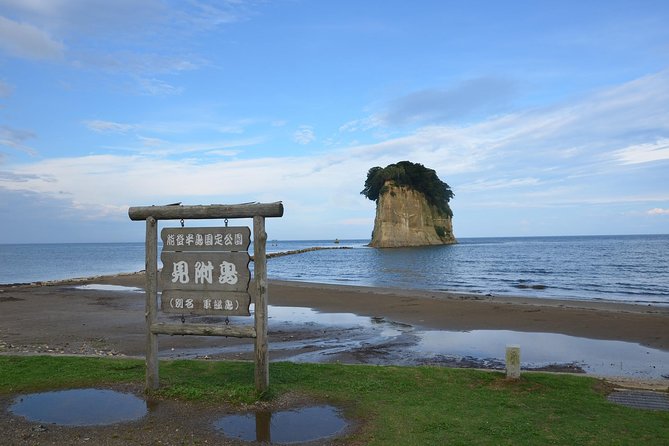
Starting the day at Wajima Morning Market is a smart move because it’s when the energy is high and the stalls are doing their thing. You’ll see fresh fish brought in from the port, vegetables from nearby farmland, plus traditional arts and crafts. It’s not a place built for photos—it’s a place built for trading, sampling, and morning routine.
The value of doing this early is that you’re not arriving when things are picked over or when you only get the leftovers. You get the full “morning” experience: voices in the avenue, activity at the stalls, and that sense of everyday Noto life. It also makes a nice contrast to later stops that are quieter and more scenic.
Practical advice: give yourself room to wander. Even if you’re not buying much, you can still snack, browse, and get a feel for what locals bring home. If you’re the type who likes markets, you’ll love the pacing here because it’s one hour—long enough to get oriented, short enough that you’re not stuck there past the best of it.
Shiroyone Senmaida rice terraces: layered slopes you can really appreciate
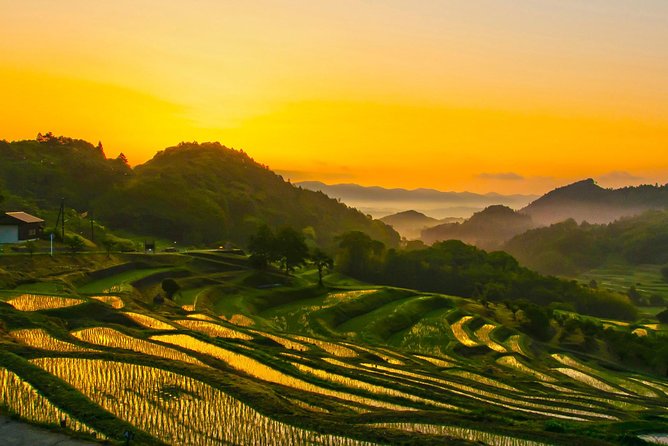
Next comes Shiroyone Senmaida, the kind of landscape that looks unreal until you’re standing in front of it. These are steep-slope rice paddies arranged in many layers, reaching down toward the foot of Koushuzan Mountain. The area is listed as about 1.2 hectares, and that scale helps you understand why the view can feel so intimate—this isn’t some tiny “postcard patch,” but also not so huge that you can’t take it in.
What I like about this stop is how it connects scenery to agriculture. Rice terraces aren’t just pretty; they’re an engineering solution shaped by hillside water and growing seasons. Even if you don’t know the technical details, you can read the land as something that’s been managed for years.
A small consideration: walking paths can feel exposed depending on the weather. If it’s wet, take your time. If it’s sunny, bring something for the heat and plan on spending a little time simply looking—this is one of those places where photos don’t really capture the layered depth.
Okunoto Salt Farm Village and the Agehama technique
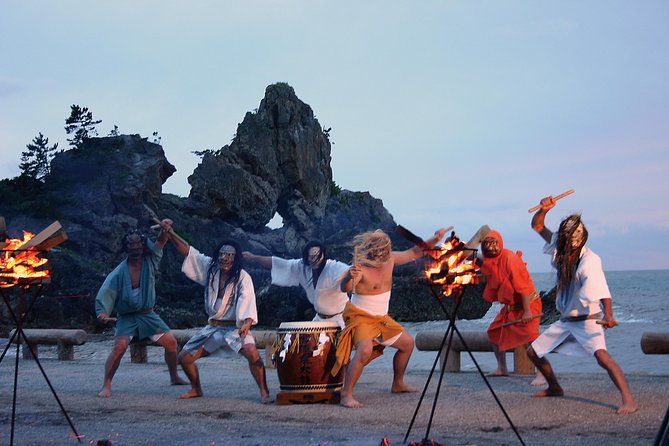
Okunoto Salt Farm Village in Suzu is where the day gets more hands-on and more unusual. This facility uses the traditional Agehama technique for salt production, and it’s described as the only facility in Japan using that method. You’re not just seeing salt as a product—you’re seeing salt as a process tied to the landscape.
This is also the stop most sensitive to conditions. In rain, it can change the experience, and the salt farm may be harder to enjoy in the way you planned. That doesn’t mean the stop is pointless—salt fields and their shapes are still interesting—but if your ideal day includes clear skies and full visibility, watch the forecast and be realistic.
Practical note: even if you’ve never cared much about salt before, this stop can change your mind because it reframes something ordinary as something made by place and work. If you’re a nature fan, it’s a great bridge between the rice agriculture of Senmaida and the more dramatic shoreline scenery later.
Myojo-ji Temple: Nichiren roots and a towering Shakamuni Buddha
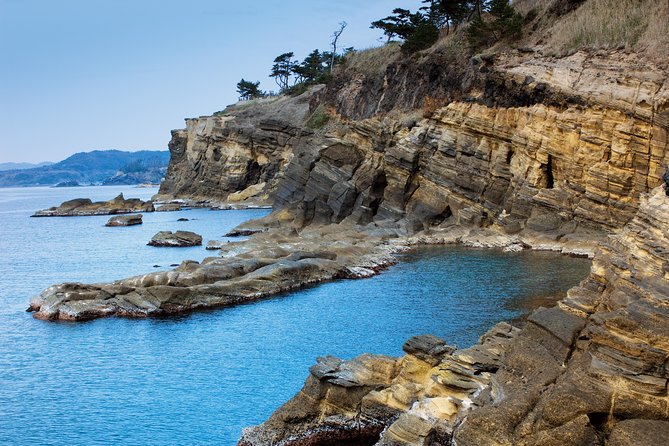
After farming landscapes, you get a cultural reset at Myojo-ji Temple, described as the head temple of the Nichiren Sect in the Hokuriku region. That alone gives it weight for anyone interested in how Japanese religious traditions developed regionally.
The standout here is Joroku-do, a hall containing a wooden statue of Shakamuni Buddha. The statue is listed as 5 meters tall, which is the kind of scale that changes how you look at the room. It’s one thing to read about a temple; it’s another to stand there and feel how big it is.
What to know before you go: one hour is a sensible window for temple visits like this. You can look at the main areas, absorb the atmosphere, and still keep energy for the outdoor sites afterward. If you’re not especially into Buddhist art, you might want to at least make time to focus on the Joroku-do hall—because the scale is memorable even if you only have a short stop.
Chirihama Beach Driveway: 8 km of sand with room to roam
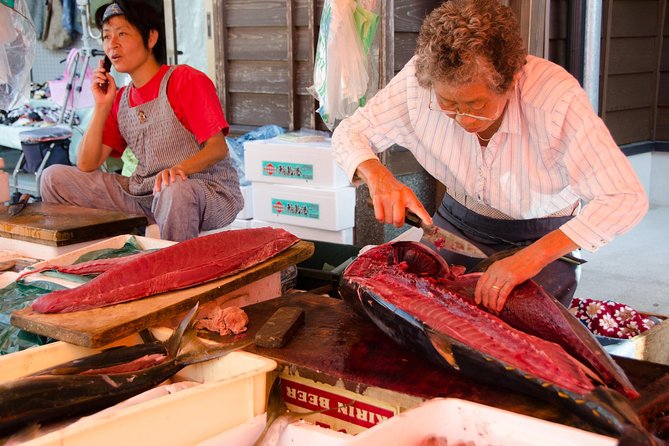
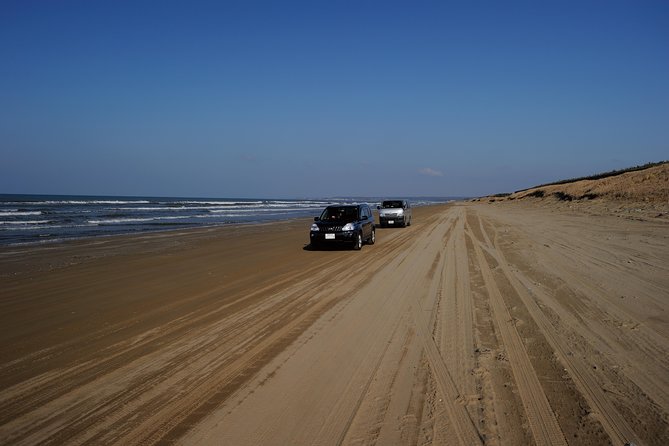
Then comes the most fun and most unusual stop: Chirihama Nagisa Driveway. It’s an 8 km long beach driveway running from Imahama Beach to the Chirihama beach area in Hakui-gun. The road width is listed as about 50 meters, and it’s made of tightly compacted fine sand—firm enough to drive on.
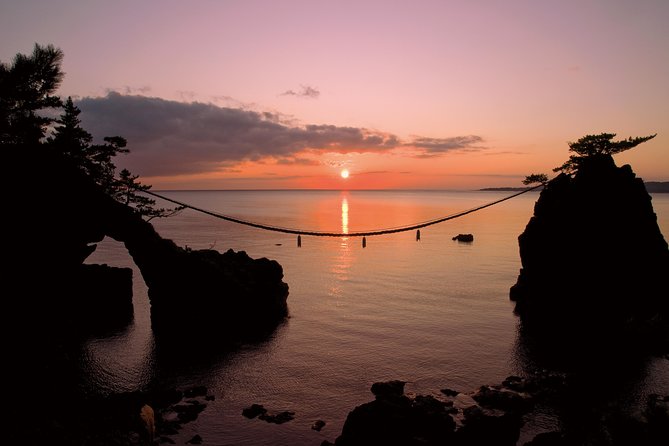
This is the kind of place that feels like a Noto signature. You get wide shoreline space, the sense of movement along the coast, and a different texture than rice paddies or salt fields—hard sand underfoot, open sky, and shoreline views that make the whole peninsula feel bigger.
Practical consideration: since it’s sand, footwear matters. Choose shoes you’re comfortable walking on. If it’s windy or if the air feels damp, pack a layer. And if rain has been part of the day, the beach portion can be less comfortable—still worthwhile, but plan for getting wet or dealing with damp sand conditions.
Price and logistics: what you’re paying for, and how to judge the value
The price is $337.25 per person, and the big question is whether a private day is worth it for you. Here’s the value logic I’d use:
You’re getting:
- A private air-conditioned vehicle for a long peninsula loop
- All fees and taxes included (so admissions aren’t an add-on surprise)
- Stops at five major Noto highlights
You’re not getting:
- Lunch (you’ll stop for food and drinks at your leisure)
So yes, it costs more than doing things DIY, but you’re buying back time and energy. On Noto, that matters because the distances add up. If you’re only in the area for a limited window, the “save time” factor turns into real trip quality: less stress, more scenery, and a plan that fits into your vacation rhythm.
When I see a price this high, I think about two traveler types:
1) Couples or small groups who want convenience without splitting into multiple buses
2) People with limited time who can’t afford a day full of transfers
If you’re traveling solo and are determined to save every dollar, you might compare against public options. But if you value comfort and want a single-day highlight sweep, this tour is built for that.
Should you book this Noto full day private driving tour?
Book it if you want a one-day overview of Noto that actually feels efficient: market morning energy, dramatic rice terraces, a salt production stop that’s more specific than the usual tourist script, a major temple, and a beach where the experience is more physical than typical sightseeing.
Skip or be cautious if weather is unreliable for your travel window. Heavy rain can affect the salt farm experience, and Chirihama Beach and outdoor strolling can feel less pleasant. If you’re okay with adjusting expectations and you like the idea of seeing Noto’s working landscapes, you’ll probably still enjoy the day.
FAQ
FAQ
What is the duration of the Noto Full Day Driving Tour?
It runs for about 9 hours.
What time does the tour start?
The start time is 8:00 am.
Is pickup included?
Yes, pickup is offered.
How much does the tour cost per person?
The price is $337.25 per person.
Are admission fees included?
Yes. All fees and taxes are included, and each stop lists its admission status (with some included and some free).
Is lunch included?
No. Lunch isn’t included, but there will be a stop for food and drinks at your leisure.
What kind of ticket do you receive?
You get a mobile ticket.
What’s the cancellation policy?
You can cancel for a full refund up to 24 hours in advance of the experience’s start time. If canceled due to poor weather, you’ll be offered a different date or a full refund.
Is this tour weather-dependent?
Yes. The experience requires good weather, and poor weather can lead to changes or cancellation.