REVIEW · FUJIYOSHIDA
Mount Fuji – Private Tour with English Speaking Chauffeur
Book on GetYourGuide →Operated by SLUZEB Tours · Bookable on GetYourGuide
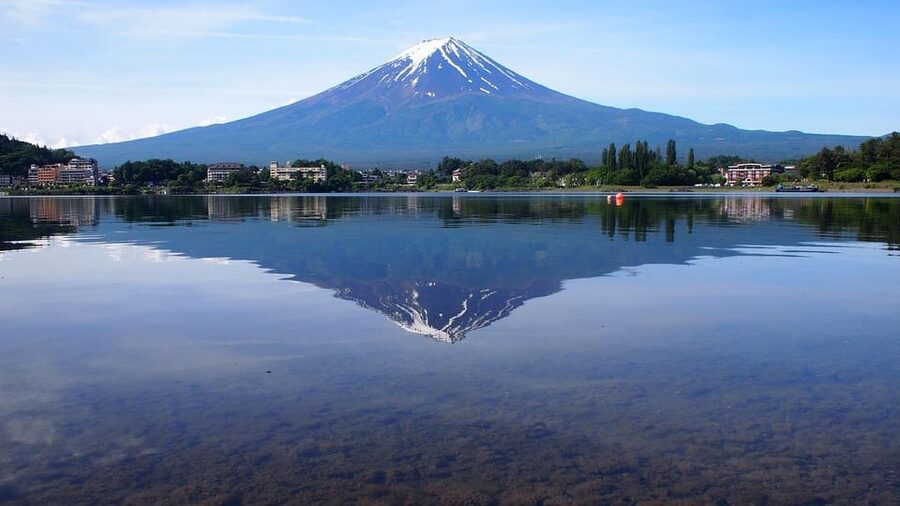
A day to chase Fuji views. This private Mount Fuji tour strings together the classic hits around Lake Kawaguchiko with private transportation and a bilingual chauffeur for a smooth, low-stress outing. It’s a big day, but the payoff is a full menu of views, gardens, and storybook stops.
I especially like the mix of scenery and culture—Oshino Hakkai and the lakeside viewpoints give you different faces of Fuji instead of just repeating postcard angles. I also like the practical extras: bottled water, air-conditioning, and help with photo and video so you spend less time wrestling with your camera.
One thing to consider: this is more of a chauffeur-led day than a commentary-heavy guided tour. In one experience, the driver was polite and on time, but English support felt limited and there wasn’t much storytelling—so if you want deep context, you’ll want to ask questions along the way.
In This Review
- Key takeaways before you book
- Entering The Fuji Day: how the 10 hours from Tokyo really feels
- Oshino Hakkai: the eight springs that anchor the whole Fuji story
- Chureito Pagoda: why this five-tier view is so iconic
- The Mount Fuji photo stop: your reality check for visibility
- Oishi Park and Lake Kawaguchiko: lavender timing and calmer views
- Arakura Fuji Sengen Shrine: prayers, cherry blossoms, and a big viewpoint
- Saiko Iyashi no Sato Nemba: time travel you can actually walk through
- Mt. Fuji 5th Station versus Gotemba Premium Outlets: the choice that shapes the day
- If you choose Mt. Fuji 5th Station
- If you choose Gotemba Premium Outlets
- My practical advice
- Pricing and value: when $967 per group feels fair
- The English-Japanese chauffeur question: what to expect in practice
- A realistic packing and comfort checklist for this Fuji day
- Should you book this Mount Fuji private tour?
- FAQ
- What is the duration of this Mount Fuji private tour from Tokyo?
- What is the price and group size for this experience?
- What languages are available during the tour?
- Is lunch included?
- Are admission tickets included?
- Can I visit both Mt. Fuji 5th Station and Gotemba Premium Outlets in the same day?
Key takeaways before you book
- Private car from Tokyo means less commuting friction and more time at each stop.
- Bilingual English/Japanese chauffeur can be a big help when you’re asking where to stand for photos.
- Photo and video assistance is built into the experience if you need angles and pacing.
- Oshino Hakkai + Chureito Pagoda hit two must-see Fuji icons early and keep the day efficient.
- Oishi Park and lavender timing can affect what you see above the lake—mid-June to mid-July is a sweet window.
- 5th Station and Gotemba are time-linked: you’ll have to choose one, since they can’t fit together.
Entering The Fuji Day: how the 10 hours from Tokyo really feels
This is a full-day private loop designed to minimize logistics. You get picked up in Tokyo, ride in an air-conditioned vehicle, and spend your time at key sights around the Fuji region rather than figuring out buses and train transfers. With a tour time of 10 hours, you’ll move at a fairly steady clip—think “lots of stops, not lots of lingering.”
The pricing is per group up to 5 people. That matters because you can make this good value if you’re traveling with family or a small group, but it can feel pricey if you’re two people going solo on the cost. The biggest reason to choose a private car here is convenience plus timing—especially when you’re trying to cover Lake Kawaguchiko views and several signature sites in one day.
You’ll also notice a theme: some places are optimized for photos, some are optimized for a quick walk with scenery, and one is a bigger optional commitment—Mt. Fuji 5th Station. If you like structure and want to see the icons without stress, this format works.
And yes, lunch isn’t included. You’ll want to plan for either grabbing something simple on your own or using the free time windows at the stops to refuel.
Oshino Hakkai: the eight springs that anchor the whole Fuji story
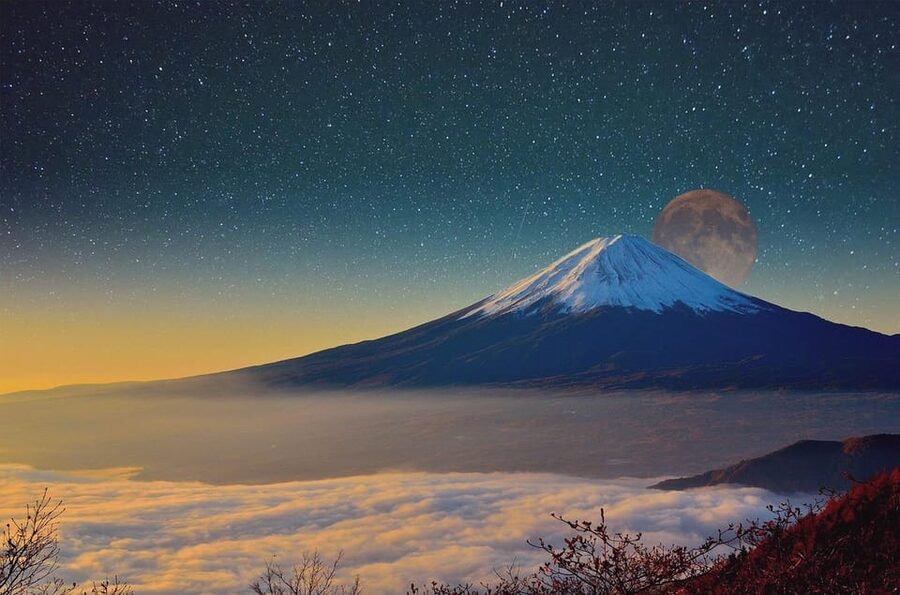
Oshino Hakkai is the tour’s opening act for a reason. These are eight springs in Yamanashi, recognized as a natural monument and tied to the Mount Fuji World Heritage area. In practical terms, it’s a calmer, more intimate place to start your day before the photo-heavy viewpoints kick in.
What you’ll likely love here is the feel of being close to the water itself. Unlike viewpoints where you’re just looking outward, Oshino Hakkai gives you something to look at and around: the spring pools, the walkways, and the way the village-styled setting frames Mount Fuji when it appears.
The itinerary gives you about 30 minutes—enough for photos and a short walk, not enough to treat it like a half-day nature hike. If you’re hoping for deep, slow wandering, you may find the timing a bit tight. But for most people, it’s a strong start and a smart way to orient yourself in the region.
Chureito Pagoda: why this five-tier view is so iconic
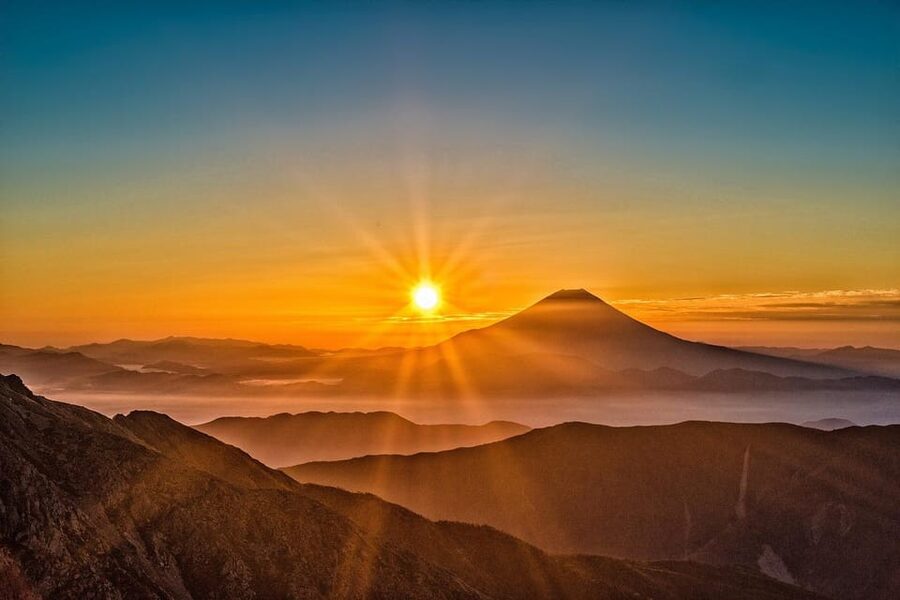
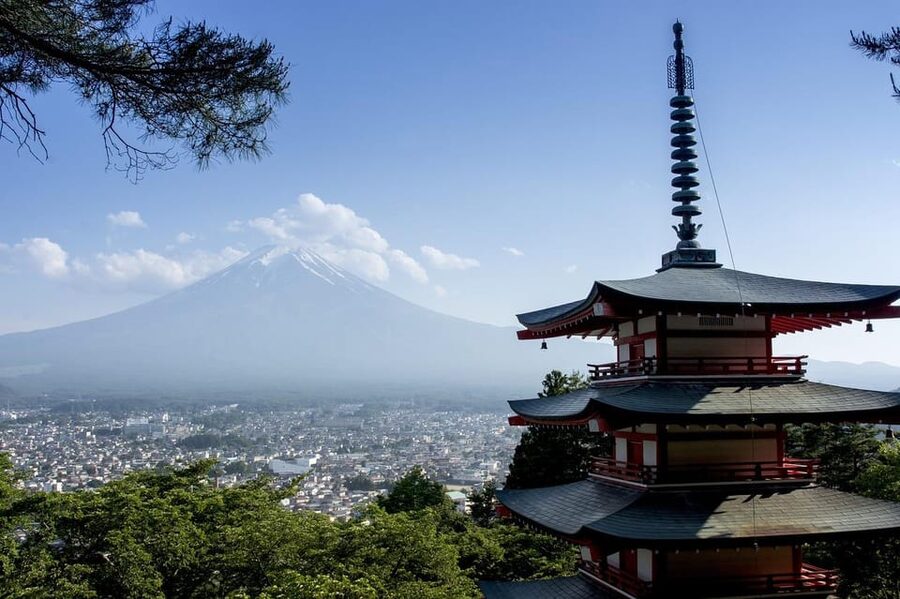
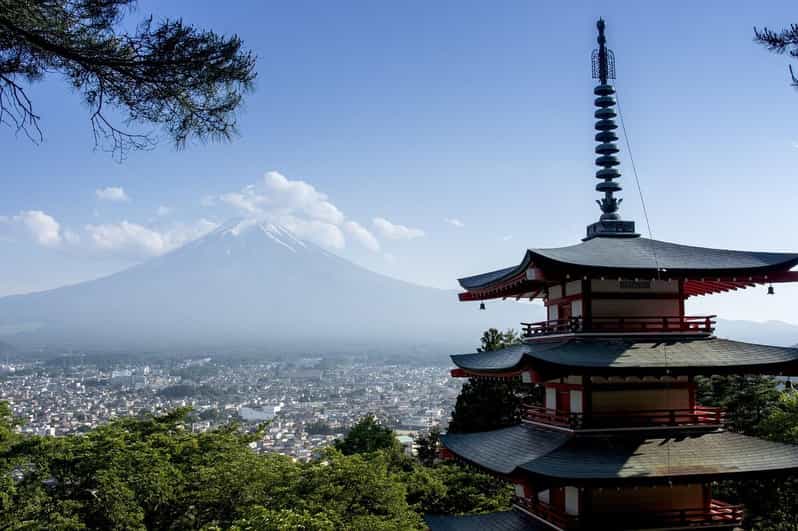
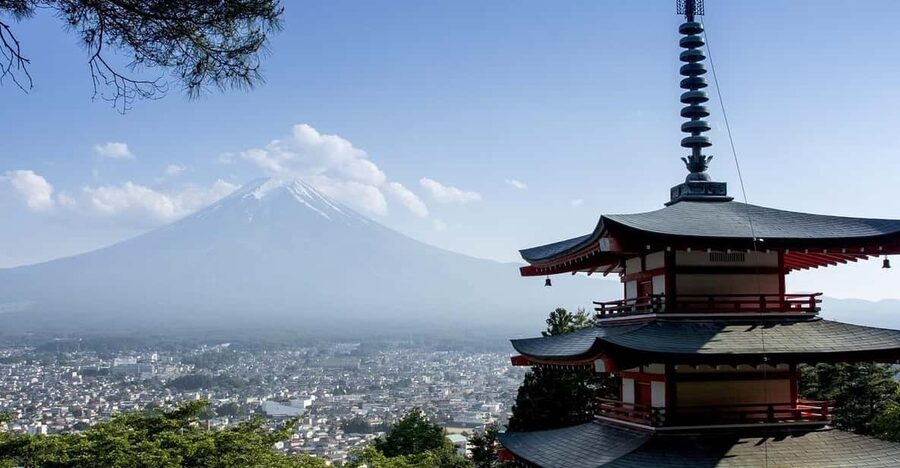
Next up is the Chureito Pagoda, a five-storied pagoda that you’ll see in countless Fuji photos for a simple reason: it’s a classic foreground + Fuji background setup. This one also has a built-in story. It was created in honor of those lost from the First Sino-Japanese War beginning in 1868 through WWII.
You’ll get a photo stop plus time to visit and walk around. That extra time matters because the best spot to shoot often depends on whether Fuji is visible at that moment and how the pagoda lines up with the angle you choose.
A quick consideration: the Chureito area can attract crowds, especially during good weather and spring. Your best strategy is to use the allotted time with purpose—get the “wide postcard” first, then try a couple of tighter angles before you move on.
The Mount Fuji photo stop: your reality check for visibility
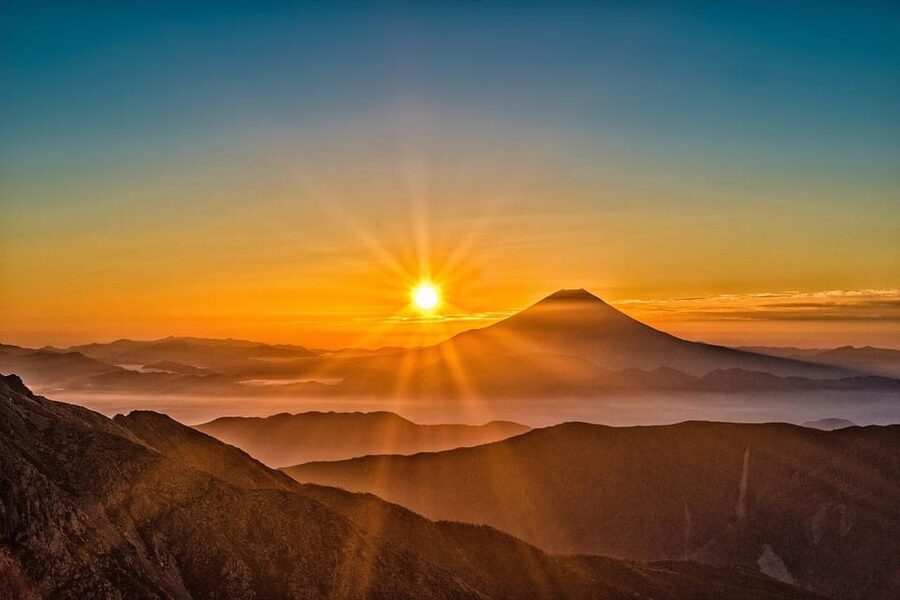
The itinerary includes a general Mount Fuji photo stop and sightseeing time afterward. This is where the day’s weather and cloud cover start to matter most. Fuji isn’t guaranteed to be perfectly clear, even in months when conditions are often favorable.
I treat these mid-day photo windows as a reality check. If you can see the mountain sharply, that’s your cue to take your pictures then. If visibility is spotty, you don’t want to waste the day chasing perfect shots at one stop only—this tour’s multiple Fuji-facing stops help spread your odds.
Keep your patience. Fuji can reveal itself in phases: a few hours of partial view can still turn into a good shot later, especially when you reach higher observation areas.
Oishi Park and Lake Kawaguchiko: lavender timing and calmer views
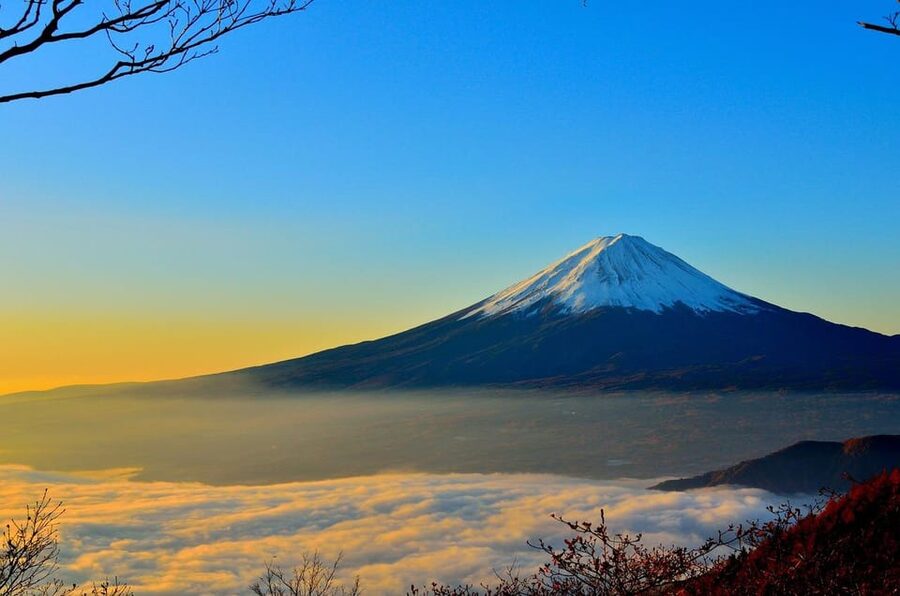
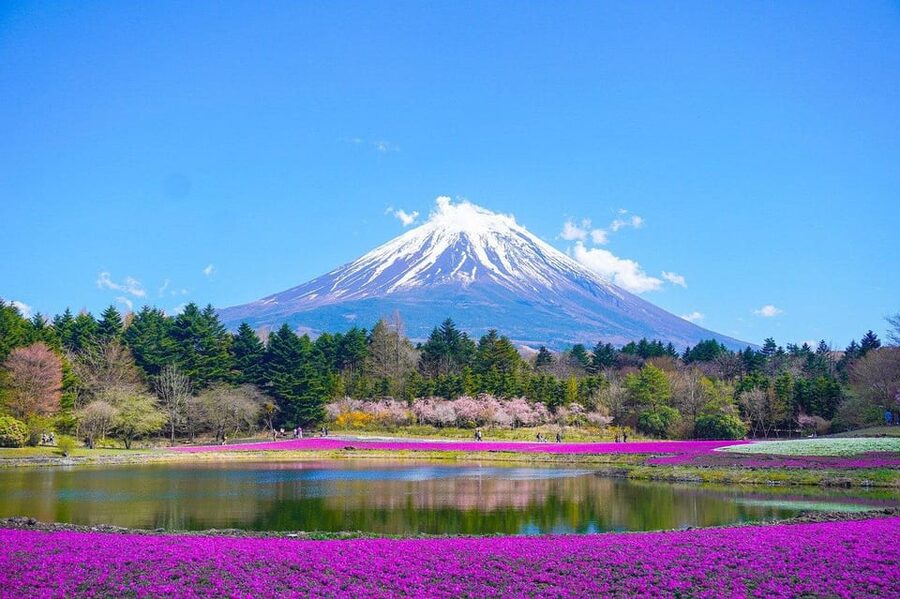
Then comes Oishi Park, another strong Fuji-photo zone. The standout detail here is seasonal: lavender blooms from mid-June to mid-July. The timing matters because the description notes that this is a period when you’re unlikely to see a snow cap on Fuji. If you’re more interested in the mountain’s full silhouette than a wintry look, this can be a great match.
You also get about 30 minutes—enough to look, take photos, and enjoy the park without turning it into a rushed sprint. The surrounding region is built around Lake Kawaguchiko, with tourist energy heavier on the east end and more undeveloped feel along parts of the north and west shores.
What I like about pairing this stop after the pagoda is pacing. You’re moving from a symbolic, structured view to something more open and airy. It’s a useful reset before the shrine viewpoint and the village-style history stop.
If you’re traveling during lavender season, plan your photo timing. Don’t just aim for “when you arrive.” If clouds shift, adjust quickly and use your time while the light is good.
Arakura Fuji Sengen Shrine: prayers, cherry blossoms, and a big viewpoint
This is one of those stops that’s both scenic and meaningful. Arakura Fuji Sengen Shrine is visited for more than photos. People come to ward off evil, to pray for family happiness, and for safe childbirth. In spring, cherry blossoms can add another layer—crowds gather specifically for the Fuji + sakura look.
The tour gives you about 30 minutes with time to walk and visit. That’s a practical amount of time for a viewpoint shrine area: enough to walk up, pause, and get photos, but not so long that you lose the rest of your day to slow wandering.
A drawback to keep in mind: shrine stairs and paths can be tiring, especially if you’re also planning to go up to higher vantage points later. If you’re sensitive to walking time, wear supportive shoes and keep your plan simple: one main viewpoint photo first, then decide if you want a second angle.
Saiko Iyashi no Sato Nemba: time travel you can actually walk through
After the shrine, you’ll visit Saiko Iyashi no Sato Nemba—a replica of an old Japanese village built with careful attention to detail. It’s the kind of place where your brain relaxes because you’re not only looking outward at Fuji; you’re exploring a recreated setting.
The history attached to it is specific. The village was destroyed by a typhoon-related landslide in the late sixties, and what you see today was rebuilt afterward. That makes the walking experience feel less like a themed stop and more like preservation after disruption.
The time on this stop is designed to fit the rest of the day. You’ll have enough to stroll around, photograph the thatched-roof buildings, and get a sense of the village layout. If you’re the type who likes “tiny details” in architecture and textures, you’ll probably enjoy it more than you expect.
Mt. Fuji 5th Station versus Gotemba Premium Outlets: the choice that shapes the day
Here’s the big decision point. You have options that can’t both fully fit due to time. The tour notes that if you want Mt. Fuji 5th Station, Gotemba Premium Outlets will be excluded. If you choose Gotemba, then Mt. Fuji 5th Station will be excluded.
If you choose Mt. Fuji 5th Station
You’ll get a photo stop plus visit and sightseeing time, about 2 hours. This is the halfway-up feeling: most climbers start their ascents from the 5th station, and even if you’re not climbing, the atmosphere at that altitude is part of the appeal.
Also, the itinerary includes the Mt. Fuji Panoramic Ropeway, which ascends 400 meters from the eastern shore area near Lake Kawaguchiko to an observation deck near the peak of Mount Tenjo. That’s a good “view upgrade” even if 5th station winds up being too intense for you.
If you choose Gotemba Premium Outlets
Gotemba is Japan’s popular outlet mall, and it’s also tied to the region’s tea and farming identity. The details given here include that Gotemba is a premium green tea area, and it’s known for wasabi farming as well.
This is the move if you want shopping time and a break from scenery-heavy walking. But remember: it’s also the move that sacrifices the Fuji 5th station experience.
My practical advice
If your number one goal is Fuji itself, prioritize Mt. Fuji 5th Station. If your priority is keeping the day comfortable while still seeing the highlights around the lake, choose Gotemba. Either way, your day stays efficient because the tour structure prevents you from trying to do both at once.
Pricing and value: when $967 per group feels fair
The price is $967 per group up to 5 people for 10 hours. Here’s how that usually breaks down in real terms:
- For a full group of 5, it’s about $194 per person.
- For 3 people, it’s about $322 per person.
- For 2 people, it’s about $483 per person.
So the value is clearly strongest when you can split costs across a group. Private transportation is the most expensive piece of the puzzle here, and that’s exactly what you’re buying: convenience, time, and a simple route that hits the major sights.
On top of that, the tour includes entry/fees for specific attractions (listed as Saiko Iyashi no Sato Nemba at 500 JPY per person, Mt. Fuji Panoramic Ropeway at 800 JPY per person, and Mt. Fuji 5th Station at 2,100 JPY per group), plus an admission/entry ticket for one person overall. Lunch is not included, so you’re still responsible for meals.
If you were to compare this to private car hire plus paying attraction tickets separately, the inclusion can help make the overall day feel more predictable. The main question isn’t just cost—it’s whether you want a private, structured day versus piecing it together on public transport.
The English-Japanese chauffeur question: what to expect in practice
The tour is described as having a live tour guide in English and Japanese. But in at least one experience, the service felt like a driver who transported people and handled timing more than a guide providing active information and conversation. The driver was described as nice, respectful, and on time, but English support was limited and there wasn’t much guiding or question-friendly commentary.
So here’s what you should do if you book:
- Bring a short list of what you want explained. If you care about the war-related background of the Chureito Pagoda or the meaning behind the shrine prayers, ask directly.
- Don’t assume the experience will feel like a full guided lecture. It may be closer to a chauffeured plan with occasional assistance.
- If fluent English narration matters to you, message ahead and confirm what kind of commentary you can expect.
One more plus: there’s free picture taking and video making assistance if needed. Even if the narration is limited, that kind of practical help often makes the difference between average photos and photos you’re actually proud to keep.
A realistic packing and comfort checklist for this Fuji day
Because this is a 10-hour loop with multiple stops, comfort matters more than you’d think.
- Wear shoes that handle short walks and stairs at shrines and viewpoints.
- Keep a layer ready. At higher elevations, the air can feel cooler even if Tokyo feels warm.
- Bring your own snacks if you tend to get hungry. Lunch isn’t included, and timing between stops can feel tight.
- Plan your camera workflow: charge devices, clear storage, and decide whether you want more wide shots or details.
If you do just one thing right, do this: keep your schedule flexible in your head. Even with a plan, Fuji days can change based on visibility.
Should you book this Mount Fuji private tour?
Book it if you want a structured private day that covers the Fuji region icons efficiently, especially if you’re traveling with 3–5 people and can share the cost. The included entries, photo/video help, and the option to choose Mt. Fuji 5th Station or Gotemba give you room to match the day to your priorities.
Consider skipping or adjusting your expectations if you’re craving lots of storytelling and fluent English guiding throughout. This can feel more like a well-run chauffeured itinerary than a conversation-heavy guided tour. If you’re the type who loves history explanations and answering lots of questions, confirm expectations before you go.
If your goal is simple—see the eight spring area, get the pagoda view, enjoy the lakeside park atmosphere, and choose the big finale that fits your style—this is a solid way to do it without turning the day into a logistics project.
FAQ
What is the duration of this Mount Fuji private tour from Tokyo?
The tour runs for 10 hours.
What is the price and group size for this experience?
It costs $967 per group for up to 5 people.
What languages are available during the tour?
The tour includes English and Japanese.
Is lunch included?
No, lunch is not included.
Are admission tickets included?
Admission/entry is included for one person, and specific fees are listed for Saiko Iyashi no Sato Nemba, Mt. Fuji Panoramic Ropeway, and Mt. Fuji 5th Station.
Can I visit both Mt. Fuji 5th Station and Gotemba Premium Outlets in the same day?
The tour notes that due to time constraints you’ll exclude Gotemba Premium Outlets if you visit Mt. Fuji 5th Station, and you’ll exclude Mt. Fuji 5th Station if you visit Gotemba Premium Outlets.