REVIEW · KAGOSHIMA
Kagoshima Private & Custom Tour with Licensed Guide and Vehicle
Book on Viator →Operated by TABIKAGO(たびかご) · Bookable on Viator
Kagoshima feels like two worlds in one day. You get a private, custom route with an English-speaking licensed guide and a government-licensed vehicle, so you can shape the day around volcano views, Satsuma crafts, and the region’s heavier history.
I love the flexibility built into the plan: you choose 2–3 sites to fit your pace, and the pickup is easy with flexible meeting points (ports, hotels, train stations) plus staff holding a sign with your name. I also like that you can message your team in advance and during the tour (Viator messages or WhatsApp), which makes stops feel low-stress even in a new city.
The main drawback is that a lot of the world-famous sights here come with extra paid items: most admissions aren’t included, Sakurajima ferry costs aren’t included, and the 6-hour window means you’ll need to pick your priorities (and plan for walking at observatories and trail areas).
In This Review
- Key things that make this tour work well
- A private Kagoshima day starts with pick-up that doesn’t waste time
- How the 6-hour plan stays doable: choose 2–3 highlights, not everything
- Sengan-en and Shoko Shuseikan: Shimadzu power in garden form and factory form
- Satsuma Kiriko glassworks plus the foreign engineer residence: craft meets change
- Shiroyama observatory and the restored castle gate: city views with a time-lapse feel
- Sakurajima Visitor Center, the public footbath, and Yunohira views
- Tenmonkan, the big torii shrine, and the aquarium with Sakurajima in front
- Museum of the Meiji Restoration: understanding why the whole region pivoted
- Saraku sand baths, Chiran’s peace story, and a samurai garden you can walk through
- Kirishima Jingu and the Kirishima Art Forest: a calmer pace in nature
- Armor workshop, Satsuma ceramics kiln, and the Mars Tsunuki whisky finale
- Price and value: what you’re actually buying here
- Should you book this Kagoshima custom tour?
- FAQ
- How long is the Kagoshima private custom tour?
- Is this tour private or shared with other groups?
- Do you get an English-speaking licensed guide?
- What’s included in the price?
- What costs are not included?
- Can I choose which sites we visit?
- Is the tour ticket mobile?
- Does weather affect the tour?
- Are there restrictions for the sand bath experience?
- Is the distillery included free of charge?
Key things that make this tour work well
- Private by default: no mixing with other groups, with support for families and seniors when you need it
- Licensed guide + licensed vehicle: English-speaking licensed guidance with a government-licensed private ride
- Custom timing: your guide adjusts the order and pacing to what your group actually wants to do
- Sakurajima and crafts are built in: you can include volcanic views plus hands-on Satsuma glass, kilns, and armor
- Real comfort details: air-conditioned vehicle and bottled water included
- Extra touches for groups: past groups have been treated to add-ons like name calligraphy, origami, and even a soba-making experience (when available)
A private Kagoshima day starts with pick-up that doesn’t waste time
The biggest win here is getting going quickly. Instead of a fixed meeting point, you can arrange flexible pickup and drop-off—ports, hotels, and train stations are all valid options. At the start, your staff meet you with a sign showing your name, which helps a lot if you arrive in a place where everything looks the same.
You’re also not stuck waiting in silence. You can contact the team through Viator messages or WhatsApp before and during the tour. That’s the kind of small operational detail that keeps the day from turning into a scavenger hunt.
For families, I’ve noticed the best private tours are the ones that can flex on the fly. This one is built for that: if your group has different needs (kids, seniors, mobility considerations), the operator can coordinate multiple licensed guides and vehicles depending on group size and requirements.
How the 6-hour plan stays doable: choose 2–3 highlights, not everything
On paper, the list of possible stops is long—from Shimadzu-era sites to Sakurajima, from samurai neighborhoods to whisky. In practice, the tour is designed as a custom day with 2–3 sites selected from your interests.
That matters because Kagoshima isn’t just “one compact sightseeing area.” You’re dealing with seaside distances, ferry logistics for Sakurajima, and hilltop views where you’ll walk. With only about 6 hours, the smart way to plan is to pick a mix that gives you variety without racing.
A practical approach I recommend:
- Pick one signature nature or volcano stop (Sakurajima observatories/footbath)
- Pick one history/culture stop (Sengan-en, Meiji Restoration Museum, Chiran)
- Pick one craft/food-related stop (Kiriko glassworks, kiln, armor, or distillery)
Sengan-en and Shoko Shuseikan: Shimadzu power in garden form and factory form
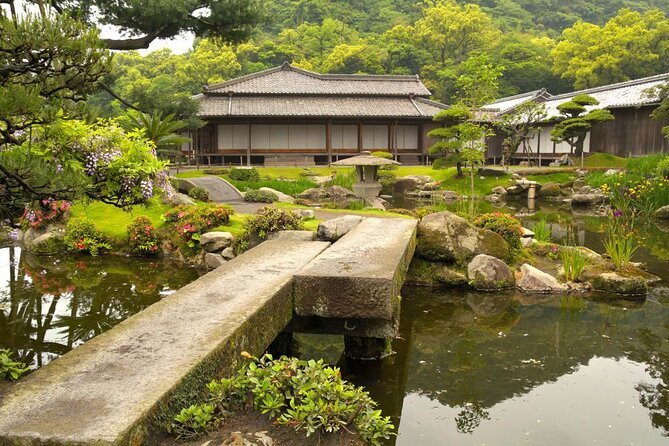
If your guide includes Sengan-en, you’ll step into a Japanese-style stately home and garden on the coast north of downtown Kagoshima. It was built in 1658 as part of the Shimadzu clan’s residences. The payoff is that you see how wealth and taste were displayed in the Edo period—then you get coastal views, not just indoor exhibits.
Next, Shoko Shuseikan Museum (also known as Kyu Shuseikan Kikai Kojo / Shouko Shuseikan) is a short stop that punches above its weight. It’s described as the oldest extant Western-style factory building in Japan. The displays focus on modernization projects tied to the Satsuma domain—so it’s history you can point at, with walls and machinery context rather than only dates on a screen.
Why this combo works: Sengan-en gives you the “world of authority,” and Shoko Shuseikan shows the “world of engineering change.” Together, they explain why Satsuma could transform quickly in later centuries.
Possible drawback: both are very stop-and-walk oriented, so if your group wants long seated time, you may want to balance them with a more leisurely city break later.
Satsuma Kiriko glassworks plus the foreign engineer residence: craft meets change
One of the most enjoyable ways to “get” Satsuma culture is through glass and craft. Satsuma Kiriko Glassworks is where you can watch how the cut-glass process works, and you can browse pieces at the nearby Iso Kogei-kan.
Then consider Foreign Engineer’s Residence (Ijinkan). It’s tied to the early Western-style spinning mill operations. Even if you’re not a industrial-history person, I like this stop because it personalizes the shift: you’re not just reading that technology arrived, you’re walking through the kind of living space that supported it.
What to do here: ask your guide what makes Kiriko distinctive (the colored overlays and the cutting feel are what most people remember). If you’re buying souvenirs, prioritize a small piece that fits in your luggage rather than something large and fragile.
Cost note: admissions aren’t included for these stops, so budget for ticket fees on top of the tour price.
Shiroyama observatory and the restored castle gate: city views with a time-lapse feel
For big visual payoffs, Shiroyama is a classic pick. It’s a 107-meter hill in the center of Kagoshima city. The name comes from where a castle once stood. The promenade to the observatory is about 2 kilometers, and it’s lined with views as you go.
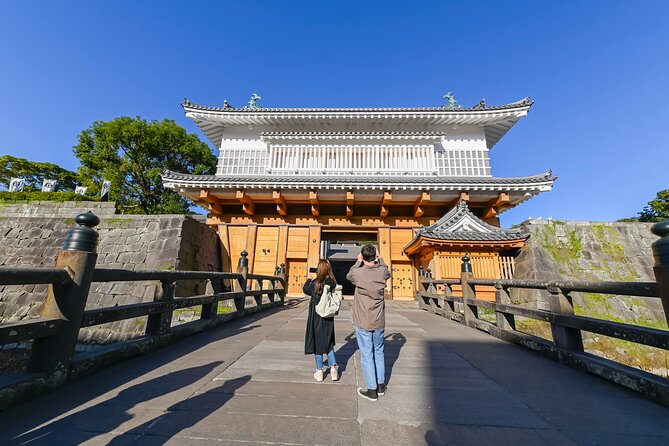
The itinerary also includes the Satsuma domain castle gate, restored in 2020 for the first time in about 150 years. It’s listed as the largest one of its kind in Japan, with height and width around 20 meters. Standing near a structure like that changes how you picture the city in the Edo period.
If you’re scheduling this during hot months, plan it as your “movement section” of the day, then swap to museums or indoor stops after. Wear comfortable shoes—this isn’t a sit-down-only visit.
Possible drawback: observatory walks mean you’ll lose time if your group moves slowly or stops often for photos. The upside is that your private setup lets you slow down without fighting crowds.
Sakurajima Visitor Center, the public footbath, and Yunohira views
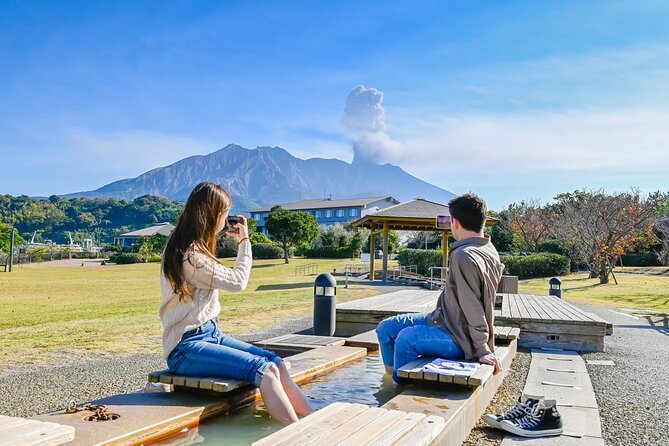
This is the part of Kagoshima that feels most dramatic. If your route includes Sakurajima Visitor Center, you’ll learn the story of the volcano’s eruptions through films and dioramas, with a Geopark base facility vibe. It’s a good “orientation stop” before you go looking at lava fields and smoke plumes.
Then add something hands-on and local: Sakurajima Yougan Nagisa Park Public Footbath. It’s a 100-meter long footbath—one of the biggest of its type in Japan—where you soak your feet in what’s described as all-natural hot spring water while looking toward Sakurajima.
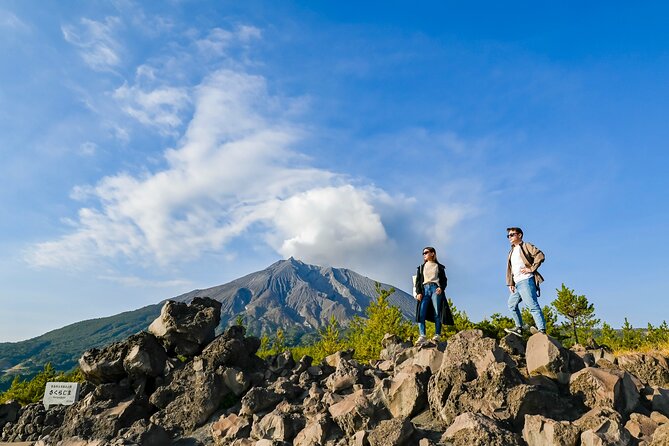
If you want the best viewpoint angle, Yunohira Observatory is the top. It’s the highest public point on Mt. Sakurajima. The observatory is along a 1-kilometer trail on a lava field created by the great 1946 eruption. On clear days, you can see impressive views of the active volcano. On other days, the gray mood still feels very real.
Two practical notes:
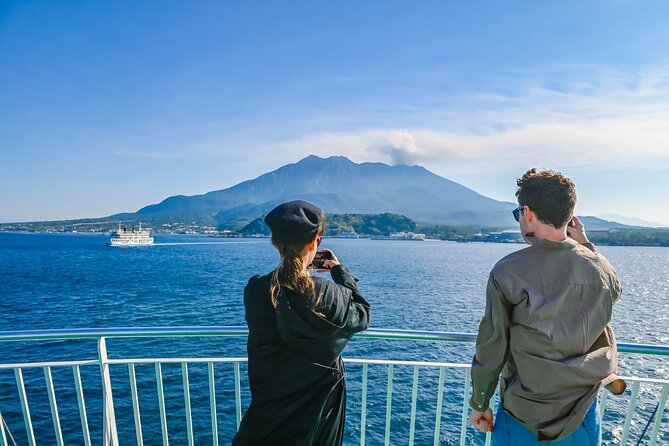
- You’ll need to budget extra for Sakurajima ferry boarding fee and vehicle fare (not included).
- This area depends heavily on conditions. If the weather is bad, your guide may adjust or shorten.
Tenmonkan, the big torii shrine, and the aquarium with Sakurajima in front
When you’re on Sakurajima, it’s easy to forget Kagoshima city exists. Stops like Tenmonkan bring you back to street-level life. Tenmonkan is named after Meijikan, an astronomical institute built by the Satsuma domain in the Edo period. Today it’s Kagoshima’s central shopping district, so it’s a practical place to shop, snack, and reset.
From there, the itinerary includes a major Kagoshima shrine with an enormous torii gate. Admission is free, and it’s especially popular around New Year’s and the Rokugatsudo Lantern Festival. Even if you’re visiting outside festival season, it’s a good visual landmark stop.
The aquarium option also makes sense here. It highlights themes like the Kuroshio Current and Sea of Nansei Islands, and the selling point is the location: Sakurajima is directly in front. The main attraction is listed as 30,000 marine creatures, which makes it a great “weather-proof” choice if skies turn.
If your day is already packed with volcanic time, you may treat Tenmonkan and the shrine as shorter breaks rather than long museum equivalents.
Museum of the Meiji Restoration: understanding why the whole region pivoted
If you want the story thread that connects all the modernization sites, Museum of the Meiji Restoration is a strong pairing. It’s built for visitors who want a full view of the Meiji Restoration, with displays and movies that reproduce key parts of the era.
In a custom tour, this museum helps your day feel coherent. Without it, you might see Sengan-en and Shoko Shuseikan as separate curiosities. With it, you can start connecting the dots: the Shōgun-era ending, the modernization wave, and why western-style systems appeared in Satsuma.
Admission fees aren’t included, so add that to your budget.
Saraku sand baths, Chiran’s peace story, and a samurai garden you can walk through
This part of the itinerary splits into two very different emotions: body relief and remembrance.
First, Saraku Sand Bath Hall. It’s a unique natural hot sand treatment loved by locals for over 350 years. You’ll get the detox and circulation angle from the center’s description, but the big practical detail is the health restriction list. You can’t bathe if you have symptoms of high blood pressure at or above 180/100 mmHg, heart disease, arrhythmia, angina pectoris, lung disease, pregnancy, inflammation, or fever. Also, skip alcohol before bathing.
If your group includes someone who can’t do it, still consider the stop. Watching others do it—or just enjoying the setting—can still work as a break from hard walking.
Then comes the heavier history: Chiran Peace Museum about kamikaze pilots. The framing here is meant to emphasize the importance of worldwide peace, and it’s described as a true story for future generations. This isn’t a “light” stop, and it’s worth mentally preparing your group.
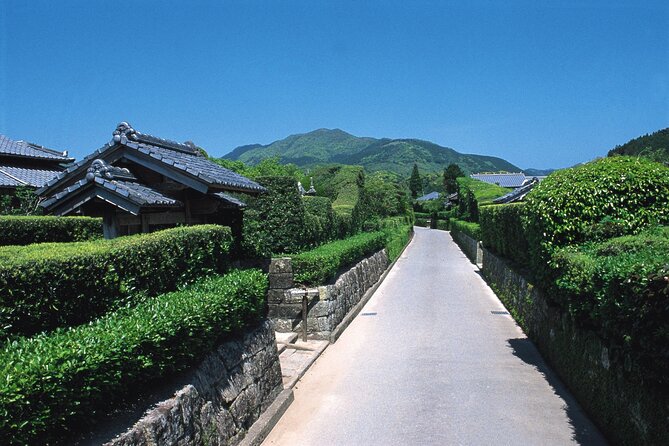
After that, you can lighten the mood with Chiran Samurai Residence Garden (also called Chiran Samurai Residence Complex). It’s nicknamed Little Kyoto of Satsuma and includes over 500 samurai residences from the late Edo period. Even in a short time, it gives you scale and atmosphere—stone, quiet lanes, and the feel of a community built around service.
Possible drawback: timing. If you include sand baths plus peace museum plus gardens in 6 hours, you may need to shorten museum time or skip one of the longer walks.
Kirishima Jingu and the Kirishima Art Forest: a calmer pace in nature
Kirishima brings a change of scenery. Kirishima Jingu Shrine is a standout because its halls—Main Hall, Shinden Hall, and Worship Hall—were designated national treasures on February 9, 2022. That gives the stop a clear cultural weight.
If you want something more modern after shrine time, Kirishima Art Forest is a modern art museum surrounded by Kirishima nature. The experience is described as using all five senses, which matters because it keeps art from feeling like just one room of pictures.
This cluster works well when:
- Your group wants a break from intense walking
- You want a mix of cultural heritage (shrine) plus modern creative space (art forest)
- You’re planning a family-friendly day that still feels meaningful
Armor workshop, Satsuma ceramics kiln, and the Mars Tsunuki whisky finale
To end with something fun and tactile, you’ve got two great options that fit well in a custom route.
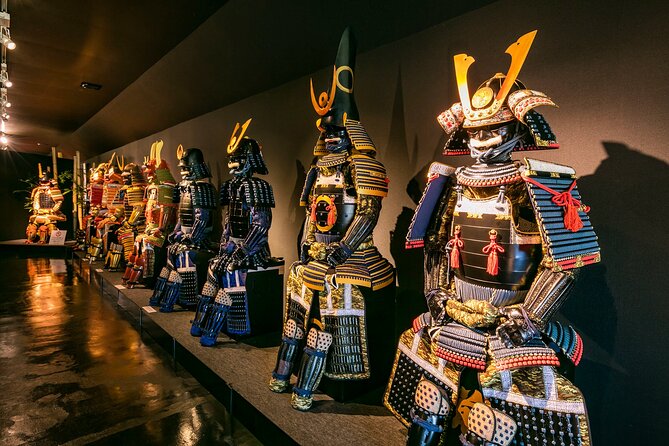
Marutake Armor Factory (renovated and reopened in 2018) includes a workshop where you can see armor and helmets used in the past, with a Japanese castle and garden inside. This is one of those places where kids usually perk up instantly—because it’s visual, practical, and easy to discuss even if you’re not a history expert.
Then there’s the kiln of the 15th Chin Jukan. This Satsuma ware kiln has kept its fire burning through the generations (from the 1st chin jukan to the 15th). It produces distinctive yet traditional Satsuma ware, including Shiro Satsuma styles per the description.
Finally, if your group likes spirits, consider Mars Tsunuki Distillery, described as the southernmost whisky distillery on the main Japanese islands. You can see old still tower buildings and a stone barrel warehouse, and the production process tour is included with admission listed as free. It’s a neat finale because it turns craft into industry—then into something you can bring home.
If you choose distillery plus craft stops, keep expectations realistic: distillery tours are usually timed, and you’ll want to leave enough buffer for purchases.
Price and value: what you’re actually buying here
The listed price is $625.94 per group (up to 1). That sounds steep until you factor in what private tours typically cost in Japan once you add:
- A licensed English guide
- A private, government-licensed vehicle
- Door-to-door flexibility
- A custom route that matches your pace rather than forcing you into a fixed circuit
Also, the tour includes domestic travel accident insurance and bottled water, plus an air-conditioned vehicle. Those small included comforts add up in summer.
What’s not included is where you need to plan: most admission fees, meals for you and the guide/driver, and Sakurajima ferry boarding fee and vehicle fare. Fuel, tolls, and parking fees can also come up; the operator says you’ll receive a detailed estimate in advance, then pay by credit card at the end of the tour.
So the value question becomes: can your group use those inclusions effectively? If you’re with kids, seniors, or mixed interests, this tour is often worth it because it saves energy and avoids the logistics headaches of hopping between areas on your own.
Should you book this Kagoshima custom tour?
Book it if you want a day that feels like it was built around you, not around a bus schedule. I’d especially recommend it if you’re aiming for a mix of:
- Sakurajima (visitor center, footbath, Yunohira viewpoints)
- one history stop (Meiji Restoration Museum or Chiran)
- one craft or craft-adjacent visit (Kiriko, kiln, armor, or distillery)
Skip or adjust the plan if:
- You’re trying to do too many different zones in one day. With 6 hours, you’ll have to pick.
- You need low walking. Observatories and trail points are part of the experience, and sand baths have strict health limits.
- You’re on a tight budget for admissions and ferry costs, since those aren’t included.
If you want the safest kind of private day—clear pickup, licensed guidance, and a route that can flex—this is a strong choice for Kagoshima.
FAQ
How long is the Kagoshima private custom tour?
It’s about 6 hours.
Is this tour private or shared with other groups?
It’s private. Only your group participates.
Do you get an English-speaking licensed guide?
Yes. An English-speaking licensed guide is arranged for the tour.
What’s included in the price?
Included items are domestic travel accident insurance, an air-conditioned vehicle, private transportation, and bottled water. You’ll also get a customizable tour experience selecting 2–3 sites.
What costs are not included?
Admission fees, meals for you (and meals for the guide and driver), Sakurajima ferry boarding fee and vehicle fare, and other personal expenses are not included. Fuel, tolls, and parking fees are also not included.
Can I choose which sites we visit?
Yes. The tour is customizable, and you select 2–3 sites based on your interests.
Is the tour ticket mobile?
Yes, it includes a mobile ticket.
Does weather affect the tour?
Yes. It requires good weather. If canceled due to poor weather, you’ll be offered a different date or a full refund.
Are there restrictions for the sand bath experience?
Yes. People with symptoms of high blood pressure (180/100 mmHG or more), heart disease, arrhythmia, angina pectoris, lung disease, pregnancy, inflammation, and fever cannot bathe. The tour info also says to refrain from drinking alcohol before bathing.
Is the distillery included free of charge?
Mars Tsunuki Distillery is listed as admission free, and you can take a tour of the production process there.