REVIEW · MIYOSHI
Iya Valley All Must-Sees Private Chauffeur Full-day Tour with a Driver
Book on Viator →Operated by Japan Guide Agency · Bookable on Viator
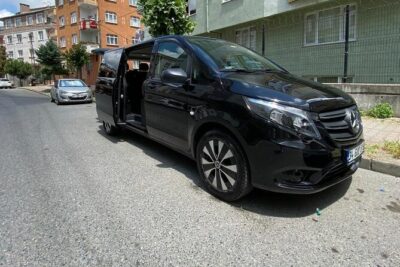
Hairpin roads and vine bridges in one day. This private Iya Valley day trip pairs dramatic river gorges with old-school rural Japan, all wrapped up in a driver-run schedule you can tailor. You’re based out of Miyoshi, and with pickup available around the valley, the day feels built around getting you to the best viewpoints without the hassle of figuring out transport.
The two things I like most are simple: you get a private vehicle (so you spend more time looking and less time waiting), and you can steer the day toward the stops you care about most. The gorges and vine bridges are the headline, but Ochiai Village and the Edo-era farmhouses give the trip a grounded cultural feel, not just photo stops.
One consideration: this is not a licensed English guide package. Your local driver’s English is limited, and some sites have winter closures. If you’re set on Mt. Tsurugi, you’ll also need extra time beyond the 6 hours.
In This Review
- Key things to know before you go
- Why Miyoshi works so well for Iya Valley
- Your driver is the real value: safety, timing, and local know-how
- Designing your perfect 6-hour route (and when you should add time)
- Iya Kazura Bridge and the vine-bridge photos you came for
- The Peeing Boy viewpoint and Oboke Koboke Gorge: short stop, big feeling
- Scarecrow Village in the Sky (900 meters up) and Ochiai’s Edo-era farmhouses
- Mt. Tsurugi: worth it if you plan for the time and season
- Price and value: paying for a private day, not just ticketed sights
- When this private Iya Valley tour fits you best
- Should you book this private Iya Valley chauffeur tour?
- FAQ
- How long is the Iya Valley private chauffeur tour?
- How many stops can I choose?
- Is pickup available?
- Do I need to buy entrance tickets for the stops?
- Is there a licensed English-speaking guide?
- Can I visit Mt. Tsurugi?
- Are the vine bridges open year-round?
- Is lunch included?
- What if I need a car seat or booster?
- Can I cancel for a full refund?
Key things to know before you go
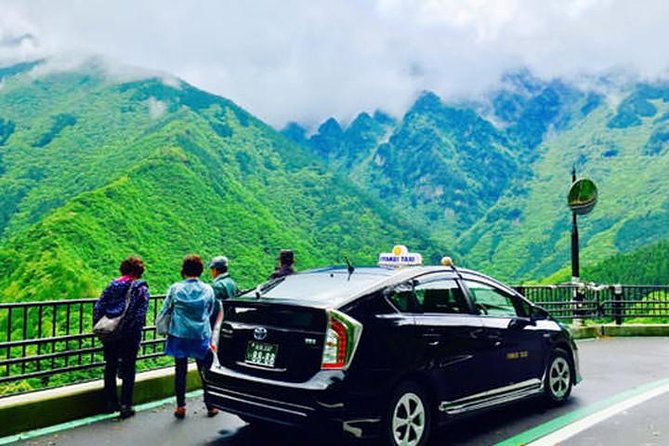
- Private chauffeur, not a group bus: only your party in the car, with room to adjust as you go
- Pick 3–4 stops: you choose the mix of bridges, gorges, villages, and viewpoints
- Vine bridge timing matters: some bridges and Mt. Tsurugi close during December–March
- Scenic viewpoints are short stops: quick photo time at the Peeing Boy viewpoint, longer time at villages and bridges
- Narrow-road driving is part of the deal: the best days feel safe and smooth thanks to the driver’s local pacing
- Bring translation support: your driver may use an electronic translator, but detailed English won’t be guaranteed
Why Miyoshi works so well for Iya Valley
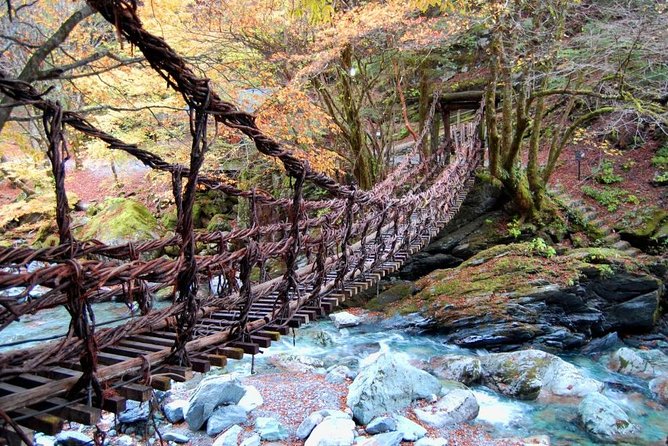
Miyoshi is a practical jumping-off point for Iya Valley because it keeps the day focused on the valley itself. Instead of piecing together separate rides, you’re paying for a single private car that can move you between riverside gorges, hill villages, and bridge viewpoints.
The big win is efficiency. Iya Valley is full of tight roads and steep angles, so transfers done the hard way can eat up your day fast. Here, you’re essentially buying back time for the places that actually make Iya Valley special.
You’ll also appreciate the flexibility: transfers are available from anywhere in the valley, and the tour is built around the idea that your schedule can shift with your interests. That matters when you’re choosing between, say, one extra village stop versus squeezing in the summit area.
Your driver is the real value: safety, timing, and local know-how
This is a driver-based private tour, and the driver experience shows up again and again in how people describe their day. On narrow hairpin roads, the difference between careful driving and stressful driving is huge. One driver named Mr. Higashi was singled out for how well he handled traffic pull-offs and the tight two-way stretches.
Another standout name is Osako-san, praised for being outstanding and adding extra things when time allowed. That’s not just about being friendly—it’s about local timing: where to stop for photos, how to manage the order of viewpoints, and how to keep the day from turning into a parking-lot shuffle.
Now for the trade-off. The driver’s English is limited, and a licensed English-speaking guide is not included. In at least one case, the driver used an electronic translator to make communication work. You should still plan on your own translation support as a backup, especially if you want deeper history beyond what a driver can quickly explain.
Designing your perfect 6-hour route (and when you should add time)
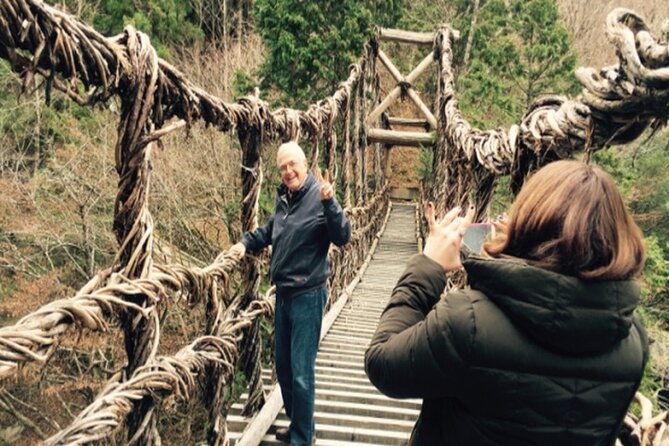
The tour runs about 6 hours and is framed as customizable around 3–4 sites from the available list. That’s a sweet spot: enough time to see the signature vine bridges and gorge viewpoints, but not so long that you feel stuck.
For most people, the ideal order is intuitive once you see how the valley’s stops connect: you start with a vine bridge, then move into gorges and viewpoints, and finish with the most dramatic bridges or a village stop—depending on what you chose. The tour also has an option to extend if you want Mt. Tsurugi, so you can build your day based on how ambitious you want to be.
Here’s the key decision point: do you want Mt. Tsurugi? If yes, you’ll need to extend the tour by 2 extra hours, and it takes about one hour from Iya Valley to Mt. Tsurugi. That’s enough extra time to matter, especially if you’re also trying to fit in longer village visits.
Iya Kazura Bridge and the vine-bridge photos you came for
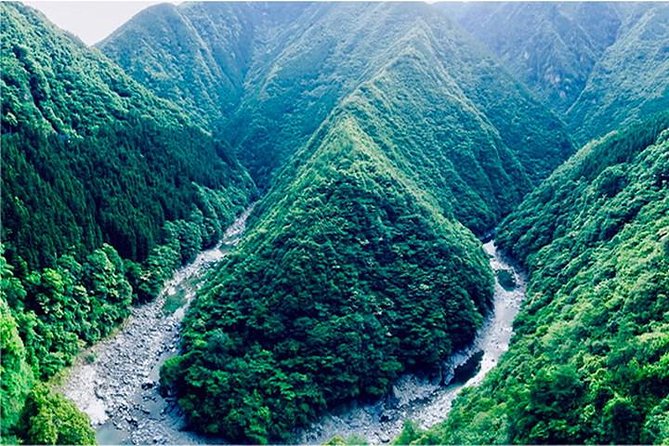
The day’s heart is the vine bridge section. These aren’t just walking bridges; they’re historical survivors from a time when crossing the Iya River meant using vine-supported structures. You’re seeing what’s left from centuries of crossings—now far fewer remain.
Stop: Iya Kazura Bridge is a 30-minute visit, and admission isn’t included. You’re looking at a site with real historical weight: in past centuries, there were more than 13 vine bridges for crossing the Iya River, but today only 3 remain. (One of the bridges in this area, the Oku-Iya Double Vine Bridge, is closed during winter season.)
Timing note: if you’re visiting in December–March, plan for changes. The itinerary includes a heads-up that certain bridges close in winter, so your final “bridge count” may depend on the season.
Later in the day you’ll also reach Okuiya Niju Kazurabashi Bridge, listed as your final stop. This is 1 hour, with admission ticket not included, and it can be closed during December to March. If vine bridges are your main reason for coming, prioritize whichever bridge options are open for your travel dates and let the driver help you pick the sequence that avoids dead-ends.
The Peeing Boy viewpoint and Oboke Koboke Gorge: short stop, big feeling
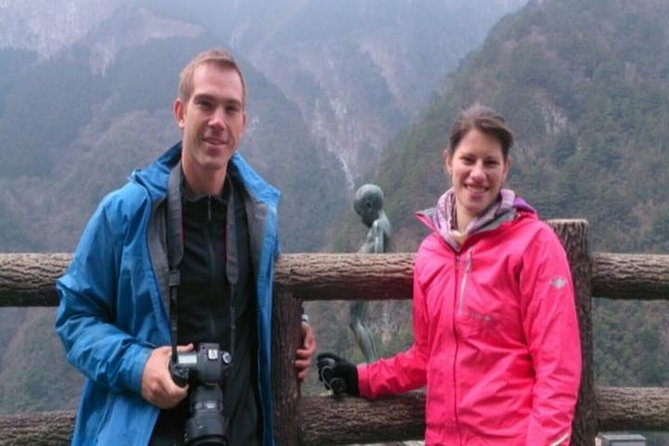
Not every moment needs to be long. Two of the most memorable “pause-and-look” stops are built for quick payoff.
Stop: The Peeing Boy of Iya Gorge is only about 15 minutes. You get an impressive view over steep mountains and the turquoise Iya River far below—more than 200 meters down. It’s the kind of viewpoint that’s worth the stop even if you don’t stay long, because the scene is the whole point.
Then you move to the gorge pair that makes Iya Valley famous beyond its vine bridges.
Stop: Oboke Koboke (Ōboke and Koboke) is around 30 minutes and free to enter. These are narrow, steep-sided gorges near the valley entrance, and they’re commonly combined as part of one gorge experience. The practical benefit of placing them mid-day is pacing: you get a visual shift from bridge crossings to sheer river walls, which keeps the day from feeling repetitive.
If you’re the type who likes to photograph, this is where your camera time makes sense. If you’re not, it still works because the viewpoints do most of the entertaining for you.
Scarecrow Village in the Sky (900 meters up) and Ochiai’s Edo-era farmhouses
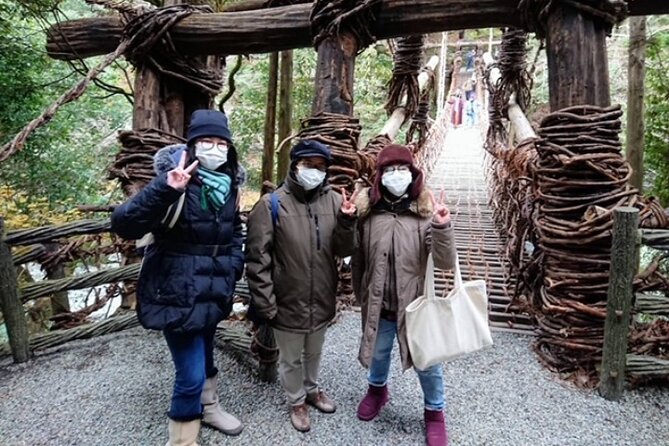
Two of the stops add a very different flavor—slower, more human, and tied to village life.
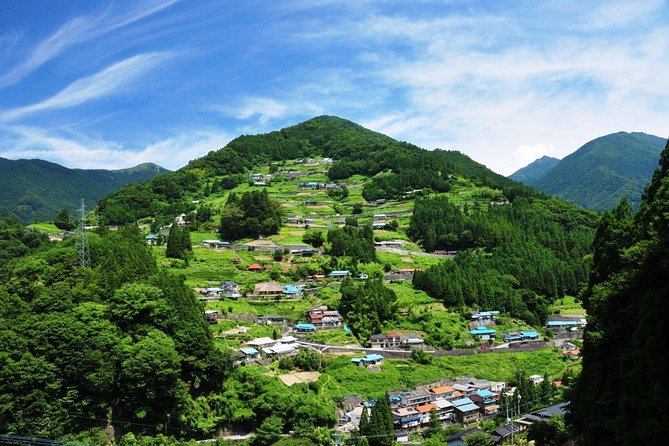
Scarecrow Village is also known as the Scarecrow Village in the Sky because it sits at an altitude of about 900 meters. Expect a village setting where you can see daily work and farm life from a higher perch. The advantage here is contrast: after dramatic river gorges and bridge angles, this feels calmer and more observational.
Then there’s Ochiai Village, described as a small hamlet with historical farmhouses dating back to the mid-Edo era. You’ll spend about 1 hour here, and entry is free. Because it’s perched on a mountainside, you get that classic Iya Valley feel—rural life shaped by steep terrain and old traditions, not a redeveloped tourist town.
This pairing is great if you want the trip to include more than just scenery. It gives you a “how people lived here” layer, without making the day feel like a museum tour.
Mt. Tsurugi: worth it if you plan for the time and season
Mt. Tsurugi is a serious ask, and the tour spells out the reality.
Mount Tsurugi is 1,955 meters high and is described as the second tallest mountain on Shikoku Island. It’s located at the eastern end of the remote Iya Valley, and it’s included as a free entry stop—but only if you extend your day.
If you want this part, the tour notes you’ll need to extend by 2 hours. It also states it takes about one hour from Iya Valley to Mt. Tsurugi. So don’t treat this like a quick add-on. It will pull time from other stops.
Also important: Mt. Tsurugi is closed during December to March. If your trip falls in winter, you’ll need to accept that the “summit moment” may not be possible.
My practical take: add Mt. Tsurugi only if you’re genuinely excited about mountain atmosphere and you don’t mind shifting the rest of your schedule.
Price and value: paying for a private day, not just ticketed sights
At $335.01 per group (up to 3), you’re paying for a private chauffeur experience rather than a bus-and-crowds format. For a family of three, that can actually be good value, because one vehicle replaces multiple transit headaches.
What you get for the price is the big part:
- private vehicle
- driver (with limited English)
- the ability to customize 3–4 sites
- pickup/transfer options around the valley
- a mobile ticket
What you don’t get:
- entrance fees (listed as not included for some key sites)
- lunch
- a licensed English guide
So the math is pretty clear. You’ll feel the value most if you care about comfort, flexible timing, and minimizing wasted transit time. If your group is budget-only and you don’t mind public transport and rigid routes, a cheaper plan might exist—but it’s likely to cost you time and stress.
Also: the car seats note is worth reading. There are limited car seats/booster seats, rear-facing car seats aren’t available, and you need to contact the operator directly if you need them. That can matter for families.
When this private Iya Valley tour fits you best
This is a good match if you want:
- a small-group private day with no waiting for others
- the signature vine bridge experience plus gorge viewpoints and villages
- a plan that’s adjustable based on what you like more (bridges, gorges, rural life, or the Mt. Tsurugi add-on)
It’s especially strong for people who get motion-prone stress. A driver who knows when and where to pull over, how to handle traffic on narrow roads, and how to keep the schedule steady can make the difference between enjoying the day and fighting the commute.
It may be less ideal if:
- you expect deep, fluent English explanations all day (a licensed English guide is not included)
- you’re traveling in December–March and you specifically want the closed vine bridge and Mt. Tsurugi options (the tour flags those winter closures)
Should you book this private Iya Valley chauffeur tour?
I’d book it if you want Iya Valley in a comfortable, efficient format and you’re traveling as a small group (up to three). The best reason is practical: a private car in a tight road valley saves time, and the drivers you’re likely to get are praised for handling those roads confidently.
I’d rethink it if you’re traveling during December–March and Mt. Tsurugi or certain bridge sections are on your must-see list. In that case, choose your stops with the winter closures in mind so you don’t end up with a day that feels trimmed.
If your priority is simply to see the famous spots—vine bridges, gorges, and rural village life—this is a smart way to do it. Just plan for basic communication support, and keep entrance fees and lunch as separate items in your budget.
FAQ
How long is the Iya Valley private chauffeur tour?
It’s about 6 hours for the basic experience.
How many stops can I choose?
You can customize the day with 3–4 sites from the available list.
Is pickup available?
Yes. Transfers are available from anywhere in the valley, and pickup is offered.
Do I need to buy entrance tickets for the stops?
Entrance fees are not included. Some stops specifically note admission tickets are not included, while others are free.
Is there a licensed English-speaking guide?
No. A licensed local English-speaking guide is not included. The driver has limited English.
Can I visit Mt. Tsurugi?
Yes, but you must extend the tour by 2 hours, since it takes about one hour from Iya Valley to Mt. Tsurugi. It is also closed during December–March.
Are the vine bridges open year-round?
No. The itinerary notes that some vine bridge sections are closed during the winter season (December to March).
Is lunch included?
No. Lunch is not included.
What if I need a car seat or booster?
There are only a limited number of car seats and booster seats. Rear-facing car seats are not available, and you must contact the operator directly if you need them.
Can I cancel for a full refund?
Yes. You can cancel up to 24 hours in advance for a full refund.