REVIEW · HUE
Hue City Tour by Private Car with Optional Sightseeings
Book on Viator →Operated by Hue Private Drivers · Bookable on Viator
Hue feels like a long, thoughtful pause. This private car tour strings together the big Hue landmarks in a way that’s easy to manage, with door-to-door pickup and a schedule that lets you linger when something grabs you. You’ll cover Thien Mu Pagoda, the Imperial Citadel, and several Nguyen dynasty tombs without the stress of hopping between buses and fixed group times.
What I like most is the balance between structure and freedom: you get a planned route, but you can still request your start time and pace. Another win is the “right kind of small-scale” feel—only your group rides together—so you can ask questions, take photos, and move at a human tempo.
One thing to consider: the entrance tickets are not included, so your final cost will depend on how many sites you fully enter (and any optional add-ons you choose). Also, like many Hue outdoor plans, it’s weather-sensitive.
In This Review
- Key highlights worth knowing
- Why a private car works so well in Hue
- Thien Mu Pagoda: a free stop with Vietnam War context
- Hue Imperial Citadel and Thai Hoa Palace: where power was staged
- Minh Mang Tomb: the Fengshui idea in practice
- Khai Dinh Tomb: expensive design, unforgettable vibe
- Tu Duc Tomb in a pine forest: a gentle finish
- Price and value: what $35 covers and what to budget
- How to get the best experience from your driver
- Should you book this Hue City tour by private car?
- FAQ
- How long is the Hue City Tour by Private Car?
- What does the tour cost?
- Do I get hotel pickup and drop-off?
- Is this a private tour?
- Are entrance tickets included in the price?
- Does the driver speak English?
- Is bottled water provided?
- What monuments are visited?
- What is included besides the car and driver?
- What happens if I need to cancel?
Key highlights worth knowing
- Private car, door-to-door pickup: get started from your hotel area with less hassle
- Flexible timing: start when you want, then adjust time on site
- Thien Mu Pagoda is free to enter: a strong first stop with major historical meaning
- Full Imperial Citadel circuit: includes the Thai Hoa Palace area and the Forbidden City zone
- A smart tomb sequence: Minh Mang, Khai Dinh, then Tu Duc in the smoothest order for most schedules
- English support from your driver: basic English plus a helpful, practical approach for navigating
Why a private car works so well in Hue
Hue monuments can feel spread out, and that’s exactly where a private car saves you. You avoid the awkward bits of planning: where to wait, how to coordinate multiple stops, and how to make sure you arrive before the light changes. With pickup and drop-off from your hotel area, your day starts already in motion.
The private format also changes how the tour feels. You’re not negotiating for the front of a bus window or trying to keep up with a group that has a different pace. You can spend extra time in a spot that catches your attention, then pull back when you need a breather. That matters in Hue, where a few of the sites can be visually similar until you realize what each emperor wanted to project.
Finally, the driver approach is practical. You’ll have a basic English-speaking driver and bottled water in the car, plus parking fees, tolls, and petrol are covered. That’s the kind of setup that helps you enjoy the monuments instead of tracking the logistics.
Thien Mu Pagoda: a free stop with Vietnam War context
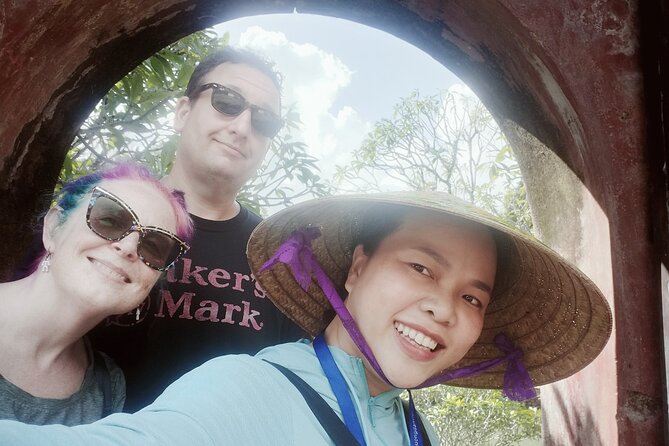
Thien Mu Pagoda is often the first name people hear when they talk about Hue, and for good reason. Your tour starts there after you’re picked up in the Hue city center. You’ll have about 40 minutes to explore, and the best part: admission is free.
This pagoda is tied to a long timeline. It was built by Lord Nguyen Hoang in 1601, and it’s also associated with a shocking moment from the Vietnam War era. The site connects to the historical event of Most Venerable Thich Quang Duc, who set himself on fire in 1963 as a protest against the suppression of Buddhism by the Ngo Dinh Diem government. If you want your trip to feel grounded in real history—beyond just pretty architecture—this context matters.
There’s also a standout visual detail inside the temple area. The visit includes the kind of feature that makes people slow down and look up; you’ll see a “car” mentioned as a notable element in the temple space. Even if you don’t fully connect it right away, it’s the sort of specific image that helps Thien Mu feel memorable rather than generic.
A practical note: 40 minutes goes fast if you want photos plus reading time. If you care about details, plan to choose one or two areas to focus on instead of trying to capture everything at once.
Hue Imperial Citadel and Thai Hoa Palace: where power was staged
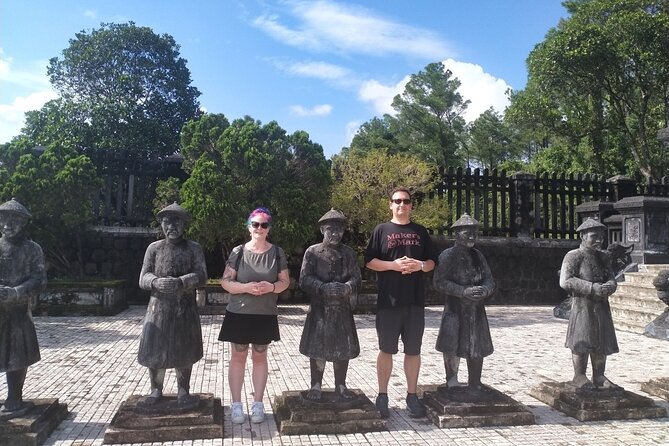
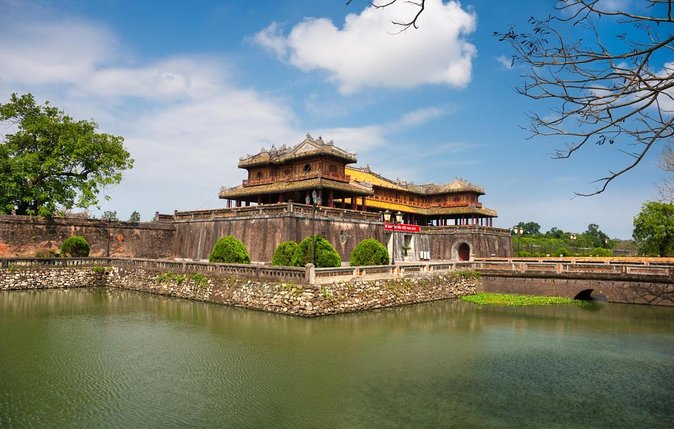
Next comes the Hue Imperial Citadel complex, which is the heart of the Nguyen dynasty story. You’ll spend about 2 hours here, and while the entrance ticket is not included, this is the kind of stop where you’ll likely feel the value of paying.
This complex includes the Hue Citadel, the Royal City, and the Forbidden City—the former working and private residence of 13 emperors, plus concubines and eunuchs. That range is important. You’re not just seeing where rulers lived; you’re walking through a system that organized daily life, ceremony, and control.
A highlight mentioned for the citadel visit is the Thai Hoa Palace area. Even if you’re not an architecture expert, Thai Hoa helps you understand how imperial Vietnam wanted power to look and feel. The scale, symmetry, and ceremonial layout do the job of political theater—this is where the court message was built into the buildings.
The potential drawback is simple: citadel sites can be big and busy, and the Imperial Citadel involves multiple zones. Your private car schedule helps because you can pace it, but if you try to cover every angle at full speed, you’ll end up tired and under-satisfied. Use the flexibility: slow down when you notice a section with a clearer story, then keep moving before your energy drops.
Minh Mang Tomb: the Fengshui idea in practice
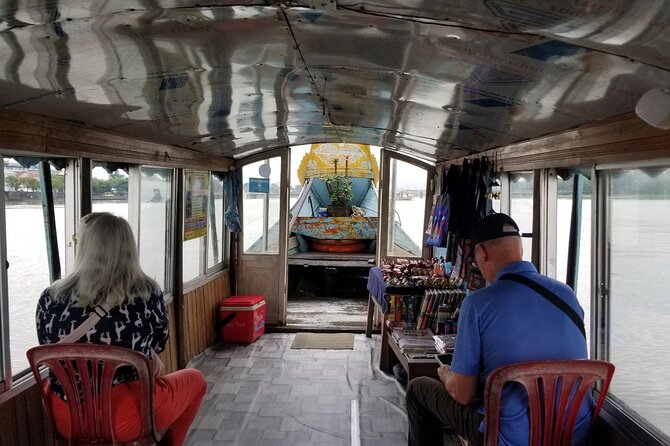
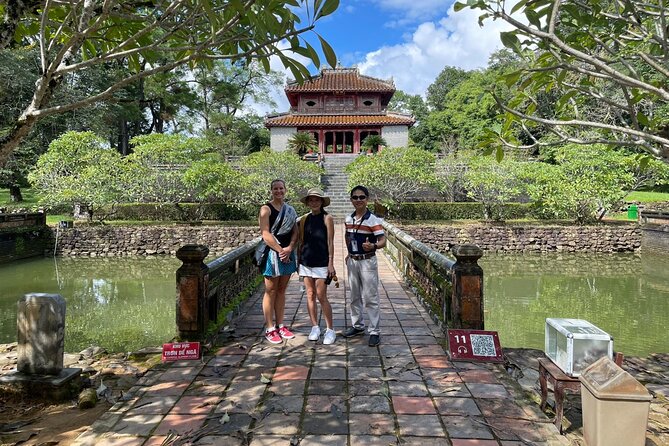
After the citadel, the route turns toward a calmer kind of monument: the mausoleum of Emperor Minh Mang. You’ll get about 1 hour, and again the entrance ticket is not included.
What makes Minh Mang’s tomb stand out in the context of Hue is the landscape plan. It’s described as following the ideal Fengshui, and that’s not just a buzzword. In practice, Fengshui often shows up as how paths, water elements, and building placement relate to each other—so the grounds are part of the experience, not just decoration.
The tomb’s timing also works well in a longer day. After Thien Mu and the Imperial Citadel, your feet probably want a lighter pace. One hour at Minh Mang gives you time to enjoy the grounds and the layout without turning it into an all-day hike.
If you’re visiting in bright sun, consider this tip: bring a hat and take a few short breaks. Tomb grounds are often outdoors for long stretches, and 60 minutes can feel longer than it should if you’re baking.
Khai Dinh Tomb: expensive design, unforgettable vibe

Next is the Khai Dinh Tomb, the royal tomb of Emperor Khai Dinh, the 12th emperor of the Nguyen dynasty. Your time here is about 40 minutes, with entrance tickets not included.
This tomb is often called the most impressive and expensive royal tomb in the world. Even if you treat that as a dramatic description, it signals the right expectation: Khai Dinh is built to look dramatic and different from what you might assume a “typical tomb” looks like. The result is a stop that can feel more striking than the more traditional styles you may see elsewhere.
Because the time is shorter, you’ll want to use your 40 minutes wisely. Look for the main structure first—then circle back for details if you still have energy. If you spend too long searching for every photo angle, you’ll miss the overall effect that makes this tomb memorable in the first place.
Also, keep your timing in mind. Khai Dinh comes after Minh Mang, so you might be a little foot-tired. The private format helps because you can keep the day moving without sprinting.
Tu Duc Tomb in a pine forest: a gentle finish
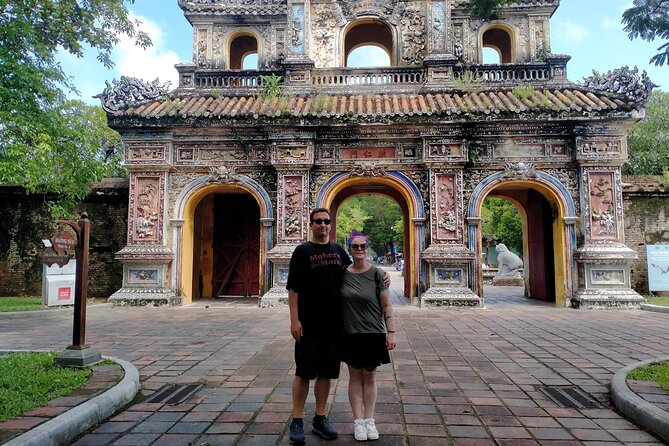
The last major monument is the tomb of Emperor Tu Duc. You’ll spend about 1 hour here, and the entrance ticket is not included.
The location is part of why people like this stop: the tomb sits in a boundless pine forest, around 8 km from Hue city. That distance is exactly why the private car matters. You’re not just walking to a nearby site—you’re being transported to a setting that changes how the whole place feels.
Tu Duc’s tomb is described as one of the most beautiful Hue royal tombs of the Nguyen dynasty. The beauty here is tied to setting and atmosphere. The pine forest creates a different mood than what you’ll have seen at the citadel. It’s a nice contrast and a smart way to end the day: from political power, to landscape Fengshui, to a visually striking tomb, then finally to a calmer forested finish.
One small caution: since this is the last hour of a 5–6 hour day, you’ll want to avoid over-planning your photo checklist. Choose a couple of must-shots, then give yourself permission to just look.
Price and value: what $35 covers and what to budget
The price is $35.00 per person, and the tour typically runs 5 to 6 hours. Value here comes from what’s included. You get a private car/van, door-to-door pickup, a basic English-speaking driver, bottled water in the car, and operational costs like road tolls, parking fees, and petrol.
That’s important. In many budget tours, you pay for the vehicle but still get hit with confusing extras once you’re in the city. Here, transportation basics are handled, so you can focus your budget on the sights themselves.
What is not included is just as key: entrance tickets, plus meals and personal expenses. If you’re trying to calculate your total trip cost, plan on adding entry fees for the Imperial Citadel area and the three tombs. If you skip full entry at one stop, your total will drop, but that also changes what you’ll get out of the visit.
One other value point: it’s usually booked about 22 days in advance. If you’re traveling in a busy season or on a weekend, earlier booking can help you lock in the private format without last-minute scrambling.
How to get the best experience from your driver
This tour runs best when you use the flexibility built into it. Your driver will pick you up at your hotel lobby in Hue city center around your requested time, then follow the sightseeing flow. You’ll have options to spend time on the monuments and not feel like you’re being dragged along.
The driver’s English level is described as basic. That doesn’t make the tour useless—it just means you’ll get the most out of it by asking simple, pointed questions. For example:
- Ask what the main landmark represents at each stop
- Ask what to look for first inside a major area
- Ask for a good photo spot rather than asking for a full lecture
There’s also a detail from a past customer that’s worth taking seriously: an English-speaking guide with great communication and a strong photo habit helped them feel un-rushed and supported. In plain terms, if you care about pictures, don’t be shy about saying you want a couple of guided photo moments.
Finally, build in realistic pace. Even with a private car, you’re still doing five big stops in one day. Wear comfortable shoes and plan to take short rest breaks instead of powering through.
Should you book this Hue City tour by private car?
I think this tour is a strong choice if you want major Hue landmarks in one organized day and you care about pacing. The private car setup, door-to-door pickup, and the ability to request your start time make it feel more personal than standard group options.
It’s also a good fit if you’re traveling with people who don’t want to split up or argue about meeting points. The private format keeps everyone together while still giving you the freedom to pause when something looks worth a closer look.
Skip it only if you strongly dislike paying separate entrance fees and you’re trying to keep the total cost to an ultra-tight number. Also, if weather is unreliable on your travel days, keep some mental flexibility—outdoor sightseeing in Hue depends on the day you get.
If you’re choosing your first Hue monument day, this one has a clean logic: start with Thien Mu, move into imperial power at the citadel, then shift into the tombs that show how each emperor wanted to be remembered.
FAQ
How long is the Hue City Tour by Private Car?
The tour lasts about 5 to 6 hours.
What does the tour cost?
It’s $35.00 per person.
Do I get hotel pickup and drop-off?
Yes. Door-to-door pickup is offered, and your driver transfers you back to your hotel after the tour ends.
Is this a private tour?
Yes. Only your group participates.
Are entrance tickets included in the price?
No. Entrance tickets are not included.
Does the driver speak English?
You’ll have a basic English-speaking driver.
Is bottled water provided?
Yes. Bottled water is included in the car.
What monuments are visited?
You’ll visit Thien Mu Pagoda, the Hue Imperial Citadel (including Thai Hoa Palace), Minh Mang Tomb, Khai Dinh Tomb, and Tu Duc Tomb.
What is included besides the car and driver?
Road tolls, parking fees, and petrol are included.
What happens if I need to cancel?
You can cancel for a full refund if you cancel at least 24 hours before the experience starts. If you cancel less than 24 hours before, the amount paid is not refunded. Poor weather can also lead to a rescheduled date or a full refund.