
REVIEW · DA LAT
Da Loop Tour On Private Car
Book on Viator →Operated by Easy Rider Mr.Viet · Bookable on Viator
Waterfalls, pagodas, and coffee in one long day. This private-car Da Lat loop strings together spiritual stops, minority village life, and big scenery (with fewer crowd headaches) while a guide handles the details for you.
I especially like the balance: calm, scenic culture first (hello Trúc Lam Zen Monastery and Tuyen Lam Lake), then the day gets louder and wetter with major falls. I also like the human side of Da Lat’s countryside—K’Hor life at Làng Con Gà, plus hands-on crafting at Nam Ban, where you can watch silk production and see bamboo work in the village areas.
The main drawback to plan for is walking. Pongour Falls includes a walk down to the base, and the tour info asks you to bring the right footwear and sun protection—plus lunch and drinks aren’t included, so you’ll want a small cash buffer.
In This Review
- Key Points Worth Knowing Before You Go
- Why This Private Da Lat Loop Works So Well
- Price and Value: What You’re Really Paying For at $40
- Morning Setup: Truc Lam Zen Monastery and Tuyen Lam Lake
- The K’Hor Village Stop at Làng Con Gà
- Elephant Falls: A Big Water Moment Without the Long Trek
- Pongour Falls: The Walk-Down Finale (Plan Shoes Here)
- Linh An Pagoda After the Falls: A Calm Reset
- Nam Ban Silk and Bamboo Crafts: Where the Day Gets Hands-On
- Ta Nung Coffee Plantation and Van Thanh Flower Village
- What Makes the Private Car Experience Feel Easier
- Practical Tips: Walking, Dress, Lunch, and Small Expenses
- Should You Book the Da Lat Loop Tour on Private Car?
- FAQ
- How long is the Da Lat loop tour?
- What’s included in the $40 price?
- Is this tour private?
- Can solo travelers join?
- Which meals are included?
- Are drinks included?
- Do I need a special outfit for the waterfalls?
- Is hotel pickup offered?
- What happens if the weather is bad?
Key Points Worth Knowing Before You Go
- Private, door-to-door pickup from your central Da Lat location, handled by an experienced driver
- A long, efficient route: monasteries, lakes, minority village life, then two headline waterfalls
- Entrance fees covered at every stop (so you’re not hunting tickets all day)
- Real rural crafts time in Nam Ban: silk-making and bamboo craft village activities
- Coffee plantation and flower-farm options that fit the Da Lat vibe without turning the day into a shopping circuit
- Guide pacing is flexible, so you can ask for small adjustments to match your interests
Why This Private Da Lat Loop Works So Well
Da Lat can be a bit of a puzzle if you’re trying to see a lot in one day: sites spread out across hills, roads curve forever, and time evaporates when you’re catching buses or coordinating rides between far-flung stops. This tour is designed around the opposite idea—one private car and one guide, so the schedule feels like a smooth loop instead of a chaotic scramble.
What makes it fun is the variety. You’re not just bouncing between viewpoints. You move from a Zen monastery (built in 1994 with an oriental architectural style) to a man-made freshwater lake that feeds surrounding rural villages, then into places that show everyday life—K’Hor village life at Làng Con Gà, craft work in Nam Ban, and coffee processing in Ta Nung.
It’s also “big day” without being “all suffering.” The stops are timed for a comfortable visit length—typically 30 to 60 minutes each—so you can look around, take pictures, and still make the next stop.
Price and Value: What You’re Really Paying For at $40
At $40 for an approximately 8.5-hour day, the real value is what’s bundled: a private car, a local guide, and entrance fees across the route. In practice, that matters because waterfalls and temples often have their own ticket costs, and those add up fast if you do everything separately.
Two other value notes:
- Pickup is included from any central Da Lat location, which saves time and transport hassle.
- It’s a private group, so you’re not stuck waiting on stragglers from a larger bus.
One consideration: this is set up for at least 2 passengers. If you’re solo, there’s an extra private-car charge (the tour info doesn’t list the amount, so you’ll want to check when booking). For two people, it’s usually the sweet spot.
Morning Setup: Truc Lam Zen Monastery and Tuyen Lam Lake
You start with an easy entry into Da Lat’s spiritual side: Truc Lam Zen Monastery. It’s described as a Zen monastery temple built in 1994 with oriental-style architecture, and it’s allotted about 45 minutes. This is the kind of stop where timing works well early: fewer people, cooler air, and a calmer feel before the day shifts into more active sightseeing.
Then you head to Tuyen Lam Lake for around 30 minutes. The tour frames it as both man-made and freshwater, with an area over 350 hectares and depth over 30 meters in some areas. You’ll also hear why it matters: the lake provides water for rural villages around Da Lat.
Why this combination is smart: monasteries give you a “pause,” and the lake gives you “open space.” Together, they break up the day so you don’t feel like you’re rushing from one dense spot to another.
Practical note: even though your time here is short, the lake stop is ideal for photos and a slow walk. Bring water for later, because the day gets more outdoorsy after this.
The K’Hor Village Stop at Làng Con Gà
After the monastery and lake, the tour shifts from scenery to people. At Chicken Village (Làng Con Gà), you get a chance to understand the daily life of the K’Hor villagers—an indigenous ethnic minority group. The visit is around 45 minutes and is positioned as more than a quick look: you’re meant to learn about how they live, and where the K’Hor fit as original inhabitants of the Da Lat plateau.
This is one of the stops that makes the day feel grounded. Waterfalls can be impressive, but they don’t explain local life. Làng Con Gà adds that missing link: you see what “off the main road” looks like and how people make a living.
What to keep in mind: this is not a formal museum. Dress comfortably, stay respectful, and expect the visit to be conversational rather than strictly exhibit-based.
Elephant Falls: A Big Water Moment Without the Long Trek
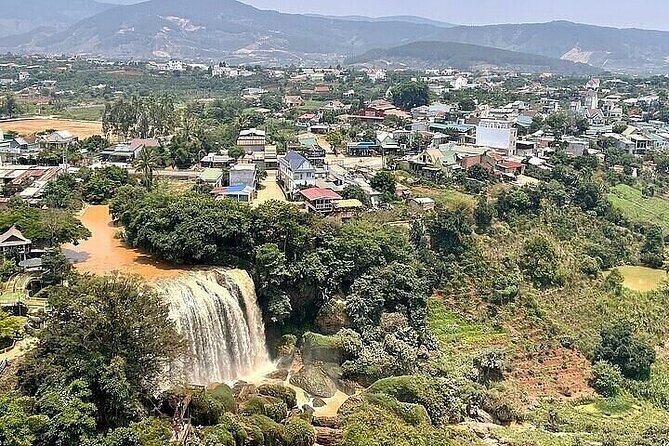
Next comes Elephant Falls, which the tour places about 25 km from Da Lat in Nam Ban town (Lam Ha district), on the Cam Ly River. The numbers given are part of why it’s appealing: it’s described at roughly 40 meters wide and over 30 meters high, and you’ll spend about 1 hour here.
Elephant Falls is a solid “mid-afternoon anchor” because you get a major waterfall in time for energy. Compared with Pongour (which includes a walk down to the base), this is usually the simpler waterfall leg of the day. That said, the day is still long, and you’ll be on your feet.
If you’re sensitive to heat, plan your photos in the shade when you can. And if the path feels slippery after mist or spray, slow down. It’s a waterfall area, not a stroll.
Pongour Falls: The Walk-Down Finale (Plan Shoes Here)
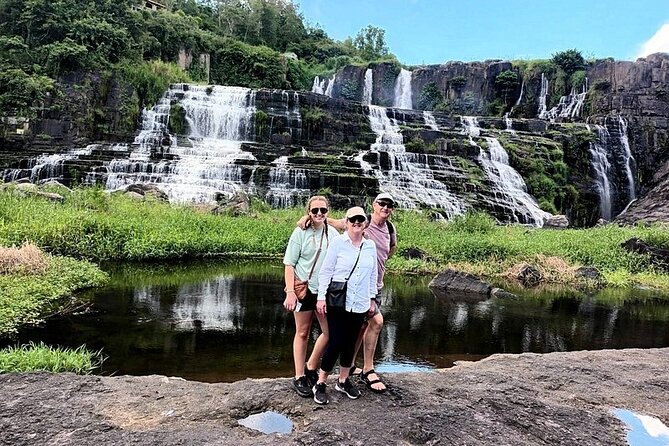
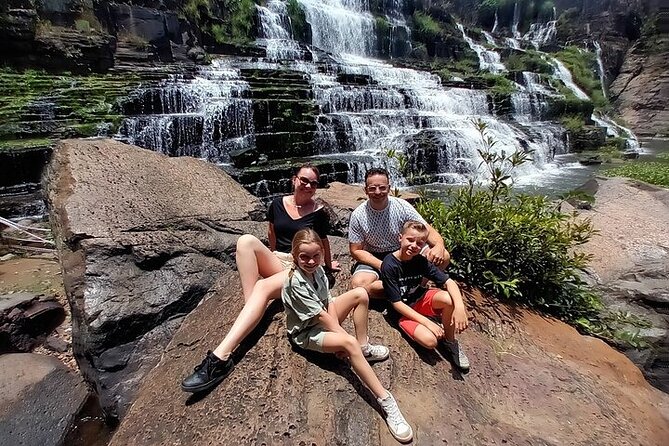
Then you hit the tour’s main waterfall star: Pongour Falls. It’s located in Ninh Gia village, Duc Trong district, Lam Dong province, and it’s described as the biggest and one of the nicest waterfalls in south Vietnam. Time here is also about 1 hour.
The tour’s key detail for your planning is the access walk: there’s a 10-minute walk down to the foot of the falls through large rocks. This is the stop that turns “easy sightseeing” into “pay attention to your footing.”
If you only remember one thing from this review, make it this: wear shoes with decent grip. The tour info explicitly asks for shoes and good walking gear, and Pongour is the reason why.
Once you’re near the falls, it’s exactly what you want from a waterfall visit: movement, sound, and scale. The water doesn’t just look good from a distance—it feels better up close, and the base viewpoint is why people plan for the walk.
Linh An Pagoda After the Falls: A Calm Reset

After two waterfall hits, the schedule includes a spiritual reset at Linh An Pagoda (Linh An Tu Pagoda). It’s described as one of the older and sacred Buddhist temples in Da Lat city, built in 1994, and it’s known for giant Buddha statues.
You spend about 45 minutes here. The value of timing matters: after mist and motion from the falls, a pagoda visit gives you quieter contrast. It also helps you understand Da Lat as more than nature tourism. This city’s religious sites are part of the daily rhythm of locals, not just postcard stops.
If you want a better experience, take your time with the statues and details rather than treating it like a quick photo stop. A shorter look feels rushed; a relaxed look feels meaningful.
Nam Ban Silk and Bamboo Crafts: Where the Day Gets Hands-On
One of the most rewarding parts of this route is the Nam Ban block—because it’s practical and sensory, not abstract.
First, you visit NamBan Silk for about 45 minutes. The focus is on the production chain: making silk from cocoons for clothing, with a chance to see the process from cocoon to fabric. Even if you don’t speak much local language, you’ll “get it” through what you see—hands, threads, stages of work.
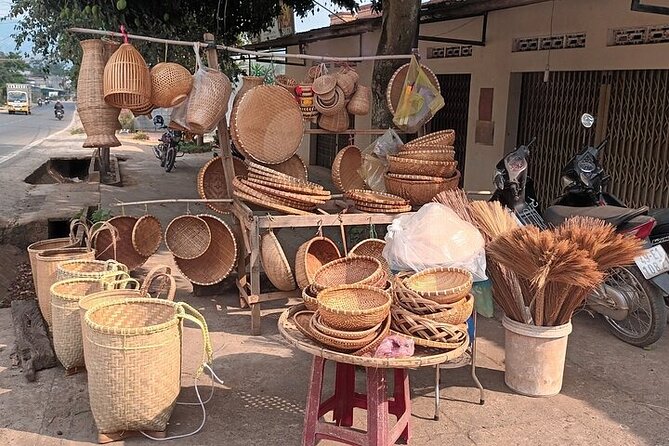
Then comes Thị Tran Nam Ban (about 1 hour), described as bamboo craft villages. This is meant to show local activities and how people make a living using their skills. If you like trips where you can point at something physical—tools, materials, finished goods—this section delivers.
Why this matters for your trip decision: many Da Lat tours treat culture as a stop you breeze through. Here, the crafts stops give you a slower pace and a clearer understanding of what local work looks like.
If you’re concerned about time: these stops are long enough to be satisfying but not so long that you lose daylight. They fit nicely between waterfalls and coffee/farm ends.
Ta Nung Coffee Plantation and Van Thanh Flower Village
The tour finishes with two classic Da Lat flavors: coffee and flowers.
At Ta Nung, you’ll visit a coffee plantation and learn about how coffee beans are processed. The visit is about 45 minutes, and the tour adds a fun tasting option: you may try real coffee mixed with chocolate, or smoothies with mountain-view outlooks over rural villages. The tour info also notes drink costs (coffee and smoothies/shakes are about $2 per glass), so it’s not fully free—just low-cost and optional.
Then you move to Vạn Thành (Van Thanh Flower Village) for around 40 minutes. Da Lat is known as a city of flowers, and this stop is described as one of the larger flower-growing and exporting villages. You’ll have a chance to e see the flower-growing scene and experience the “flowers” side of the region’s identity.
These last stops are where the route feels most Da Lat. If you’re traveling with someone who wants nature and also wants a taste of what the region produces, this pairing works.
What Makes the Private Car Experience Feel Easier
A private-car day lives or dies by the driving and timing. This one is designed with an experienced driver and a local guide, plus pickup offered from central Da Lat locations.
Here’s what that means for you:
- You spend less time figuring out roads and more time at the good parts.
- You can ask your guide questions on the fly—especially during the village and crafts stops.
- The day feels smoother because you’re not waiting for a bus schedule or matching your pace to a larger group.
In feedback, the guide name Viet (paired with driver Tom) comes up as a strong part of the experience, with emphasis on friendly service and clear English. There’s also a note that the operator can tailor parts of the itinerary to interests—so if you’re more into crafts than temples, it’s worth asking what can be adjusted.
Practical Tips: Walking, Dress, Lunch, and Small Expenses
This tour is mostly outdoors, with at least one stop that asks you to walk down to a waterfall base. The tour info calls out specific practical needs:
- Wear shoes
- Bring a hat
- Expect to wear short pants (or at least something comfortable for walking)
What to budget beyond the included price:
- Lunch is not included, and the tour guidance suggests about $2 per person for local lunch.
- Water is not included.
- Coffee and smoothies/shakes are around $2 per glass.
If you want a stress-free day, plan your timing like this: eat a real lunch mid-day or after Elephant Falls, and keep small snacks or extra water in your bag so you’re not stuck at the end of the day deciding whether to skip the tasting.
Finally: good weather matters. The tour info says the experience requires good weather, and if it’s canceled due to poor weather, you’ll be offered a different date or a full refund.
Should You Book the Da Lat Loop Tour on Private Car?
Book it if you want a single-day, private-car way to hit the big Da Lat highlights without turning the trip into logistics homework. It’s a strong choice for couples or friends who want a balanced day: monastery calm, two major falls, and culture/crafts that show real work beyond the viewpoint.
Skip—or at least rethink it—if you don’t want waterfall walking. Pongour Falls includes a descent to the base through large rocks, and the tour sets expectations with dress advice for exactly that reason. Also be realistic about the “extras” budget for lunch and optional drinks.
FAQ
How long is the Da Lat loop tour?
It runs for about 8 hours 30 minutes.
What’s included in the $40 price?
You get a private car with an experienced driver, a local tour guide, entrance fees for the stops, and round-trip pickup from your central Da Lat hotel or another location in the city center.
Is this tour private?
Yes. This is a private tour/activity, meaning only your group participates. There is a minimum of 2 passengers.
Can solo travelers join?
Solo travelers can book, but they must pay the extra private-car charge since the tour has a minimum of 2 pax.
Which meals are included?
Lunch is not included. The tour info suggests budgeting around $2 per person for local lunch, and water is also not included.
Are drinks included?
Not as part of the base price. Coffee and smoothies/shakes are noted at about $2 per glass.
Do I need a special outfit for the waterfalls?
The tour info asks you to wear shoes and a hat, and it says good for walk with short pants.
Is hotel pickup offered?
Yes. Pickup is offered from any location in the city center, with round-trip transfers.
What happens if the weather is bad?
The tour requires good weather. If it’s canceled due to poor weather, you’ll be offered a different date or a full refund.


![[Shibazakura / Tulip] Going by private car, Shibazakura Takinoue Park and Kamiyubetsu Tulip Park (from Sapporo) - Shibazakura Takinoue Park: cherry blossoms plus a May run](https://8.limotraveler.com/wp-content/uploads/shibazakura-tulip-going-by-private-car-shibazakura-takinoue-park-and-kamiyubetsu-tulip-park-from-sapporo-400x267.jpg)