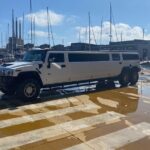
A car tour makes Barcelona make sense fast. You’ll get iconic Gaudí and big-city views without burning hours in transit, and I especially love the close-up Paseo de Gracia façades and the fact that the ride feels easy, even around the sea and Olympic areas. One possible drawback: the timing is tight, so you mainly get exterior look-and-photos plus short viewpoint pauses, not long time inside every stop.
This works best when you want a private group experience for up to 3 or 4 people. Pickup can be arranged from your accommodation or another central point, so you spend more time seeing and less time figuring out transport.
In three hours, you cover a lot of Barcelona’s “why it matters” in a logical loop: Modernisme on Passeig de Gràcia, the Magic Fountain area near Plaza d’Espanya, a Montjuïc viewpoint-and-sports sweep, then the sea at Barceloneta/Port Olímpic, ending with a drive-by near La Sagrada Família.
In This Review
- Key things I’d watch for before you go
- Why a private car tour helps Barcelona click
- From your pickup to Passeig de Gràcia’s Gaudí showpieces
- Casa Batlló: the façade that looks like it’s alive
- La Pedrera (Casa Milà): stonework with attitude
- Plaza d’Espanya: Venetian Towers, the old bullring, and the Magic Fountain area
- Why this stop is valuable on a tight 3-hour tour
- Montjuïc Hill: MNAC passes, Olympic Stadium, Olympic Swimming Pool, and a big viewpoint
- The Mirador de Montjuïc: panoramic pay-off
- Barceloneta and Port Olímpic: the sea-breeze reset
- A drive-by of La Sagrada Família, with time to look closer
- How the timing and walking feel in real life
- Price and value: $235 per group with private transport
- Who should book this tour
- Should you book it?
- FAQ
- How long is the Barcelona private car tour?
- What group size is it for?
- Where does pickup happen?
- What areas and landmarks will we see?
- Do we stop to walk around?
- What languages are available for the guide?
- Is lunch included?
- Is the tour wheelchair accessible?
- Can I cancel or pay later?
Key things I’d watch for before you go
- Private car comfort: you’re not hopping between buses and taxis all day.
- Façade viewing time: Casa Batlló and La Pedrera are the stars from the street.
- Montjuïc payoff: Olympic sites plus a viewpoint with wide city-and-sea views.
- Sea-neighborhood switch: Barceloneta and Port Olímpic feel like a different Barcelona.
- A guide who strings it together: the tour leans on neighborhood storytelling (including how places connect on the ground).
Why a private car tour helps Barcelona click
Barcelona looks compact on a map, but neighborhoods climb, drop, and curve in ways that can chew up time. This kind of private car tour is practical because it gives you the “big picture” fast. You get the highlights without needing to plan every transfer.
And it’s not just sightseeing by checklist. The route is built to move between the city’s different moods: Modernisme glamour on Passeig de Gràcia, the grand plaza energy near Plaza d’Espanya, the hillside calm of Montjuïc, and the waterfront rhythm of Barceloneta and Port Olímpic.
The vibe also fits families and friend groups. With up to 3 or 4 people, you can ask questions without turning the guide into an on-demand tour microphone.
From your pickup to Passeig de Gràcia’s Gaudí showpieces
You start right where you are. Pickup is available from your hotel, apartment, or a central location (with Eixample as one clear option), and the tour includes drop-off back in the city. That matters in Barcelona, because starting from the right place can mean the difference between an easy morning and a stressful one.
Once you’re moving, your drive along Paseo de Gracia sets the tone. This is where Barcelona’s Modernisme façade culture feels loud and theatrical, even from a car window. You’re not just passing buildings. You’re seeing why Gaudí became a symbol for the city’s identity.
Casa Batlló: the façade that looks like it’s alive
You’ll have a short stop for Casa Batlló—enough time to really look at the façade details and take photos without rushing. What I like about doing this early is you’re still fresh. You notice the overall shapes first, then the smaller textures and flourishes.
Even if you don’t go inside, the street view gives you a strong visual anchor for the rest of the day. It also helps you spot Gaudí’s recurring themes when you later see other Modernisme buildings.
La Pedrera (Casa Milà): stonework with attitude
Right after, La Pedrera gets its own quick photo-and-look moment. From the outside, it’s all about movement: curves, unusual geometry, and that slightly playful sense that the façade refuses to be boring.
Practical tip: if your camera has a wide lens mode, use it here. The building doesn’t “fit” in a tight frame, and you’ll get better results without repositioning every ten seconds.
Plaza d’Espanya: Venetian Towers, the old bullring, and the Magic Fountain area
Next up is Plaza d’Espanya. This is one of those Barcelona zones where you feel the city layering old and new. You’ll see the Venetian Towers nearby, plus the former bullring that’s been converted into a shopping area.
Then there’s the Magic Fountain area. Even if you’re not planning for a long stop, the location is worth understanding. It’s a big stage space—wide, monumental, and built for spectacle. If you’ve only seen photos, you’ll notice how the surrounding architecture frames the fountain space.
Why this stop is valuable on a tight 3-hour tour
In a short tour, you need stops that deliver meaning quickly. Plaza d’Espanya works because it’s:
- a reference point for lots of bus and metro routes (so you can navigate later),
- a “photo first” area with dramatic structures,
- and a natural bridge toward Montjuïc.
Montjuïc Hill: MNAC passes, Olympic Stadium, Olympic Swimming Pool, and a big viewpoint
Montjuïc is where the tour shifts gears from street theatre to views and geography. As you head up, you’ll pass the National Art Museum of Catalonia (MNAC) area, then continue through the Olympic zone with the Olympic Stadium and Olympic Swimming Pool.
This matters because Montjuïc isn’t just a hill with views. It’s a whole chapter of Barcelona tied to major sporting history and major urban projects. When you drive through these areas, you start to understand how the city reshaped space for big events.
The Mirador de Montjuïc: panoramic pay-off
You’ll reach a viewpoint at Mirador de Montjuïc. This is the payoff stop in the middle of the day: panoramic city views with the Mediterranean Sea in the mix.
I love this kind of moment because it gives you a mental map. After the view, the earlier stops don’t feel random. You can see how the city’s shape and coastline connect.
Practical note: wear comfortable shoes even though you’re in a car. Viewpoints usually mean short walks, uneven edges, and photo spots where you’ll want to stand steady.
Barceloneta and Port Olímpic: the sea-breeze reset
After the height and views, the tour descends into La Barceloneta and then the Port Olímpic area. This is where Barcelona’s energy changes again. The air feels different. The streets feel different. Even from a drive, you can pick up the maritime vibe right away.
What I like about ending with the waterfront is that it cools down the day. You’re not forcing more “architectural intensity.” You’re getting a breather before returning toward your drop-off point.
Also, the driving route can make the area easier than doing it on foot or with separate transport. One of the big praises connected to this kind of tour is how maneuverable the vehicle is around these coastal streets and beach zones. In plain terms: it can be less stressful than trying to coordinate public transport while you’re hungry, warm, and carrying a camera.
A drive-by of La Sagrada Família, with time to look closer
No Barcelona highlights list feels complete without La Sagrada Família. On this tour, you’ll be driven by the basilica area, with time for you to admire details and understand why it’s so important to the city’s cultural identity.
The key thing to know: you’re not doing a full, deep “only-Sagrada” visit. This is more like an important visual moment that fits the 3-hour flow. You’ll get that sense of scale and complexity from street level and from the immediate surroundings.
If you’re the type who wants hours and multiple angles, plan a separate visit later. But if you want the emotional hit of seeing it in the middle of your day, this is a strong way to do it without stretching your schedule.
How the timing and walking feel in real life
The tour is about 3 hours, designed to keep things moving without turning the day into a sprint. The stops are short and purposeful. You’ll notice “sightseeing” chunks that work like photo breaks and quick orientation pauses rather than long museum sessions.
Here’s how to think about it:
- If your goal is seeing many key areas in one go, this fits well.
- If your goal is long indoor time and detailed guided tours inside each site, this may feel too short.
Comfort tip: bring water and plan for a warm day, especially if you’re out in the open around the waterfront and viewpoints. The tour specifically asks for comfortable shoes, which is your hint that you’ll be stepping out at least a few times for views and photos.
Also note: smoking isn’t allowed in the vehicle. Not a problem for most people, but it’s good to know.
Price and value: $235 per group with private transport
At $235 per group up to 3 (with small groups often listed as up to 3 or 4), the pricing is mainly about one thing: you’re paying for a private car plus a local guide, not shared public transportation.
That can be good value if you’re traveling with 1–2 other people. Instead of each person paying for separate rides or sacrificing comfort, the cost spreads across the group. It’s also easier on your time budget. You’re not spending your mental energy deciding routes, transfers, and where to start.
Where value drops slightly: if you’re traveling solo and expecting a tour that functions like a full-day architectural deep study. This is built for “see the key places, get the stories, get the viewpoint fix,” then move on.
Who should book this tour
I’d especially recommend this tour if you:
- want Gaudí’s most iconic façades (Casa Batlló and La Pedrera) without planning them into a bigger day,
- want Montjuïc viewpoints and the Olympic area without the logistics headaches,
- are traveling as a small group and prefer a car-and-guide flow over public transport juggling,
- have limited time and want a strong first pass through multiple neighborhoods.
It’s also a good fit for families and friend groups who like a plan with enough structure to keep the day moving, but still expect to pause for photos.
One caution: it isn’t suitable for wheelchair users, based on the activity notes provided.
Should you book it?
If you want Barcelona highlights with a practical route that connects Modernisme, Olympic Montjuïc, and the waterfront in a single afternoon, this is a smart pick. The private pickup-and-drop-off approach reduces friction, and the small-group setup keeps the experience personal. I’d book it when you’re short on time, traveling with 2–3 people, and you care about seeing the right places in the right order.
Skip it if you’re determined to do long indoor visits at multiple major sites in one day. This tour is designed for quick, high-impact viewing plus viewpoint moments, not a full museum crawl.
FAQ
How long is the Barcelona private car tour?
It runs for about 3 hours.
What group size is it for?
It’s a private group experience for small parties, up to 3 or 4 people from the same group.
Where does pickup happen?
Pickup is available from your hotel, apartment, or a central city location of your choice. Eixample is one listed pickup area, and pickup within Barcelona can be flexible.
What areas and landmarks will we see?
You’ll drive along Passeig de Gràcia to see Casa Batlló and La Pedrera, visit the Plaza d’Espanya area (including the Magic Fountain zone and Venetian Towers area), pass through Montjuïc (MNAC area, Olympic Stadium, Olympic Swimming Pool, Mirador de Montjuïc), continue to Barceloneta and Port Olímpic, and be driven by La Sagrada Família.
Do we stop to walk around?
There are sightseeing stops at multiple locations, so expect some short pauses for photos and viewing. Comfortable shoes are recommended.
What languages are available for the guide?
The live tour guide is available in English, Spanish, and Italian.
Is lunch included?
No. Lunch or breakfast isn’t included.
Is the tour wheelchair accessible?
No, it’s not suitable for wheelchair users.
Can I cancel or pay later?
Yes. There’s free cancellation up to 24 hours in advance for a full refund, and you can reserve and pay later.