REVIEW · COLOMBO
5 Days Private Vehicle with English Speaking Chauffeur
Book on Viator →Operated by Apple Vacations Pvt Ltd · Bookable on Viator
A private car turns Sri Lanka into a checklist. This 5-day, transport-only trip gives you an English-speaking chauffeur guide and the freedom to shape your days around the major sights, from hill-country temples to ancient cities.
I especially like the customizable schedule: the plan is flexible once you start, not locked into a rigid script. I also appreciate the human factor, since real travelers single out drivers like Dhanesh and Indika for being helpful and easy to work with.
One consideration: several key entries are not included, including Dambulla cave temple and Sigiriya lion rock, so you’ll want to budget for tickets on top of the tour price.
In This Review
- Key highlights to focus on
- How this 5-day private chauffeur tour really works
- Where you’ll go: Sri Lanka’s most famous regions in one loop
- Day 1 in Kandy: Temple of the Sacred Tooth, Peradeniya gardens, and a lake viewpoint
- Temple of the Sacred Tooth Relic (and what you actually see)
- Peradeniya Royal Botanical Gardens: time well spent
- Kandy View Point and Kandy Lake: good views, watch your things
- New Ranweli Spice Garden: a short education with big flavor value
- Ending the day in Kandy
- Day 2: Gregory Lake, temples in Ramboda, and Nuwara Eliya’s tea-country vibe
- Gregory Lake: British-era recreation, still relaxing
- Shri Bhakta Hanuman Temple (Chinmaya Mission)
- Victoria Park: tidy paths and seasonal flower color
- Shanthipura View Point: a village at altitude
- Nuwara Eliya: base for tea-country wandering
- Day 3: Sigiriya’s rock fortress and Dambulla’s Golden Temple caves
- Sigiriya: the rock fortress that dominates the skyline
- Sigiriya Museum: the story behind the view
- Golden Temple of Dambulla (Jumbukola Vihara): cave temple scale
- A local-market-style stop in Dambulla
- More time at Sigiriya
- Day 4: Galle Dutch Fort walls, lighthouse views, and the Old Town walk
- Galle Dutch Fort: European architecture meets Sri Lankan city life
- Galle Lighthouse: a compact but photogenic rampart spot
- Dutch Hospital Shopping Precinct: restored colonial building with bay views
- Old Town of Galle and its Fortifications: the heart of the fort
- Day 5: Mihintale and Anuradhapura’s sacred circuit, including the Jaya Sri Maha Bodhi tree
- Mihintale: cave dwellings and monk history
- Ruwanwelisaya: an iconic stupa near the Maha Bodhi tree area
- Abayagiriya Stupa and the massive stupa idea
- Jaya Sri Maha Bodhi: a living record of deep time
- Anuradhapura: royal capital remains in thick history
- Price and value: what $200 per person really buys you
- Practical tips to make the days smoother (and less stressful)
- Driver experience matters: what the best versions of this tour feel like
- Should you book this private 5-day chauffeur tour?
- FAQ
- What type of tour is this, a group tour or a private one?
- Do I get pick-up and drop-off included?
- Is an English-speaking chauffeur guide included?
- Are meals and overnight hotels included?
- Are entrance tickets included for all attractions?
- Is WiFi available during the trip?
- Are there any health or quarantine requirements mentioned?
- What if the tour is canceled due to poor weather?
- Can I get a refund if I cancel?
Key highlights to focus on
- Private, just your group: no mixing, no sharing a slow van shuffle.
- English-speaking chauffeur guide: you get context while you’re moving between places.
- A/C vehicle + fuel included (up to the stated mileage): less hassle, fewer “how much is this taxi?” moments.
- Major cultural stops in 5 days: Kandy, tea country, Sigiriya, Galle, and Anuradhapura.
- You pick the pace on the ground: accommodation and extra activities are yours to choose.
- Mobile ticket: simpler day-of pickup and confirmation.
How this 5-day private chauffeur tour really works
This is a private tour centered on one thing: getting you around Sri Lanka efficiently with your own English-speaking chauffeur guide. It’s not a “sit on a bus and watch” style day. You’ll spend your time at stops, and the driving is handled for you with fuel included for the tour’s distance limit.
The big value for me is the flexibility. You get a strong backbone of famous places, but you’re not stuck with just one route forever. You can tailor the itinerary to your interests, then choose your own hotels and any extra activities at your own cost.
The tradeoff is that you still need to plan the parts that aren’t included. Entry tickets for some sights are separate, and you’ll be responsible for meals and overnight stays. If you like to travel lightly and want everything prepackaged, this may feel like “you still have to do some thinking.”
Where you’ll go: Sri Lanka’s most famous regions in one loop
In five days, the route covers five very different parts of the country. You start in the Kandy area (religious sites, gardens, views, and spices), head into Nuwara Eliya and the cooler tea country (parks, viewpoints, and small spiritual stops), then move to the cultural rock-and-caves zone around Sigiriya and Dambulla.
After that, it shifts to the southwest coast for Galle, with Dutch-era fort walls and colonial-era streets. Your final day takes you into the ancient capital region around Anuradhapura, plus nearby sacred sites like Mihintale and the Jaya Sri Maha Bodhi tree.
If you’re short on time, this is a smart “greatest hits” circuit. If you hate long drives or want one region only, you might prefer a slower, single-area itinerary instead.
Day 1 in Kandy: Temple of the Sacred Tooth, Peradeniya gardens, and a lake viewpoint
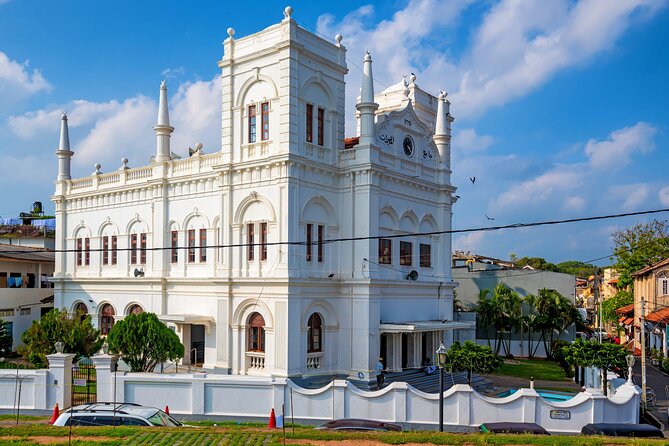
Day one is classic Kandy: you get the religious anchor, nature, views, then a taste of Sri Lanka’s spice culture.
Temple of the Sacred Tooth Relic (and what you actually see)
This is the golden-roofed Temple of the Sacred Tooth Relic, Sri Lanka’s most important Buddhist relic site. The key detail: during worship (puja), people can access the room where the tooth is kept—but you don’t actually see the tooth. It’s stored in a gold casket-shaped structure, inside a sequence of smaller dagoba-shaped caskets.
What I like about this stop is how the setting explains Buddhist devotion without turning it into a simple photo-op. You’ll also notice the complex includes smaller temples, shrines, and museums, which means you can spend extra time if your group moves slower.
Practical note: treat it like a real worship site. You’ll need to follow temple etiquette—remove footwear and dress to cover shoulders and knees.
Peradeniya Royal Botanical Gardens: time well spent
Then comes Peradeniya Royal Botanical Gardens, often considered the finest of its kind in Asia. The gardens sit about 500 meters above sea level and are bounded by a loop of the Mahaweli River, which helps explain why the scenery feels so open even when you’re in a complex.
A big plus: this stop is straightforward. You don’t need special tickets beyond entry, and the pacing is easy. It’s also a nice reset after temple intensity.
Kandy View Point and Kandy Lake: good views, watch your things
From Kandy Lake you climb up to a viewpoint. The views over the city are the point here, and you can see why it’s popular. The drawback is crowd behavior: there are peddlers nearby, and the area has a reputation for high pickpocket activity.
So my advice is simple: keep your valuables secured and avoid pulling out your phone repeatedly in busy lanes. A crossbody bag worn in front beats “left it in the wrong pocket” every time.
After the viewpoint, you’ll spend time around Kandy Lake itself, known locally as Kiri Muhuda. It’s an artificial lake built in 1807 next to the Temple of the Tooth. Fishing is banned, and there are local legends about the central island and a secret tunnel connected to the palace—exact details vary by telling, but the folklore adds a layer to what you’re seeing.
New Ranweli Spice Garden: a short education with big flavor value
Next is New Ranweli Spice Garden, a compact stop focused on Sri Lanka’s spice history. You’ll see how herbs are grown and then learn how spices connect to traditional dishes.
This is one of those stops that’s small enough not to hijack your day, but useful enough to change how you eat later. If you can only afford one “food-related” experience in the middle of a packed route, I’d pick something like this.
Ending the day in Kandy
You finish with time in Kandy itself. Four hours in the city gives you room to wander, grab dinner, and adjust the evening pace to your energy level.
Day 2: Gregory Lake, temples in Ramboda, and Nuwara Eliya’s tea-country vibe
Day two is all about moving from the valley areas into hill-country scenery and cooler air. It also mixes in a few places that feel less touristy than the headline spots.
Gregory Lake: British-era recreation, still relaxing
You’ll stop at Gregory Lake, created in 1873 during the British era. The story says it was meant to provide electricity, but it became mostly a leisure and recreation spot.
This is a good “stretch your legs” stop. It doesn’t try to be more than it is, and that makes it work in a day that includes driving.
Shri Bhakta Hanuman Temple (Chinmaya Mission)
Then you’ll visit the Shri Bhakta Hanuman Temple, run by the Chinmaya Mission of Sri Lanka. It’s located in Ramboda on the Kandy–Nuwara Eliya Road, facing the Kotmale Reservoir.
If you’re into religious architecture or simply want a pause from the tea-country tourist loop, this offers a different viewpoint. It’s also a reminder that Sri Lanka’s spiritual life isn’t limited to Buddhist sites.
Again: follow temple rules, including no hats and no footwear.
Victoria Park: tidy paths and seasonal flower color
In Nuwara Eliya, the tour includes Victoria Park of Nuwara Eliya, one of the town’s best-maintained parks. It’s especially colorful around certain months, like March to May and August to September, and it’s home to various hill-country bird species.
This is a calm stop and a good place to rest from vehicle time. If you like photos, you’ll get them without needing an extra ticket-hunt.
Shanthipura View Point: a village at altitude
Next is Shanthipura View Point. Shanthipura is described as the highest village in Sri Lanka, about 7339 feet on the Kikiliyamana Mountain road. You’ll see a Buddhist pagoda as a centerpiece with villagers’ homes built around different altitudes.
This stop is short, but it adds human scale to the scenery. You’re not just watching mountains—you’re seeing how people live on them.
Nuwara Eliya: base for tea-country wandering
Finally, you get time in Nuwara Eliya itself. It’s described as a tea nation city with nearby attractions like Hakgala Botanical Gardens and a Hindu sanctuary called Seetha Amman Temple, though you’ll likely use your time more flexibly.
What you should know practically: hill-country weather can feel different from lowland heat. Bring a layer even if you’re traveling in warm months.
Day 3: Sigiriya’s rock fortress and Dambulla’s Golden Temple caves
Day three is where the route gets cinematic. You’ll hit Sigiriya and then the Golden Temple of Dambulla, one of Sri Lanka’s rock-temple highlights.
Sigiriya: the rock fortress that dominates the skyline
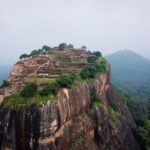
Sigiriya is the dramatic rock outcrop rising from the plains, with near-vertical walls and a flat summit. It’s linked to the short-lived kingdom of King Kassapa and known for views across misty forests.
This is the kind of place where your photos won’t do it justice because your brain keeps trying to zoom out and still can’t get a full picture. You’ll understand why people treat it like a must-see.
Important: the entrance fee for Sigiriya lion rock isn’t included. Plan for that cost.
Sigiriya Museum: the story behind the view
You’ll also visit Sigiriya Museum, described as having a diorama that helps you understand the site’s cultural importance beyond the dramatic rock itself. It discusses theories, including a Buddhist-monastery idea, while noting the prevailing view that it was a palace or fortress.
If you like history but hate feeling lost at the site, this museum is a smart way to get your bearings before you walk.
Golden Temple of Dambulla (Jumbukola Vihara): cave temple scale
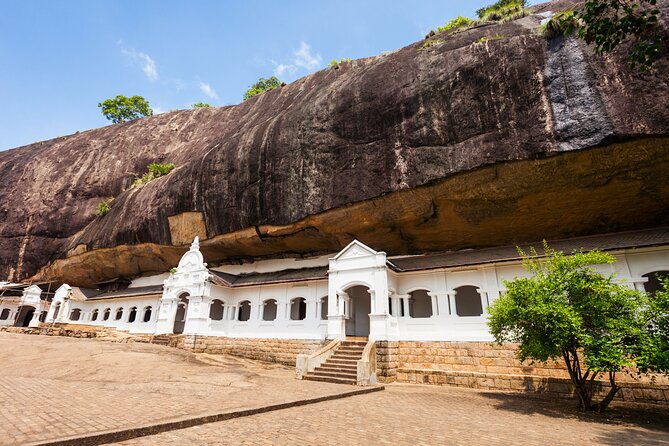
Next comes Golden Temple of Dambulla, also called the Dambulla Cave Temple. The description emphasizes that these rock temples are extensive, ancient, and in good preservation.
This stop is where the “wow” factor is built into the architecture. You’re not just walking outdoors—you’re moving through cave-temple space.
Entrance note: Dambulla cave temple tickets are not included.
A local-market-style stop in Dambulla
There’s also a stop at a wholesale market concept in Dambulla’s Secretariat Division, described as supporting farmers and selling vegetables and fruits. This is not a must for everyone, but it can be a nice reality check in the middle of big-ticket monuments.
More time at Sigiriya
The day includes additional time related to Sigiriya again. In practice, that usually means you’ll be revisiting areas for a fuller experience rather than rushing through and calling it done.
My advice: if you’re climbing at Sigiriya, pace yourself and take breaks. Your legs will thank you, and you’ll see more even when you’re moving slower.
Day 4: Galle Dutch Fort walls, lighthouse views, and the Old Town walk
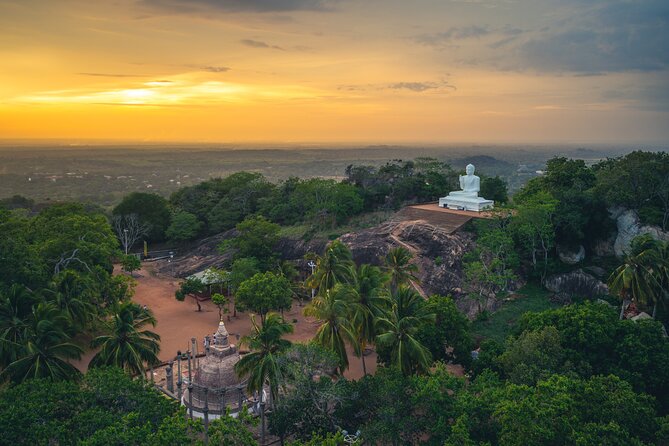
Day four shifts from inland rocks to coastal history.
Galle Dutch Fort: European architecture meets Sri Lankan city life
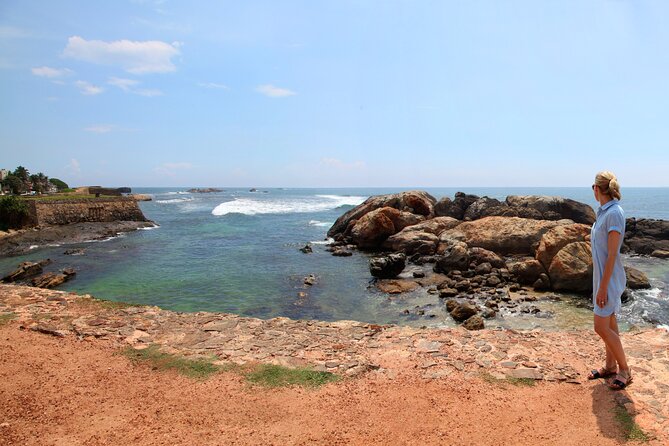
The Galle Fort (Dutch Fort) is recognized as a UNESCO World Heritage Site. It began with Portuguese fortifications, then grew with later Dutch and British-era layers. The key value here is the “urban ensemble” idea—European architecture mixing with South Asian traditions over several centuries.
This is a great walking day because the fort layout rewards slow movement. You’ll see walls, old streets, and the way the town developed inside the defenses.
Galle Lighthouse: a compact but photogenic rampart spot
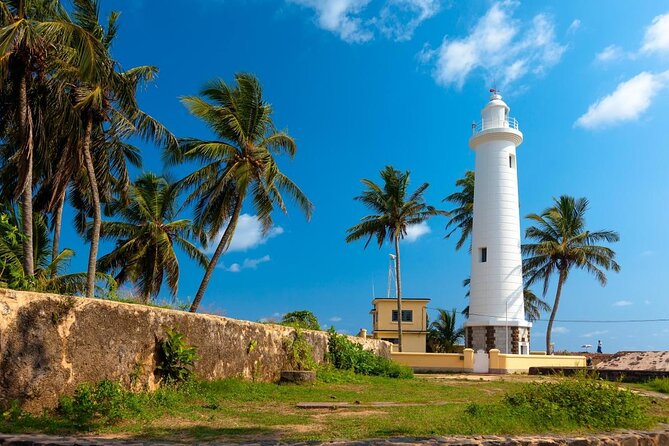
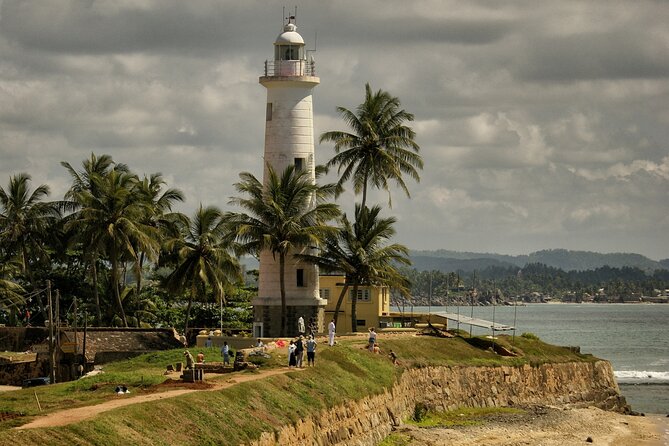
The Galle Lighthouse sits inside the fort and is built on ramparts. It dates back to 1848, with changes after a fire in 1934, then rebuilt to its current height.
Time here is short, but it’s worth it because it’s a classic coastal vantage point that feels distinct from inland viewpoints.
Dutch Hospital Shopping Precinct: restored colonial building with bay views
The Dutch Hospital Shopping Precinct is a restored colonial building that now mixes shops and places to eat or drink. Upper balcony views toward the bay add a nice touch if you want a break from walking.
Old Town of Galle and its Fortifications: the heart of the fort
The old walled city is described as living world heritage, spanning Portuguese, Dutch, and British periods into today. The area is also referred to as an archaeological reserve.
This is where you should plan to linger. If you only do one “just walk” section of the whole tour, this should be it.
Day 5: Mihintale and Anuradhapura’s sacred circuit, including the Jaya Sri Maha Bodhi tree
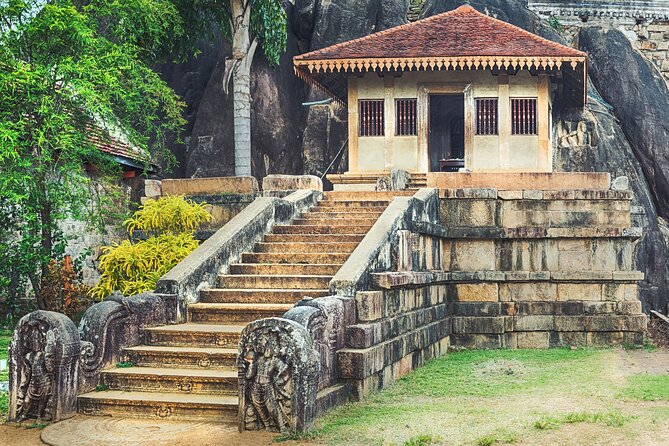
Your final day focuses on ancient sacred sites. This is less about scenery and more about spiritual and historical scale.
Mihintale: cave dwellings and monk history
Mihintale is centered on a mountain sanctuary linked to the arrival and early spread of Buddhism in Sri Lanka. It’s described as having monastic buildings, stupas, and even 68 cave dwellings for monks.
This stop gives you a sense of how organized religious life became over time. It’s also a good primer for the sites you’ll see afterward in Anuradhapura.
Ruwanwelisaya: an iconic stupa near the Maha Bodhi tree area
Next is Ruwanwelisaya, described as the oldest stupa in Sri Lanka and a major Buddhist icon. It’s located just a short walk away from the Maha Bodhi tree in Anuradhapura, and it’s tied to the idea of the Buddha’s visits to Sri Lanka.
Short walk, big meaning.
Abayagiriya Stupa and the massive stupa idea
You’ll visit Abayagiriya Stupa. The description in this route also references a stupa linked to a huge original height and its historical ranking among the world’s tallest buildings at the time. Even if you don’t memorize the numbers, the takeaway is that this area was built on an enormous scale.
Jaya Sri Maha Bodhi: a living record of deep time
Then comes Jaya Sri Maha Bodhi, described as the oldest living tree in documented history. It’s a sapling from the historical Bodhi tree under which Buddha enlightened, brought from Buddhagaya by Sanghamitta. The planted date is given as 288 B.C.E.
This is the kind of stop where you don’t need a long explanation. The age alone changes how you look at the space.
Anuradhapura: royal capital remains in thick history
Finally, you’ll have time in Anuradhapura, described as a political and administrative capital that thrived for a long time. After later periods of change, the area was hidden for a while, and now you can visit royal residences, cloisters, and landmarks.
It’s a great finish because it ties everything together: religion, governance, and architecture in one region.
Price and value: what $200 per person really buys you
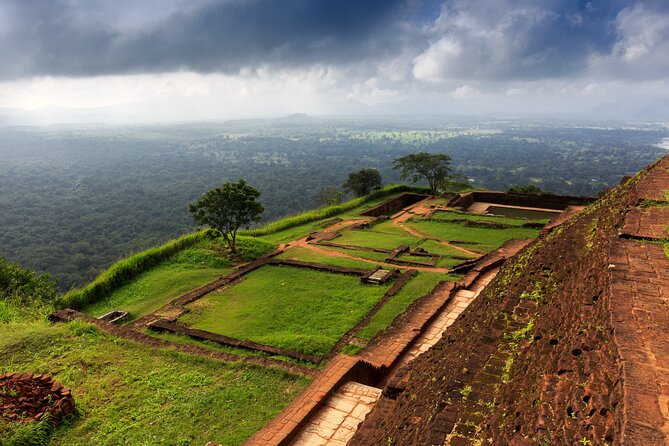
At $200 per person, the value depends on how you’d otherwise handle transport and guiding.
Here’s what you’re getting that’s hard to replicate cheaply on your own:
- An A/C standard vehicle with fuel for the tour’s distance limit
- An English-speaking chauffeur guide who accompanies you to most sights
- Chauffeur guide accommodations
- Mileage starting and ending in Colombo or the airport
- Complimentary WiFi during travel, subject to availability
- A private setup for just your group
- A mobile ticket
What you’ll still pay separately:
- Visa fees
- Your hotels (overnights)
- Food and beverages
- Personal expenses and gratuities
- Some entrance fees, specifically called out for Dambulla cave temple and Sigiriya lion rock (and other places may also have separate admissions depending on the stop)
So the deal makes sense if you want to reduce transport stress and you value having someone explain what you’re looking at. If you’re the type who prefers to drive yourself, arrange everything with local buses, and skip entrances, then a cheaper self-planned route might beat this price. But if you’re short on time and want your days to run smoothly, this is a solid use of budget.
Practical tips to make the days smoother (and less stressful)
First, pack for temples and crowded viewpoints. You’ll be expected to remove footwear and hats, and cover shoulders and knees. That’s easy if you bring a light scarf or layer.
Second, treat Kandy’s viewpoint like a place where you guard your phone and wallet. The area has a reputation for pickpocket activity, and the presence of peddlers can make it easier to get distracted. Keep valuables secure and move carefully.
Third, use the flexibility well. This route is designed so you can adjust your pace. If you find one stop you love, ask to spend a little more time there. If you’re tired, shorten the next leg.
Finally, plan for timing and driving windows. Vehicle usage is described as starting from day two at 08:30 AM to 06:30 PM. There’s also a note about extra driver charges if the vehicle needs to leave before 07:00 AM or after 09:00 PM. If your hotel check-in plans are strict, build a buffer.
Driver experience matters: what the best versions of this tour feel like
In real-world feedback, the strongest praise is for the people behind the wheel. Names that come up include Dhanesh, Indika, Cey Jay, Keerthe, and planning help from Jeev. The themes are consistent: good communication, a cooperative attitude, and real flexibility once you’re on the ground.
If you care about that, here’s a simple approach: when you book, tell the operator you want an English-speaking chauffeur who can support itinerary changes during the trip. Then confirm the pickup timing and your hotel locations clearly. It reduces the chance of awkward day-of adjustments.
Also, keep expectations realistic. A 5-day circuit is active. Even with a private vehicle, you’ll still be walking, climbing, and waiting at sites. If you like a slower travel pace, you might choose fewer museums and more time just outside the main gates.
Should you book this private 5-day chauffeur tour?
Book it if you want a guided, private transport solution that hits the main Sri Lanka highlights in five days and you don’t want to stitch together drivers city by city. It’s especially good for first-time visitors, couples, and small groups who like to mix top monuments with local stops like spice gardens and markets.
Skip it if you’d rather stay in one region and go deep slowly, or if you’re very price-sensitive once you add entrance fees for major sights like Sigiriya lion rock and Dambulla cave temple. Also skip if you dislike temple etiquette and crowded viewpoint risks, because you’ll encounter both.
Bottom line: for the time you have, this is a smart way to see a lot without turning your trip into a logistics project.
FAQ
What type of tour is this, a group tour or a private one?
This is a private tour/activity. Only your group participates.
Do I get pick-up and drop-off included?
Yes. Pickup is offered, and mileage starts and ends in Colombo or at the airport.
Is an English-speaking chauffeur guide included?
Yes. The tour includes an English-speaking chauffeur guide who accompanies you to most sights.
Are meals and overnight hotels included?
No. Entry visa fees, overnight hotel accommodations, and food and beverages are not included.
Are entrance tickets included for all attractions?
No. Entrance fees are not included for some stops, and the route specifically lists Dambulla cave temple and Sigiriya lion rock as not included. Other stops may also have separate admissions.
Is WiFi available during the trip?
Yes, complimentary WiFi is provided during travel, subject to availability.
Are there any health or quarantine requirements mentioned?
Yes. Unvaccinated passengers are required to complete 14 days of quarantine before starting the tour. Vaccinated passengers are required to stay in a Level 1 hotel and obtain a negative PCR report before starting the tour.
What if the tour is canceled due to poor weather?
If canceled due to poor weather, you are given the option of an alternative date.
Can I get a refund if I cancel?
Yes. Free cancellation is available up to 24 hours in advance for a full refund. Within 24 hours, the amount paid is not refunded.