
REVIEW · NEW DELHI
4-Day Golden Triangle by Private Car – Delhi, Agra, Jaipur
Book on Viator →Operated by Aiza tours · Bookable on Viator
You can do India’s headline sites without the stress. This 4-day private Golden Triangle strings together Delhi, Agra, and Jaipur in an air-conditioned car with local guides and hotel/rail/airport pickup. I love the logic of the schedule, especially the sunrise timing built around the Taj Mahal, and I also like the way the operator keeps you moving with a driver who stays punctual. One thing to consider: most monument entry fees are not included, so you’ll want a little cash/credit ready for tickets at several sites.
The upside of a private car is simple: you’re not stuck negotiating with random taxis between stops. You’ll also get help with entrance tickets through your guide, so you don’t spend your day hunting down ticket counters or standing in lines just to get started.
Finally, this route is a mix of major icons and a few “wait, that’s cool” detours—like the stepwell near Amber Fort and the choice to avoid elephant activities. If you hate early mornings, the sunrise at the Taj can be the only real sore spot.
In This Review
- Key reasons this tour works so well
- Golden Triangle by private car: comfort that actually saves time
- Delhi first: markets, mosques, memorials, and Mughal monuments
- Chandni Chowk: old Delhi’s 17th-century chaos (in a good way)
- Jama Masjid: big religious architecture with active life
- India Gate and Lotus Temple: two different moods, both worth a pause
- Humayun’s Tomb and Qutub Minar: Mughal-era landmarks that set up the next days
- Delhi to Agra: the ride to the Yamuna Expressway payoff
- The Taj Mahal at sunrise: why this timing is the whole show
- Pro tip for the Taj day
- Agra after sunrise: Fort views and “jewel box” moments
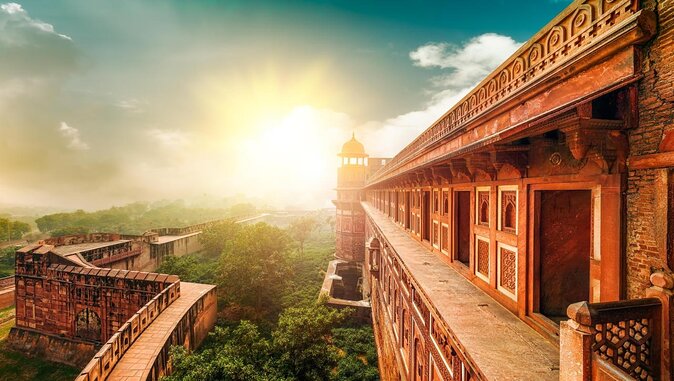
- Agra Fort: UNESCO scale and military-meets-palace design
- Itmad-ud-Daula: the “Bachcha Taj” style details
- Jaipur day: stepwell curiosity, Amber Fort, and the city’s royal rhythm
- Panna Meena ka Kund: the stepwell stop that surprises people
- Amber Fort: a hilltop palace day, minus elephant rides
- Jal Mahal: see it from the right mindset
- City Palace and royal museums: where Jaipur’s story becomes tangible
- Jantar Mantar: science in stone form
- Hawa Mahal: the pink facade with hundreds of windows
- Hotels and room setup: choose what level of comfort you want
- Guides and the little details that keep the day from falling apart
- Price and value: $20 makes sense only with the right expectations
- Who should book this Golden Triangle private car tour
- Should you book this 4-day Golden Triangle tour?
- FAQ
- Is this tour private or shared?
- Does the tour include pickup from the airport or hotel?
- Are entrance fees to monuments included?
- Will there be hotel accommodation included?
- How do you handle getting to the Taj Mahal at sunrise?
- Is elephant activity included at Amber Fort?
- Can I cancel for a full refund?
Key reasons this tour works so well
- Private car + pickup means you start where you are, not where you wish you were
- Taj Mahal sunrise is scheduled early, plus you get a battery bus ride to the monument area
- Private local guides at every stop help you understand what you’re looking at (and what to skip)
- Ticket help included through your guide, so queues for entry are less of a time-sink
- No elephant activity keeps the Amber Fort day focused on visiting, not rides
Golden Triangle by private car: comfort that actually saves time
A “Golden Triangle” can easily feel like a blur if you’re bouncing between public transport and group buses. Here, the private air-conditioned vehicle is the whole point: you’re getting a straightforward route between Delhi, Agra, and Jaipur with less friction.
Car type depends on group size, which matters more than it sounds. A four-seater sedan for 1–2 people feels like a quiet, easy ride. For bigger groups, you’ll be in a six-seater wagon or a larger van, which helps you keep the trip comfortable instead of cramming.
That comfort isn’t just about comfort. It’s about time and sanity. You can plan your days around the sightseeing windows rather than around the next bus departure. And because you’re not sharing the vehicle with strangers, your guide can nudge the schedule to match your pace—within reason.
Delhi first: markets, mosques, memorials, and Mughal monuments
Delhi on this route is a “greatest hits” day, but it’s not only shiny monuments. It’s a mix of iconic architecture and old-city scenes—useful if you want context before you hit Agra and Jaipur.
Chandni Chowk: old Delhi’s 17th-century chaos (in a good way)
You start in Chandni Chowk Market, a historic, busy bazaar area dating back to the Mughal period. This is where you get your bearings fast: narrow lanes, shop signs, snack smells, and the feeling of a city that runs on daily life.
You’re scheduled for about an hour, which is enough to wander, look closely, and feel the atmosphere without turning it into a shopping marathon. If you want photos, this is an excellent place to practice—especially from the edges of the lanes where you can frame both people and storefront activity.
Jama Masjid: big religious architecture with active life
Next up is Jama Masjid, one of Delhi’s major mosques. You’ll have around 45 minutes. This is one of those stops where architecture is only half the story; the other half is that it’s still an active religious site.
Plan for dress modestly and be respectful with movement. Also remember entry fees for this stop are not included, so this is one of those “small budgeting moment” sites.
India Gate and Lotus Temple: two different moods, both worth a pause
Then you hit India Gate, the war memorial on the ceremonial axis. It’s free and quick, around 30 minutes—enough time to see the scale and feel the gravity of the place without turning it into a long detour.
After that, the Lotus Temple gives you a totally different vibe. It’s free, and the visit is short—about 30 minutes. The lotus-like shape is instantly recognizable, and it’s a great breather after the dense streets of Old Delhi. If you want a calm stop where your guide can explain the Baháʼí House of Worship concept, this is where you’ll likely appreciate it most.
Humayun’s Tomb and Qutub Minar: Mughal-era landmarks that set up the next days
You’ll also see Humayun’s Tomb (UNESCO, about 1 hour) and Qutub Minar (also about 1 hour). These aren’t just “nice buildings.” They’re key to understanding how Indo-Islamic architecture developed.
One practical note: both stops list monument admission as not included, so you’ll pay for those entries separately. The time you spend here is worth it because they give you visual language for what you’ll later see in Agra and Jaipur—domes, arches, symmetrical design principles, and the way planners used space.
Delhi to Agra: the ride to the Yamuna Expressway payoff
Once the Delhi sightseeing is done, lunch happens at a local restaurant, then you drive about three hours toward Agra via the Yamuna Expressway.
That transfer matters. Traffic in and around Delhi can turn “a quick hop” into an all-afternoon headache, so having a private car with a driver who’s used to the routes makes a difference. Also, being on the highway early is what gives you the realistic chance of doing a sunrise Taj without making it a disaster.
The Taj Mahal at sunrise: why this timing is the whole show
This is the centerpiece day, and it’s built around sunrise at the Taj Mahal. The idea is simple: you get softer light on the white marble, fewer crowds than later in the morning, and the kind of atmosphere that makes the monument feel almost unreal.
You’ll have a few hours at the site, and you’re also given a battery bus ride from the Taj parking area up to the monument zone. That’s a small detail, but it’s one of those “you’ll thank yourself later” inclusions—less walking fatigue before you even start photographing.
Entry to the Taj is not included, so budget for it. But even if you’re paying admission, the sunrise timing is the value. You’re not just paying for a ticket. You’re paying to experience the building in a specific light and mood.
Pro tip for the Taj day
Be ready for a short comfort plan: water, sun protection, and whatever you need to handle the early start. Sunrise sounds romantic; in practice, it’s also physical. Your guide can tell you where to stand for good views once you arrive, and having that local input can save you time.
Agra after sunrise: Fort views and “jewel box” moments
After the sunrise, you return for breakfast and check-out, then continue with Agra sightseeing.
Agra Fort: UNESCO scale and military-meets-palace design
You’ll visit Agra Fort for around an hour. Entry fees are not included here, but the stop is a strong counterpart to the Taj. The Taj is pure beauty and symbolism. The fort shows power in stone—defensive architecture, court structures, and big views across the Yamuna.
If you only do the Taj, you miss the context of why this region mattered. Doing Agra Fort the same day helps the story click.
Itmad-ud-Daula: the “Bachcha Taj” style details
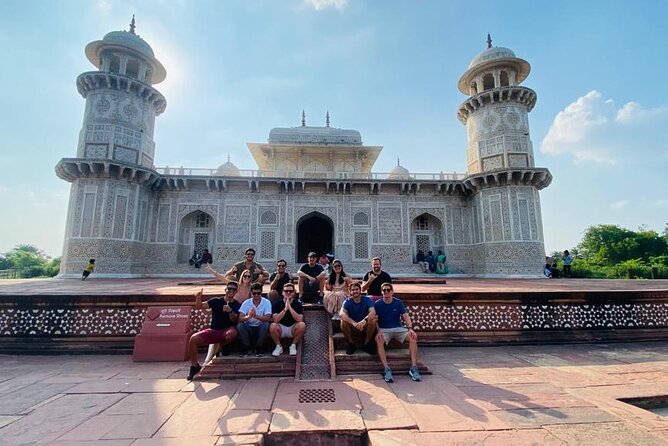
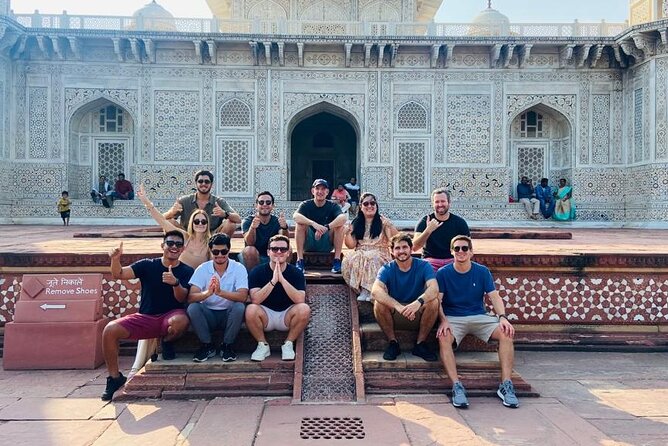
Then you see Itmad-ud-Daula (often called a smaller Taj-style mausoleum). You’ll have around 45 minutes. This is a good stop if you like close-up design—carving, symmetry, and the way the white marble and inlays create delicate visual texture.
Because it’s scheduled after the Taj, you get a nice “big landmark, then detail landmark” flow. It keeps your brain from feeling like it’s stuck only on one theme.
Jaipur day: stepwell curiosity, Amber Fort, and the city’s royal rhythm
Once Agra is complete, you drive to Jaipur, check in to your hotel, and take time to relax. After that, you get a full day of Jaipur icons without wasting hours.
Panna Meena ka Kund: the stepwell stop that surprises people
You start with Panna Meena ka Kund, a 16th-century stepwell near Amber Fort. It’s short—about 30 minutes—and free. This is the type of stop that feels less “official tourist route,” more architectural curiosity.
A stepwell is also an easy place for your guide to connect dots between engineering and everyday life. Even if you’re not a “history museum person,” it’s visually satisfying, and it breaks up the day before the big palaces.
Amber Fort: a hilltop palace day, minus elephant rides
Next is Amber Fort (about 2 hours). Entry fees are not included, and you’ll want comfy shoes—there’s a lot to see, and the grounds are not flat.
The tour also avoids elephant activity. That matters for ethical and practical reasons. If you want the Amber Fort experience without rides, you’ll likely be happier here than on tours that build the day around animal attractions. One plus from the broader operator approach: they’ll help you choose an alternative like a jeep ride when elephants aren’t part of the plan.
Jal Mahal: see it from the right mindset
You’ll stop at Jal Mahal, the water palace in Man Sagar Lake. Entry is prohibited, but the photo opportunities are still a reason to include it. Think of this as a “glance and appreciate” stop rather than a full visit.
City Palace and royal museums: where Jaipur’s story becomes tangible
Then comes City Palace of Jaipur, about 1 hour. Entry fees are not included. This is where the royal story becomes organized and physical: courtyards, museums, and the iconic Peacock Gate.
If you’ve been looking at forts and tombs for two days already, City Palace gives you something different. It shifts from military and dynastic monuments to the living space of rulers and their collections.
Jantar Mantar: science in stone form
After that, Jantar Mantar takes you to UNESCO-listed astronomical instruments. You’ll spend about an hour. Entry fees are not included.
This stop is great if you like how people once treated math as daily problem-solving. It’s also a handy mental reset: less “look up at big buildings,” more “look at how calculations become objects you can walk around.”
Hawa Mahal: the pink facade with hundreds of windows
Finally, you visit Hawa Mahal (Palace of Wind). It’s quick—around 20 minutes—and entry fees are not included. The famous feature is the 953 jharokhas (windows), and it’s a fun stop because it’s so visually specific.
It’s also a reminder that Jaipur’s royal design wasn’t only about power. It was about daily city visibility and how women in the royal household could watch street life from behind screens.
Hotels and room setup: choose what level of comfort you want
This tour runs for three nights, with breakfast included if you book the hotel option. Hotel categories vary: you may see 4-star options like Fern Residency (or similar), or 5-star options such as Hilton or Holiday Inn Jaipur City Centre.
Rooms are generally twin-sharing. If you book for three people, the default is triple-sharing, unless you pay to get two rooms.
This is where you should think about value. Private car + private guides is the real “premium” part of the tour. The hotel tier affects comfort, but the core sightseeing flow stays the same. If you’re the kind of traveler who spends mornings out and sleeps well anywhere, a mid-range hotel option can make the whole trip feel like a smart buy.
Guides and the little details that keep the day from falling apart
The best part of this tour style is how the guidance works in practice. You get private local guides at sightseeing stops, which usually means two things: you’ll understand what you’re seeing faster, and you’ll get help planning what to photograph or where to stand.
Names from the guide team you may encounter include Ali, Adin, Kapil, Sujal, Faiz, and Arbab—and the driver support can include people like Kapil (noted for punctual, safe driving) and Hermant (also mentioned as punctual and professional). Even if you don’t meet the same individuals, the pattern matters: guides who answer questions and drivers who keep mornings on time.
Also, your guide helps with entrance fee purchasing, so you’re not stuck forming lines just to buy basic entry. That’s a real time-saver at monuments with multiple ticket points.
Price and value: $20 makes sense only with the right expectations
The listed price is $20 per person, but tours like this often have a “what’s included” split. Here, entry fees for monuments are not included, and hotels are only included if you select an option that includes them.
So what are you actually paying for in the base rate?
- Private air-conditioned transport
- Private local guides
- Hotel pickup and drop-off in the Delhi area
- Battery bus support for the Taj area
- Fuel, taxes, and service charges
- Daily breakfast if you choose the hotel option
If you want a low-effort, guided, pickup-included route through three cities, the value can be strong. If you’re on a tight budget, just remember you’ll still pay monument entries at multiple stops (Taj Mahal, Jama Masjid, Humayun’s Tomb, Qutub Minar, Agra Fort, Itmad-ud-Daula, Amber Fort, and more).
Who should book this Golden Triangle private car tour
This is a great match if you:
- Want a private route and hate the hassle of coordinating transport
- Like having a guide explain what you’re seeing, not just point
- Can handle an early start for Taj Mahal sunrise
- Prefer visiting major landmarks plus a couple of more interesting stops (stepwell, water palace viewpoints)
It might be less ideal if you:
- Want everything included, including monument tickets and all meals
- Dislike early mornings enough that sunrise sounds miserable
- Travel with very strict expectations about exact hotel brands (because the category can shift and “similar” options are common)
Should you book this 4-day Golden Triangle tour?
I’d book it if you want the Golden Triangle done with minimal logistics stress: pickup handled, private guides at each stop, and a sunrise Taj that isn’t an afterthought. The price can feel like a bargain once you factor in the private transport and guide time, especially when monument entry fees are the only major extras you’ll pay.
If you want to maximize value, plan your budget around the ticketed sites and treat the free stops (like India Gate, Lotus Temple, and the market time) as part of the pacing plan. For many travelers, that’s the sweet spot: a mostly guided, mostly ticketed day-to-day route, with enough variety to keep things from repeating.
FAQ
Is this tour private or shared?
It’s a private tour/activity, so only your group participates.
Does the tour include pickup from the airport or hotel?
Yes. Pickup is offered from the airport, railway station, hotel, or any pickup location in Delhi, Noida, and Gurugram.
Are entrance fees to monuments included?
No. Entry or admission fees are not included, though your guide will help you buy them so you don’t have to wait in queue for tickets.
Will there be hotel accommodation included?
Hotel accommodation is included only if you book the option that includes hotels. The tour includes three nights, with daily hotel breakfast included in that case.
How do you handle getting to the Taj Mahal at sunrise?
You’ll get a battery bus ride to and from the Taj Mahal parking lot up to the monument area.
Is elephant activity included at Amber Fort?
No. The tour does not organize elephant activity, so your Amber Fort day focuses on the visit itself.
Can I cancel for a full refund?
Yes, free cancellation is available up to 24 hours before the experience’s start time for a full refund.