REVIEW · VIENNA
3 hour private tour in Vienna with private car
Book on Viator →Operated by VT-Limousinen Service GmbH · Bookable on Viator
Vienna rewards curiosity fast. This private 3-hour car tour is a smart way to see the big sights without losing time to transit. You’ll move through the classic core (Hofburg area, Parliament, town hall, Stephansplatz) and finish with memorable stops like Hundertwasserhaus and Belvedere gardens.
What I like most is the “you’re not stuck guessing” feel. I love having hotel pickup plus a guide who can explain what you’re looking at while the driver handles the getting-there parts. Another win: the tour setup is built for comfort, with an air-conditioned vehicle, bottled water, and onboard WiFi, so the day stays pleasant even when you’re covering a lot of ground.
One thing to consider: this is a tight 3-hour program. If your dream stop is Schönbrunn Palace, plan for a different (longer) option, because this route centers on the city sights and short breaks rather than a full outside-of-center palace visit.
In This Review
- Key Things I’d Book This For
- Why a 3-hour private car tour makes sense in Vienna
- Hotel pickup, onboard comfort, and the rhythm of “short stops”
- Heldenplatz: statues, gardens, and the Hofburg front-row view
- Kunsthistorisches Museum area: the 1891 art museum context
- Natural History Museum pairing: architecture as a lesson
- Parliament, town hall, and Burgtheater: civic Vienna in one sweep
- Votivkirche and the Danube Canal: religion and old Vienna feel
- Stephansplatz and the Prater park break with the 1897 Ferris wheel
- Hundertwasserhaus: quirky housing after the grand buildings
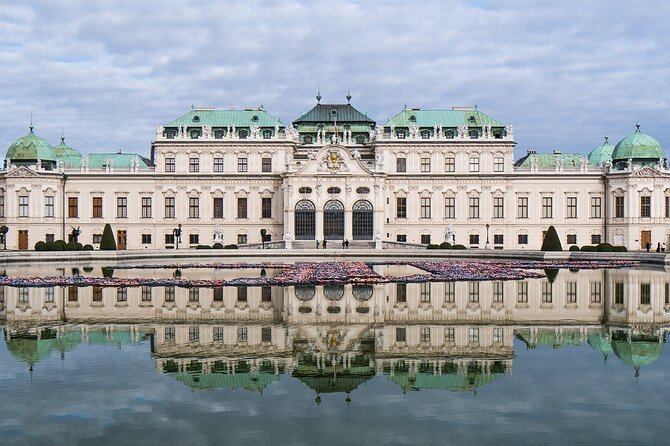
- Belvedere gardens: baroque palace vibe without committing to entry
- Price check: is $600.85 for up to two actually good value?
- The guide effect: where private tours win
- Should you book this Vienna private 3-hour tour?
- FAQ
- What’s included in the private tour?
- How long is the tour in Vienna?
- How many people is the private group limited to?
- What language is the tour offered in?
- Is pickup from my hotel included?
- Are museum entrance fees included?
- Is there a restroom on board?
- Can I cancel for a full refund?
- Is admission free at all stops?
Key Things I’d Book This For
- Hotel pickup with private car so you start with less hassle and more sightseeing
- English-speaking certified guides who focus on what you’ll actually see at each stop
- A tight, efficient route through major landmarks like Heldenplatz, Parliament, and Stephansplatz
- Photo breaks plus short walkabouts, including a set time at key squares
- Modern Vienna contrast at Hundertwasserhaus after the imperial-era sights
- Belvedere gardens time that keeps the baroque atmosphere without forcing long museum detours
Why a 3-hour private car tour makes sense in Vienna
Vienna can look complicated at first. The street grid, the Ringstrasse grandeur, the spacing between landmarks—it all adds up. A private car tour is a clean fix for that problem. In just 3 hours, you get a guided route that strings together the most recognizable parts of central Vienna, with minimal friction.
Think of it as a fast orientation layer. You learn what’s what, and then your future self can explore on foot (or by transit) with way better instincts. I like the idea that the tour gives you context early, so later museums and palaces feel less like isolated buildings and more like chapters in the same story.
Also, private doesn’t just mean exclusive seating. It means you can ask questions in real time. If you care about architecture, politics, religion, or design, a good guide can steer the conversation to match.
Hotel pickup, onboard comfort, and the rhythm of “short stops”
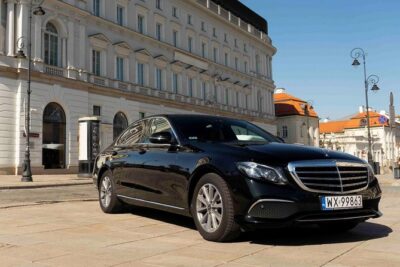
This tour runs with pickup from your hotel, and you stay in a private vehicle while the guide handles the directions and background. That changes the vibe instantly. Instead of spending your energy on transit timing, you spend it on looking, listening, and getting your bearings.
Inside the vehicle, you’ll have the basics that keep comfort high: air-conditioning, WiFi on board, and bottled water. The tour also uses a mobile ticket, which is helpful when you’re juggling days full of entry tickets and times.
A detail I appreciate: the stops aren’t all “park here and stare.” Many are designed as brief, useful encounters—think a set photo break, a short orientation, and a quick walking window. That matters in Vienna, where you can get stuck if you plan to do too much self-guided in one day.
Heldenplatz: statues, gardens, and the Hofburg front-row view
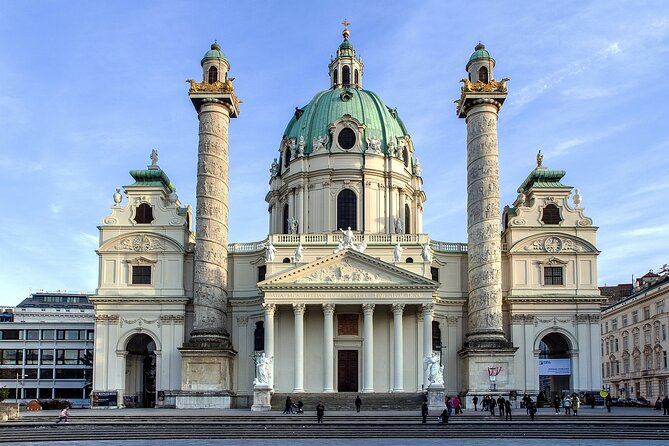
Your route starts at Heldenplatz, a square with gardens and tall statues in front of the old imperial palace of the Hofburg. This is the kind of stop where a guide’s context makes the scene click. Without that, you might see it as a beautiful square; with it, you understand the role Heldenplatz played in imperial ceremonial life.
The scheduled time is about 20 minutes, and it’s framed as a place where you can also get quick pointers about other important nearby buildings you can visit later at your own pace. I like this approach. It turns a short stop into a planning tool, not just a moment to pass through.
Practical tip: treat Heldenplatz as your “visual reset.” After your pickup drive, you can stretch your legs, take a couple of photos, and then settle in for the architectural comparisons that come next.
Kunsthistorisches Museum area: the 1891 art museum context
One of the more interesting parts of this route is that you’re not only seeing one landmark—you’re getting the “why these buildings sit together” perspective.
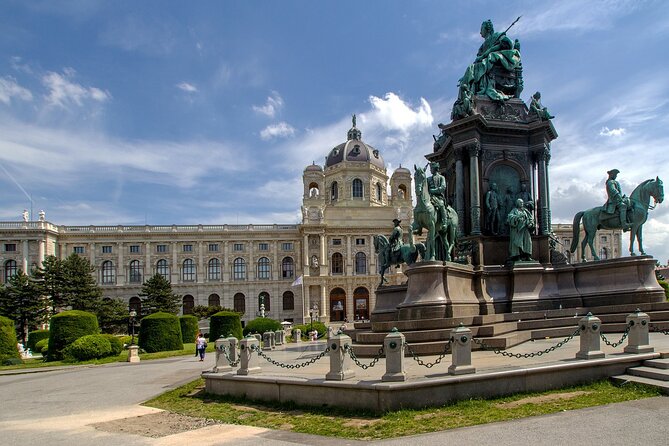
The Kunsthistorisches Museum is described as an art museum that opened in 1891 near the Ringstrasse, directly opposite the identical building of the Natural History Museum on Maria-Theresien-Platz. That pairing is the point. The city laid out these museum siblings as part of the grand center, so the exterior views you get on this tour are tied to how Vienna planned its cultural image.
Because entrance fees are not included, you should treat this as an orientation stop. You’ll get history and meaning from your guide, but you’re not automatically spending time inside. That’s ideal if you’re traveling with limited museum stamina—or if you want to choose which museum you’ll return to later.
Drawback to know: if you were hoping for full museum time, this tour won’t replace a longer museum visit. It’s more about making the architecture understandable so your later choices feel easier.
Natural History Museum pairing: architecture as a lesson
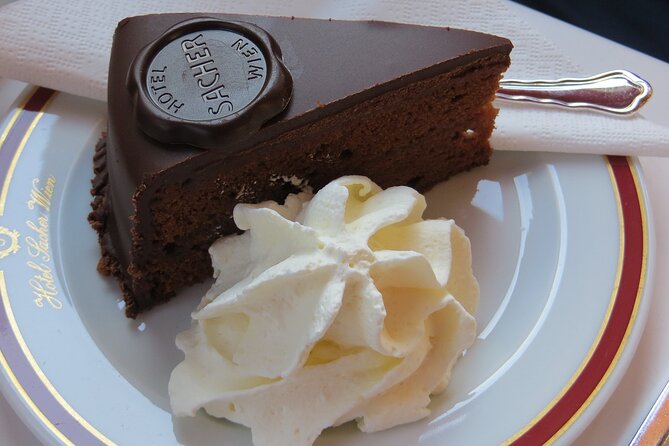
Right across the Maria-Theresien-Platz axis sits the Natural History Museum, presented as one of the largest museums in Austria’s capital. Like its art-museum neighbor, it anchors the Ringstrasse-era identity of Vienna’s center.
On a guided route like this, the museum pairing becomes more than “two big buildings.” Your guide can explain how the similar design and central placement create a balanced city composition. I like when a tour helps you see urban planning as something you can actually notice while walking around.
Practical tip: even if you don’t go inside, look for the symmetry and the overall layout. Then, later, when you’re back with time to spare, you’ll feel like you already understand what you’re looking at.
Parliament, town hall, and Burgtheater: civic Vienna in one sweep
Next you move from imperial court vibes to civic and public-life Vienna. The Austrian Parliament Building is where the National and Federal Councils meet from 1918 to the present day. That’s the kind of date detail that makes a building feel alive rather than just old-stone pretty.
Then the route continues to the town hall on Friedrich-Schmidt-Platz. It’s described as built between 1872 and 1883—a timeline that helps you understand why Vienna’s main public architecture looks the way it does. Opposite the town hall is the Burgtheater, another key landmark on this civic axis.
I like that this section gives you variety in a compact time window. You’re not stuck in one era. You’re moving across Vienna’s layers: imperial setting, then modern governance, then culture through theater.
If you like to photograph: this is a good stretch for wide shots. The buildings are meant to be viewed from multiple angles, and the square spacing helps you get clean frames.
Votivkirche and the Danube Canal: religion and old Vienna feel
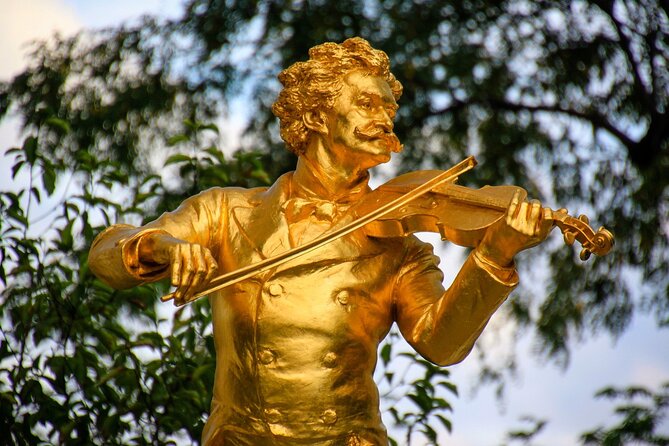
The tour then shifts toward spiritual and local neighborhood atmosphere with the Votivkirche, a Roman Catholic church in the Alsergrund district next to the University of Vienna. This kind of stop works well on a private tour because you can ask the guide what to look for—facade details, setting, and how it fits into the surrounding area.
After that, you slowly come to the Danube Canal, where you can see what’s described as the oldest church in Vienna. The exact landmark name isn’t provided in the route details, but the framing matters: you’re not only seeing major monuments—you’re also touching the older thread that runs under the city’s famous grandeur.
This is a good moment to slow down mentally. After squares and civic buildings, the canal and older religious site help you remember Vienna isn’t just big-stone monuments. It’s also daily life and long continuity.
Stephansplatz and the Prater park break with the 1897 Ferris wheel
Then comes Stephansplatz, described as the heart of the city. You get about 20 minutes and a chance for a short photo break. I like this stop because it’s one of the places you can use later as a reference point. After the tour, you’ll know exactly where you are in the city’s mental map.
From there, you head to a large park with a giant 1897 Ferris wheel and other classic rides, described as a popular Vienna spot. Even though the tour keeps this portion light, it gives you a classic Vienna contrast: imperial architecture on one side, fairground nostalgia on the other.
If your itinerary later includes evenings out, this is a helpful way to calibrate. Vienna looks refined, but it’s also fun. The Prater-area feel is part of that balance.
Hundertwasserhaus: quirky housing after the grand buildings
At Hundertwasserhaus, you get a longer stop of about 30 minutes. This residential complex was built between 1983 and 1985 by the municipality of Vienna. That detail is important because it signals that the city isn’t only shaped by emperors and baroque planners. Vienna also has strong opinions about modern design and public living.
This is the one spot on the route that naturally shifts your mood. The architecture here is the opposite of straight lines and predictable facades. It works great as a reset after the more formal sights.
The tour also notes a break here where you can find a larger range of souvenirs inside the building area. That’s practical. After so many exterior photo moments, it’s nice to have a place where you can step out of walking-mode and do something low-pressure.
Belvedere gardens: baroque palace vibe without committing to entry
The final major scenic stop is Jardines de Belvedere—the Belvedere area described as a baroque-style palace complex. Scheduled time is about 20 minutes, and the tour notes that admission is not included.
So here’s how to think about it: this is your taste of the Belvedere atmosphere, not a full guided museum day. You’ll get the setting and the sense of scale, then you can decide later if you want to return for interior exhibits.
For many first-time visitors, Belvedere is one of the places where Vienna’s baroque flavor shows up loud and clear. Even with a short visit, it can make your photos and your memory feel more “Vienna” than just central-squares.
Price check: is $600.85 for up to two actually good value?
At $600.85 per group (up to 2) for about 3 hours, you’re paying for three things at once: a private vehicle, a certified guide, and hotel pickup. That price can feel steep if you compare it to a group bus tour.
But for Vienna, private value often shows up when you price in what you avoid:
- Less time spent coordinating transit.
- Less mental load figuring out routes and the order of sights.
- More “ask questions now” time rather than reading on your phone later.
This also matters when you travel as a couple or small duo. Splitting the cost across two people brings the per-person cost down sharply compared with solo pricing on many private tours.
One more note: the tour is booked on average about 44 days in advance, which suggests it’s a popular slot for people who want a quick, high-quality orientation early in the trip. If you’re traveling during peak times, I’d book with some buffer so you don’t end up with only less convenient start times.
The guide effect: where private tours win
The route is a list of landmarks, but the real difference is the guide’s storytelling style. The tour highlights that guides are certified and that you’ll be looked after privately.
You can see the pattern in the kinds of outcomes people rave about: guides help connect what you’re seeing to real people and real timelines. Some guests also noted flexibility around walking pace and personal interests, which is a huge deal in Vienna where “a short stop” still means moving.
If you want the best experience, arrive with one or two priorities. For example:
- Are you more interested in architecture and design?
- Or in civic life and how the city works?
- Do you want photo-heavy stops, or explanations with fewer pictures?
With that, you’ll get more out of the same 3 hours.
Should you book this Vienna private 3-hour tour?
Book it if you want a strong first-pass overview of central Vienna, with hotel pickup, a private car, and a guide who helps you understand the landmarks fast. It’s also a good match if you don’t want to spend your vacation day bouncing between transit connections.
Skip it, or change your plan, if a single far-out priority like Schönbrunn Palace is non-negotiable. This 3-hour format is built around city-center sights, short pauses, and guided context—not a full palace day.
My final take: if you’re the type of traveler who likes to get oriented early and then explore on your own later, this tour is a practical, comfortable way to start.
FAQ
What’s included in the private tour?
You get an air-conditioned vehicle, WiFi on board, private transportation, bottled water, certified travel guides, and pickup from your hotel. You also get a private experience where only your group participates.
How long is the tour in Vienna?
The tour lasts about 3 hours.
How many people is the private group limited to?
The pricing is per group for up to 2 people.
What language is the tour offered in?
The tour is offered in English.
Is pickup from my hotel included?
Yes. Pickup is offered from your hotel.
Are museum entrance fees included?
No. Entrance fees to museums are not included.
Is there a restroom on board?
No restroom on board is included.
Can I cancel for a full refund?
Yes. You can cancel up to 24 hours in advance for a full refund.
Is admission free at all stops?
Some stops are listed with free admission, such as Heldenplatz and Stephansplatz, and you should also note that Belvedere gardens admission is not included. For anything not clearly listed as free, plan for the possibility of additional costs if you choose to enter.